


Google Inc announced a surprise overhaul of its operating structure on Monday, creating a holding company called Alphabet Inc to pool its many subsidiaries and separate the core Web advertising business from newer ventures like driverless cars.
The move appeared to be an attempt by the search engine giant to focus on its more creative and ambitious projects, while investors cheered the potential for more financial disclosures of its disparate business segments.
The surprise news sent shares of Google up by as much as 7 percent to US$708 in after-hours trading.
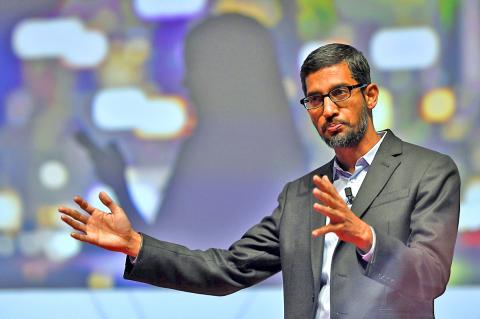
Photo: AFP
Google’s planned structure resembles the way companies like Berkshire Hathaway Inc and General Electric Co are organized, with a central unit handling corporat activities such as finance and relatively independent business units focused on specific areas.
Under the new corporate structure, the Google unit is to encompass the core search engine, as well as Google Maps and YouTube.
In addition to Google X, the company’s new ventures such as Calico, which focuses on longevity, and connected home products maker Nest are to be managed separately. Other units that are part of the new structure include Fiber, for its high-speed Internet efforts, venture capital arm Google Ventures and Google Capital, which invests in larger tech companies.
Alphabet is to replace Google as the publicly traded entity and all shares of Google are to automatically convert into the same number of shares of Alphabet, with all the same rights.
“This new structure will allow us to keep tremendous focus on the extraordinary opportunities we have inside of Google,” Google CEO Larry Page said in a blogpost. Page is to become CEO of Alphabet.
Analysts said the new structure could herald a new era of fiscal discipline and transparency in some of Google’s more experimental and opaque business units.
In a filing with the US Securities and Exchange Commission, Google said the new arrangement is to take effect later this year and that it will likely result in two reportable financial segments.
“For example, if a unit is doing well or badly, they can dial it up or down, they can form partnerships or different companies,” said Roger Kay, an analyst at Endpoint Technologies Associates Inc, a market intelligence company.
Other analysts were cautious, saying the new holding company would need to provide more details on cash flow of the experimental business segments.
“Breaking up into two different segments — well, it’s not a terrible thing. It’s better than not doing it, but on the other hand, you’re going to have a ton of businesses buried inside of a legacy Google,” Pivotal Research Group analyst Brian Wieser said.
The shuffle also looked to have the markings of Ruth Porat, who joined Google as its chief financial officer in March from Morgan Stanley. In Google’s recent quarterly conference call, Porat, who is to serve as financial officer for both Alphabet and Google, repeatedly emphasized keeping expenses under control.
With Page heading up Alphabet, Sundar Pichai, a long-time Google executive who most recently served as the company’s senior vice president of products, is to head Google. Pichai, a well-liked executive who oversaw Google’s Android and Chrome units, is respected in Silicon Valley for attracting top engineers.
Google cofounder Sergey Brin is to become president of Alphabet, and Eric Schmidt, chairman of Google, is to be executive chairman. The company’s current directors are to become directors of Alphabet.

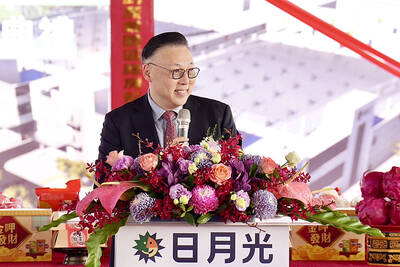
ENERGY ISSUES: The TSIA urged the government to increase natural gas and helium reserves to reduce the impact of the Middle East war on semiconductor supply stability Chip testing and packaging service provider ASE Technology Holding Co (日月光投控) yesterday said it planned to invest more than NT$100 billion (US$3.15 billion) in building a new advanced chip testing facility in Kaohsiung to keep up with customer demand driven by the artificial intelligence (AI) boom. That would be included in the company’s capital expenditure budget next year, ASE said. There is also room to raise this year’s capital spending budget from a record-high US$7 billion estimated three months ago, it added. ASE would have six factories under construction this year, another record-breaking number, ASE chief operating officer Tien Wu

The EU and US are nearing an agreement to coordinate on producing and securing critical minerals, part of a push to break reliance on Chinese supplies. The potential deal would create incentives, such as minimum prices, that could advantage non-Chinese suppliers, according to a draft of an “action plan” seen by Bloomberg. The EU and US would also cooperate on standards, investments and joint projects, as well as coordinate on any supply disruptions by countries like China. The two sides are additionally seeking other “like-minded partners” to join a multicountry accord to help create these new critical mineral supply chains, which feed into

For weeks now, the global tech industry has been waiting for a major artificial intelligence (AI) launch from DeepSeek (深度求索), seen as a benchmark for China’s progress in the fast-moving field. More than a year has passed since the start-up put Chinese AI on the map in early last year with a low-cost chatbot that performed at a similar level to US rivals. However, despite reports and rumors about its imminent release, DeepSeek’s next-generation “V4” model is nowhere in sight. Speculation is also swirling over the geopolitical implications of which computer chips were chosen to train and power the new
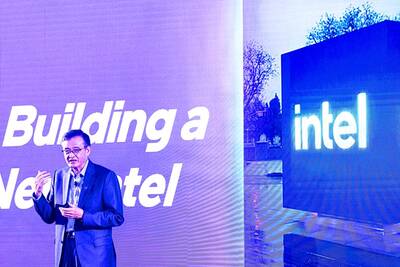
Intel Corp is joining Elon Musk’s long-shot effort to develop semiconductors for Tesla Inc, Space Exploration Technologies Corp and xAI, marking a surprising twist in the chipmaker’s comeback bid. Intel would help the Terafab project “refactor” the technology in a chip factory, the company said on Tuesday in a post on X, Musk’s social media platform. That is a stage in the development process that typically helps make chips more powerful or reliable. The chipmaker’s shares jumped 4.2 percent to US$52.91 in New York trading on Tuesday. The Terafab project is a grand plan by Musk to eventually manufacture his own chips for


 RSS
RSS