


Eastern Multimedia Group (EMG,
Unable to expand its subscriber base in its home market owing to regulatory caps, EMG sees developing digital TV content as a way to increase revenue at home and tap into the vast market in China, company chairman Gary Wang (
"We brought Carlyle in for their six years of experience in managing cable TV, as well as for the money needed for further investment," Wang said.
In April, Carlyle agreed to pay about US$1.3 billion for stakes in EMG's Eastern Multimedia Co (
With 1.06 million subscribers, Eastern Multimedia Co is Taiwan's second-largest cable TV operator, behind China Network Systems Co (
Wang said his company planned to spend an estimated NT$3 billion (US$900 million) during the next five years to develop digital television content, which will help it boost revenue in the future.
He said a basic cable package in the US cost about US$25 a month, with a premium-content package costing US$75, whereas cable TV subscribers in Taiwan paid only NT$550 (US$16.72) a month.
"There's room for an increase [in revenue] if we add content," Wang said on Monday.
EMG's revenue last year was NT$59.9 billion, down from NT$60.28 billion in 2004.
Cable operator Eastern Multimedia Co's revenue last year was NT$9.48 billion, but Wang said this could double in the future through additional content on a digital platform.
As Eastern Multimedia Co's subscriber base is already nearing the regulatory cap of one-third of Taiwan's cable TV market, Wang said domestic revenue growth would come from migrating users to the digital platform, for which content is key.
Only 50,000, or 4.8 percent, of Eastern Multimedia Co's users now subscribe to its digital service.
The firm has three digital channels, but Wang said he hoped to have 10 channels by the end of the year.
With an eye on the China market, Wang said the group planned to co-produce TV dramas with China's national broadcaster, China Central Television (CCTV,
Eastern Multimedia Co has a news-sharing agreement with CCTV, while the content of EMG's digital cartoon channels is designed in Taiwan and produced in China, with the aim of creating products that appeals to both markets.
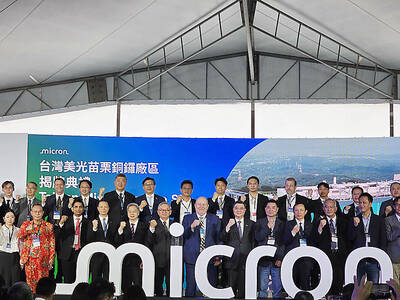
UNPRECEDENTED PACE: Micron Technology has announced plans to expand manufacturing capabilities with the acquisition of a new chip plant in Miaoli Micron Technology Inc unveiled a newly acquired chip plant in Miaoli County yesterday, as the company expands capacity to meet growing demand for advanced DRAM chips, including high-bandwidth memory chips amid the artificial intelligence boom. The plant in Miaoli County’s Tongluo Township (銅鑼), which Micron acquired from Powerchip Semiconductor Manufacturing Corp (力積電) for US$1.8 billion, is expected to make a sizeable capacity contribution to the company from fiscal 2028, the company said in a statement. It would be an extended production site of Micron’s large-scale manufacturing hub in Taichung, the company said. As the global semiconductor industry is racing to reach US$1 trillion

Singapore-based ride-hailing and delivery giant Grab Holdings Ltd has applied for regulatory approval to acquire the Taiwan operations of Germany-based Delivery Hero SE's Foodpanda in a deal valued at about US$600 million. Grab submitted the filing to the Fair Trade Commission on Friday last week, with the transaction subject to regulatory review and approval, the company said in a statement yesterday. Its independent governance structure would help foster a healthy and competitive market in Taiwan if the deal is approved, Grab said. Grab, which is listed on the NASDAQ, said in the filing that US-based Uber Technologies Inc holds about 13 percent of

Taiwan’s food delivery market could undergo a major shift if Singapore-based Grab Holdings Ltd completes its planned acquisition of Delivery Hero SE’s Foodpanda business in Taiwan, industry experts said. Grab on Monday last week announced it would acquire Foodpanda’s Taiwan operations for US$600 million. The deal is expected to be finalized in the second half of this year, with Grab aiming to complete user migration to its platform by the first half of next year. A duopoly between Uber Eats and Foodpanda dominates Taiwan’s delivery market, a structure that has remained intact since the Fair Trade Commission (FTC) blocked Uber Technologies Inc’s

Memory chip stocks extended their losses yesterday after Alphabet Inc’s Google publicized research that could allow more efficient use of the storage needed for artificial intelligence (AI) development. SK Hynix Inc and Samsung Electronics Co, South Korean leaders in the market, fell more than 6 percent and about 5 percent respectively in Seoul. In the US, Micron Technology Inc, Western Digital Corp and Sandisk Corp slid more than 2 percent in pre-market trading, after they all closed lower on Wednesday. Memory companies have been on a tear in recent months as the rapid development of AI infrastructure triggered a spike in chip


 RSS
RSS