


Until late into the night you could have beat time to the rhythm of pneumatic staplers and scored the rise and fall of a tide of laryngeal babble into a gigantic symphony of dissonance.
With each stand, each booth, from palatial two storey affairs like that of Microsoft in Hall One -- even Billionaire Bill manned a tiny booth here back in the seventies -- these mastodons (and minions) of the IT trade have literally nailed themselves to the floor.
It is hardly likely that above this din and fray any human ear could hear even the loudest of musicians play -- as they do most raucously on the more well-heeled German stands during the week.
Outside, as the first gray light of morning creeps over this City of Herrenhausen, Ratskelder and Expo2000, conscripts to the cause pimp an armada of duffel coated exhibitors and buyers with first editions of CeBIT Mail and Messewoche.
Nailing down those "Pimpernels" of the E-trade, which is what it is all about this year, is as much of a challenge as getting through the gates in the first place.
In these early hours, passing stand after inert stand, like patient octopuses ready to embrace hapless human prey, its more apparent than ever that the E- word -- or is it "e-World" -- dominates CeBIT like never before.
From advanced storage for e-commerce data to handheld devices that perform sophisticated Web applications.
In Linux -- a free Unix-based operating system originally created by Super Fin Linus Torvalds -- software too has a new Leonardo di Caprio all its own.
Experts predict that this operating system will surpass Microsoft NT by the year 2003. Not surprisingly then, Linux is expecting to cash in on the headlines and the hype at its pavilion with a steady stream of new business and Internet applications and demonstrations.
But you still need hardware to make all this software work and that means an acronymic mouthful of new product offerings -- from Mobile, wireless LAN, DVD, CD-RW, WAP, MP3, USB (that some are already confuse with UPS!) and other hot categories with e-capabilities -- all worthy of a column in themselves.
Then of course, there's the Taiwan Pavilion where eager "beavering" Taiwanese are getting into line -- or more accurately, into booths.
At B705YT, Lee, President and CEO of InnoLabs "demists" his specs and beams at the prospects.
As well he can. Back in 1998 Innolabs, then a start up in the business, blazed the way with USB, IEEE 1394, high capacity storage devices and outsized RAM memory as standard features in its NB 9800 notebook series.
No secret too that the company is the engineering muscle behind the PCT -- Personal Computing Tablet -- that has taken the US market by storm.
An entirely new concept and design in mobile computing with pen based input, voice recognition and a inbuilt CCD -- a boon for admin-intensive tasking.
"We'Ore expecting boom days for the PCT," he says. "In this competitive area you've got to be applications driven and recognize the demands of the mobile professional market."
Having won the best of mobile computing award at Comdex Fall, the PCT's aura of digital seduction is heavy in the air.
Judging by the rapidly filling stands and the zip zapping of name cards this, it seems, is going to be another bumper year for the Taiwanese.
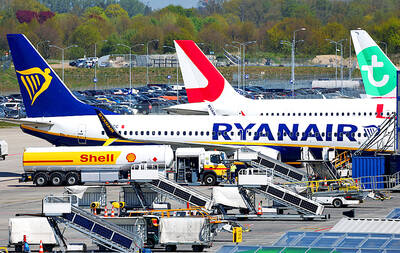
Ryanair, Transavia, Volotea and other low-cost airlines are feeling the financial pain from high jet fuel prices as a result of the Middle East war and are cutting flights. The closure of the Strait of Hormuz has taken a huge chunk of oil supplies off the market, sending the price of jet fuel soaring and triggering fears of shortages that could force airlines to cancel flights. Airlines are not waiting for a lack of supplies to react. “Travel alert: Airlines are cutting thousands of flights right now,” Travel Therapy host Karen Schaler said in an Instagram reel this past weekend.
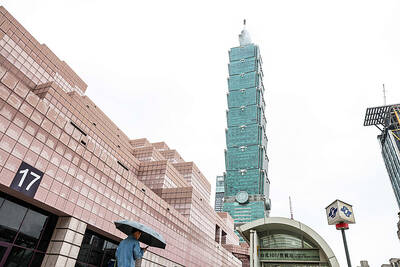
MANAGING RISKS: Taiwan has secured LNG sufficient to cover 95 percent of electricity demand for next month, UBS said, describing the government’s approach as proactive UBS Group AG has raised its forecast for Taiwan’s economic growth this year to 8 percent, up from 6.9 percent previously, and said expansion could reach as high as 8.6 percent if external energy shocks are avoided. The upgrade reflects a stronger-than-expected first-quarter performance and sustained momentum in artificial intelligence (AI)-driven exports, which UBS said are providing a firm foundation for growth despite geopolitical and energy risks. Taiwan’s GDP expanded 13.69 percent year-on-year in the first quarter, the fastest growth since the second quarter of 1987, the Directorate-General of Budget, Accounting and Statistics (DGBAS) reported on Thursday. On a seasonally
The Fair Trade Commission’s (FTC) ongoing review of Grab Holdings Ltd’s US$600 million acquisition of Foodpanda Taiwan’s operations, announced on March 23, has taken on fresh urgency as industry experts warn that the transaction could embed significant Chinese cybersecurity vulnerabilities into Taiwan’s digital infrastructure through Grab’s deep ties to autonomous-driving firm WeRide (文遠知行). Less than 16 months after the FTC blocked Uber Eats’ direct attempt to acquire Foodpanda Taiwan — citing potential combined market shares of 80 to 90 percent — the emergence of Grab as the buyer has prompted questions about whether the same competitive harm is simply being rerouted
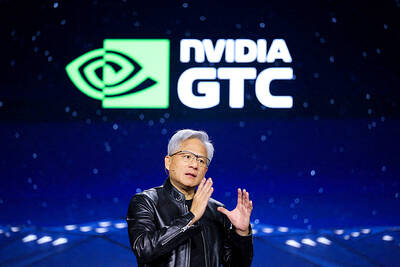
The list of Asian stocks that benefit from business partnership with Nvidia Corp is getting longer, as the region further integrates into the artificial intelligence (AI) chip giant’s business ecosystem. Just in the past week, South Korea’s LG Electronics Inc, Taiwan’s Nanya Technology Corp (南亞科技), as well as China’s Huizhou Desay SV Automotive Co (德賽西威) and Pateo Connect Technology Shanghai Corp (博泰車聯) have become the latest to rally on news of tie-ups, supply-chain participation or product collaboration with the US chip designer. Asian suppliers account for about 90 percent of Nvidia’s production costs, up from about 65 percent last year, data compiled


 RSS
RSS