


Police armed with assault rifles raided the homes of Russia’s top protest leaders yesterday in a show of force on the eve of a mass Moscow rally against Russian President Vladimir Putin’s rule.
The coordinated security sweep in the early hours of a public holiday targeted the homes of a new brand of young Russian politicians who analysts believe represent the biggest threat to ex-KGB spy Putin’s 12-year rule.
Officers beat down the doors of the increasingly popular anti-corruption blogger Alexei Navalny as well as media celebrity and more recent Putin critic Ksenya Sobchak.

Photo: AFP
Others on the list included Sergei Udaltsov — an outspoken ultra-leftist who stages periodic hunger strikes to protest his repeated arrests — and the far more moderate democracy campaigner Ilya Yashin.
Russia’s powerful Investigative Committee said 10 raids were being conducted in all as part of a probe over a previous demonstration “that ended in mass disturbances.”
A so-called “March of Millions” that drew 20,000 people in Moscow on May 6 ended in the arrest of hundreds after bloody clashes broke out between protesters and police on the eve of Putin’s inauguration to a third term.
Navalny and the nine others face up 10 years in prison if they are charged and convicted of organizing mass disturbances. The protest movement blames police for the violence and calls the charges political.
The May 6 unrest sparked a stiff response from the Kremlin that saw Putin on Friday sign into law legislation dramatically raising fines for those who break the already restrictive laws on organizing and holding rallies.
The highest penalty for individuals has been raised to 300,000 rubles (US$9,000) — higher than for any other administrative offense and almost equivalent to Russians’ average annual salary.
Rights activists said Russia’s security agencies were trying to intimidate the nascent movement and prevent mass attendance to avoid embarrassing Putin just a month into his third term.
City authorities have authorized up to 50,000 people to take part in a demonstration and subsequent rally today at the site of a December protest against that month’s fraud-tainted parliamentary polls.
“They are trying to disrupt the ‘March of Millions’ and make sure fewer people come,” human rights campaign Lev Ponomaryov told Interfax.
He said that the raids and stiff new penalties would only energize the protest movement and give it the urgency it appeared to be losing after Putin’s dominant win in March 4 presidential elections.
Police had in previous days detained 12 people in connection with last month’s march.
The protest leaders’ representatives said the raids were unexpected and similar to those conducted in far more serious cases involving grave crimes.
Navalny’s attorney Olga Mikhailova told Moscow Echo radio that “around 15 policemen burst” into his Moscow apartment yesterday morning and presented him with a search warrant.
“Initially, they tried to break down the door,” she said.
The radio station’s deputy editor reported from Sobchak’s apartment building that armed police officers were stationed at the entrance and preventing others from getting in.
Udaltsov said he had been ordered to appear for questioning today only an hour before the new demonstration was due to begin.
“They want to keep me from taking part,” Udaltsov told Interfax.
The Investigative Committee later confirmed that all those targeted would have to appear for questioning this afternoon.
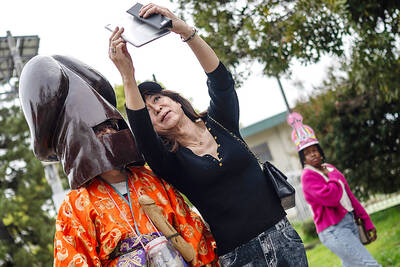
Showcasing phallus-shaped portable shrines and pink penis candies, Japan’s annual fertility festival yesterday teemed with tourists, couples and families elated by its open display of sex. The spring Kanamara Matsuri near Tokyo features colorfully dressed worshipers carrying a trio of giant phallic-shaped objects as they parade through the street with glee. The festival, as legend has it, honors a local blacksmith in the Edo Period (1603-1868) who forged an iron dildo to break the teeth of a sharp-toothed demon inhabiting a woman’s vagina that had been castrating young men on their wedding nights. A 1m black steel phallus sits in the courtyard of

JAN. 1 CLAUSE: As military service is voluntary, applications for permission to stay abroad for over three months for men up to age 45 must, in principle, be granted A little-noticed clause in sweeping changes to Germany’s military service policy has triggered an uproar after it emerged that the law requires men aged up to 45 to get permission from the armed forces before any significant stay abroad, even in peacetime. The legislation, which went into effect on Jan. 1 aims to bolster the military and demands all 18-year-old men fill out a questionnaire to gauge their suitability to serve in the armed forces, but stops short of conscription. If the “modernized” model fails to pull in enough recruits, parliament will be compelled to discuss the reintroduction of compulsory service, German

For two decades, researchers observed members of the Ngogo chimpanzee group of Kibale National Park in Uganda spend their days eating fruits and leaves, resting, traveling and grooming in their tropical rainforest abode, but this stable community then fractured and descended into years of deadly violence. The researchers are now describing the first clearly documented example of a group of wild chimpanzees splitting into two separate factions, with one launching a series of coordinated attacks against the other. Adult males and infants were targeted, with 28 deaths. “Biting, pounding the victim with their hands, dragging them, kicking them — mostly adult males,
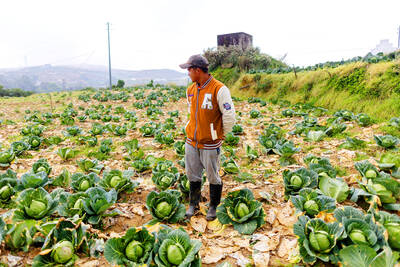
Filipino farmers like Romeo Wagayan have been left with little choice but to let their vegetables rot in the field rather than sell them at a loss, as rising oil prices linked to the Iran war drive up the cost of harvesting, labor and transport. “There’s nothing we can do,” said Wagayan, a 57-year old vegetable farmer in the northern Philippine province of Benguet. “If we harvest it, our losses only increase because of labor, transportation and packing costs. We don’t earn anything from it. That’s why we decided not to harvest at all,” he said. Soaring costs caused by the Middle East


 RSS
RSS