


Rescue mission or diplomatic risk?
While the sight of a freed American prisoner landing on home soil is a celebrated victory, recent high-profile diplomatic rescues in North Korea and Myanmar can also complicate US diplomacy.
The release on Sunday of an American man from Myanmar after a visit there by Senator Jim Webb follows closely on the heels of a similar rescue of two journalists by former US president Bill Clinton in Pyongyang earlier this month.
Both gained their public goal — the freedom of US captives. But both also nudged open a diplomatic door that could either invite welcome change or slam shut on US President Barack Obama’s emerging foreign policy.
With their timing so close, the Clinton and Webb missions may suggest to other rogue nations that in dealings with the Obama administration, holding US hostages can be a profitable political ploy.
“They can look at this and say, there’s a new game afoot,” former US ambassador to the UN John Bolton said. “They think: We can get legitimacy and high level attention by using Americans as pawns.”
Such visits, argue experts, can give regime leaders an aura of respect and recognition that may make it harder for the US to press for sanctions or continue isolation policies aimed at forcing change in everything from humans rights to nuclear power.
At the same time, Bolton said, there is the risk that other would-be heroes across the Washington power spectrum may also decide that they too could wage “publicity hound diplomacy.”
Still, the solo rescue missions can spawn benefits that make the risks worth taking.
First and foremost, such lower level contact that doesn’t involve a sitting president or secretary of state can take the temperature for change without the added pressure of a formal engagement that is more likely to demand results.
In that way, it can be a face-saving measure, since an unsuccessful mission by an unofficial delegate is less likely to be condemned as a White House failure.
If successful, the solo sessions can lead to a long-term payoff — thawed relations between enemy nations or a shift in policy.
Obama has advocated more contact with other less-friendly countries, even including a willingness to talk with Iran.
He has said he would be willing to talk to anyone without preconditions, referring to nations with whom the Bush administration had refused to hold discussions.
Webb on Sunday said he hoped his Myanmar visit and meeting with military junta leader Senior General Than Shwe would improve relations between the two countries. Washington has led efforts to impose political and economic sanctions on the regime because of its poor human rights record and failure to transfer power to democracy leader Aung San Suu Kyi after a 1990 election.
The senator, who chairs the Senate Foreign Relations Committee’s East Asia and Pacific Affairs Subcommittee, is the first member of Congress to visit Myanmar in more than a decade. He said he plans to discuss his recommendations with US Secretary of State Hillary Clinton when he returns.
White House press secretary Robert Gibbs said on Sunday that the White House had monitored the Myanmar situation, but he had little else to say about the Webb trip.
“Obviously this was something that he did independently,” Gibbs said of Webb. “He was briefed before he left by the State Department.”
Webb’s visit to Myanmar secured the freedom of John Yettaw, 53, of Missouri, who was apprehended after swimming uninvited to Suu Kyi’s lakeside residence, where she is being held on house arrest.
Stephen Flanagan, senior vice president at the Center for Strategic and International Studies, said Webb’s mission provides an opening for the Obama administration to begin a dialogue with Myanmar, which does not now have diplomatic relations with the US.
Flanagan also dismissed suggestions that the rescue missions undercuts Hilary Clinton. She has a full agenda and is clearly shaping policy, he said.

Kouri Richins, a Utah mother who published a children’s book about grief after the death of her husband is to serve a life sentence for his murder without the possibility of parole, a judge ruled on Wednesday. Richins was convicted in March of aggravated murder for lacing a cocktail given to her husband, Eric Richins, with five times the lethal dose of fentanyl at their home near Park City in 2022. A jury also found her guilty of four other felonies, including insurance fraud, forgery and attempted murder for trying to poison her husband weeks earlier on Feb. 14, 2022, with a
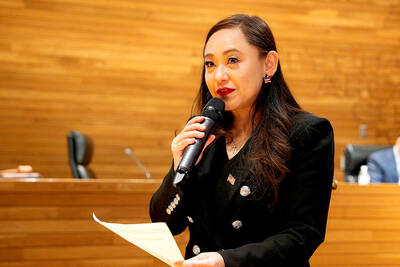
‘PERSONAL MISTAKES’: Eileen Wang has agreed to plead guilty to the felony, which comes with a maximum sentence of 10 years in federal prison A southern California mayor has agreed to plead guilty to acting as an illegal agent for the Chinese government and has resigned from her city position, officials said on Monday. Eileen Wang (王愛琳), mayor of Arcadia, was charged last month with one count of acting in the US as an illegal agent of a foreign government. She was accused of doing the bidding of Chinese officials, such as sharing articles favorable to Beijing, without prior notification to the US government as required by law. The 58-year-old was elected in November 2022 to a five-person city council, from which the mayor is selected

DELA ROSA CASE: The whereabouts of the senator, who is wanted by the ICC, was unclear, while President Marcos faces a political test over the senate situation Philippine authorities yesterday were seeking confirmation of reports that a top politician wanted by the International Criminal Court (ICC) had fled, a day after gunfire rang out at the Philippine Senate where he had taken refuge fearing his arrest. Senator Ronald “Bato” dela Rosa, the former national police chief and top enforcer of former Philippine president Rodrigo Duterte’s “war on drugs,” has been under Senate protection and is wanted for crimes against humanity, the same charges Duterte is accused of. “Several sources confirmed that the senator, Senator Bato, is no longer in the Senate premises, but we are still getting confirmation,” Presidential
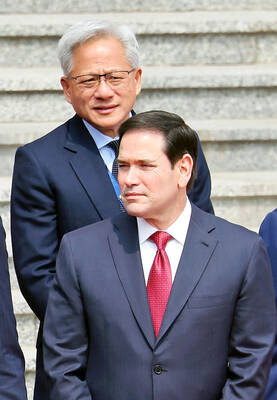
HELP DENIED? The US Department of State said that the Cuban leadership refuses to allow the US to provide aid to Cubans, ‘who are in desperate need of assistance’ US Secretary of State Marco Rubio on Wednesday said that Cuba’s leadership must change, as Washington renewed an offer of US$100 million in aid if the communist nation agrees to cooperate. Cuba has been suffering severe economic tumult led by an energy shortage that plunged 65 percent of the country into darkness on Tuesday. Cuba’s leaders have blamed US sanctions, but Rubio, a Cuban American and critic of the government established by Fidel Castro, said the system was to blame, including corruption by the military. “It’s a broken, nonfunctional economy, and it’s impossible to change it. I wish it were different,” he told


 RSS
RSS