


Pope Benedict XVI condemned anti-Christian violence in India, where at least 11 people were killed in three days of violence as Christians clashed with Hindu mobs attacking churches, shops and homes.
During his weekly audience at the Vatican, Benedict said he was “profoundly saddened” by news of the violence against Christian communities in eastern India.
“I firmly condemn any attack on human life,” Benedict told a crowd of faithful and pilgrims. “I express spiritual closeness and solidarity to the brothers and sisters in faith who are being so harshly tested.”
HINDU LEADER
The pope also called “deplorable” the killing of a Hindu leader. Hardline Hindus have blamed that death on Christian militants, setting off the latest violence in India’s Orissa state.
Benedict urged religious leaders and local authorities to “work together to re-establish between the members of the various communities the peaceful coexistence and the harmony that have always marked Indian society.”
The violence began as Hindu hardliners set ablaze a Christian orphanage on Monday, killing a woman who worked as a lay teacher and seriously injuring a priest.
VIOLENCE SPREADS
Four people were killed later that day, including two burned alive when rioters set fire to thatched huts.
Six more people were killed on Tuesday and on Wednesday in villages across the state, despite a curfew imposed by police, authorities said.
One was doused with kerosene and burned to death by a mob, another died when protesters set fire to a house, while four were killed in an exchange of gunfire between the rival groups.
It is not clear if the latest dead were Christians or Hindus.
Security forces on Wednesday were ordered to shoot on sight protesters defying the curfew.
‘SIN AGAINST GOD’
On Tuesday, the Holy See condemned the orphanage attack and a top Vatican official called it “a sin against God and humanity.”
In an interview published in Italy’s Corriere della Sera daily, Cardinal Jean-Louis Tauran, the head of the Vatican’s council for inter-religious dialogue, said there was “no possible justification” for the assault.
Hinduism is the main religion in India and relations with the country’s religious minorities — such as Christians, who account for 2.5 percent of the country’s 1.1 billion people, and Muslims, who make up 14 percent — are usually peaceful.
However, Hindu nationalists often accuse Christian missionaries of luring poor people away from India’s largest faith through bribes or coercion — a charge churches have denied. The issue of conversions has sparked violence by hardline Hindus throughout India’s history.
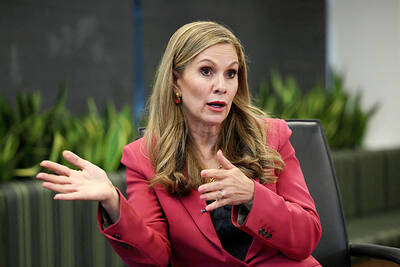
Australians were downloading virtual private networks (VPNs) in droves, while one of the world’s largest porn distributors said it was blocking users from its platforms as the country yesterday rolled out sweeping online age restriction. Australia in December became the first country to impose a nationwide ban on teenagers using social media. A separate law now requires artificial intelligence (AI)-powered chatbot services to keep certain content — including pornography, extreme violence and self-harm and eating disorder material — from minors or face fines of up to A$49.5 million (US$34.6 million). The country also joined Britain, France and dozens of US states requiring
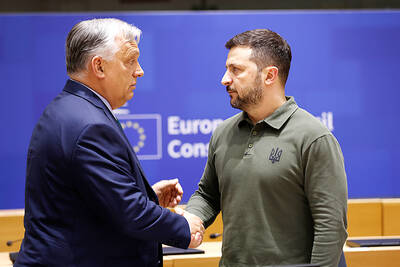
Hungarian authorities temporarily detained seven Ukrainian citizens and seized two armored cars carrying tens of millions of euros in cash across Hungary on suspicion of money laundering, officials said on Friday. The Ukrainians were released on Friday, following their detention on Thursday, but Hungarian officials held onto the cash, prompting Ukraine to accuse Hungary’s Russia-friendly government of illegally seizing the money. “We will not tolerate this state banditism,” Ukrainian Minister of Foreign Affairs Andrii Sybiha said. The seven detained Ukrainians were employees of the Ukrainian state-owned Oschadbank, who were traveling in the two armored cars that were carrying the money between Austria and
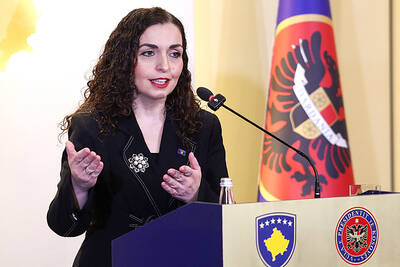
Kosovar President Vjosa Osmani on Friday after dissolving the Kosovar parliament said a snap election should be held as soon as possible to avoid another prolonged political crisis in the Balkan country at a time of global turmoil. Osmani said it is important for Kosovo to wrap up the upcoming election process and form functional institutions for political stability as the war rages in the Middle East. “Precisely because the geopolitical situation is that complex, it is important to finish this electoral process which is coming up,” she said. “It is very hard now to imagine what will happen next.” Kosovo, which declared

MORE BANS: Australia last year required sites to remove accounts held by under-16s, with a few countries pushing for similar action at an EU level and India considering its own ban Indonesia on Friday said it would ban social media access for children under 16, citing threats from online pornography, cyberbullying, online fraud and Internet addiction. “Accounts belonging to children under 16 on high-risk platforms will start to be deactivated, beginning with YouTube, TikTok, Facebook, Instagram, Threads, X, Bigo Live and Roblox,” Indonesian Minister of Communications and Digital Meutya Hafid said. “The government is stepping in so that parents no longer have to fight alone against the giants of the algorithm. Implementation will begin on March 28, 2026,” she said. The social media ban would be introduced in stages “until all platforms fulfill their


 RSS
RSS