


Britain's newspapers said yesterday that Morgan Tsvangirai could not be blamed for pulling out of Zimbabwe's presidential election but urged South Africa to turn on President Robert Mugabe.
National dailies branded Mugabe “tyrannical” in their editorials and raised comparisons with Adolf Hitler as they urged Zimbabwe’s neighbor South Africa to wield its influence and lead world outrage at Mugabe’s regime.
Tsvangirai, leader of the main opposition Movement for Democratic Change party, withdrew from the two-man second round run-off on Sunday, saying violence had made a fair vote impossible.
The move all but hands victory to Mugabe, who has ruled Zimbabwe since it gained independence from Britain in 1980.
The Daily Telegraph said it was hard to see what else Tsvangirai could have done.
“His candidature risked bestowing a semblance of legitimacy on the whole wretched business; and in the meantime, it was intensifying the violence,” it said.
The broadsheet said peaceful change in Zimbabwe was largely dependent on South Africa, as it was when the country gained its independence.
The 'Daily Mail'
Nobody could blame Tsvangirai for pulling out, the Daily Mail said.
“This sick farce of a contest was never going to end in a fair result anyway. Indeed, Mr Tsvangirai was almost suicidally brave to fight on for as long as he did,” the tabloid said.
“What makes this tragedy worse is the way this corrupt and murderous tyrant [Mugabe] has been allowed to get away with it,” the editorial said.
THE ‘GUARDIAN’
The Guardian said Tsvangirai’s decision was a “triumph for terror.”
“Making that call was excruciating because it killed any lingering hope that Mr Mugabe’s tyrannical rule might be ended by the ballot box,” it said.
Southern African leaders have slowly begun turning against Mugabe and he needs electricity and supplies from neighboring states, the editorial read.
“A wind of change blowing through southern Africa might — just — still finish Mr Mugabe,” the paper said.
THE ‘INDEPENDENT’
The Independent said that while nobody could blame Tsvangirai for withdrawing, the decision “still leaves a bitter taste.”
The daily said an opportunity had been lost, but Mugabe would be weakened by the development nonetheless.
The 11th-hour pullout by Zimbabwe’s opposition leader from a presidential run-off complicates efforts to end the deadlock, but a breakthrough is still possible, South African media said yesterday.
The Star newspaper quoted sources close to the mediation efforts in Zimbabwe as saying they were “still hopeful there will be a breakthrough, leading to the formation of a national unity government.”
The 14-nation South African Development Community (SADC) regional bloc has appointed South African President Thabo Mbeki to mediate in Zimbabwe.
Mbeki visited Zimbabwe last week and held separate talks with Mugabe and Tsvangirai.
Tsvangirai’s withdrawal would “likely deepen Zimbabwe’s political crisis,” but “it may open an opportunity for [SADC] leaders, especially … Mbeki, to salvage a negotiated settlement,” the Business Day newspaper said.
THE ‘TIMES’
The Times, in an editorial, called for decisive regional action, including kicking Mugabe — an African liberation icon — out of the SADC.
Regional leaders and Mbeki — accused of treating Mugabe with kid gloves — have “failed to act ... even as evidence of the torture, murder and mutilation of opposition campaigners mounted.”
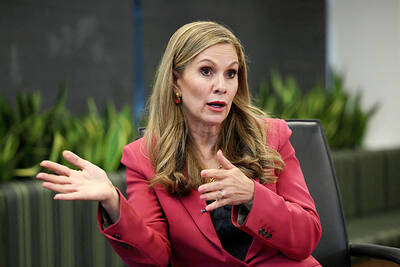
Australians were downloading virtual private networks (VPNs) in droves, while one of the world’s largest porn distributors said it was blocking users from its platforms as the country yesterday rolled out sweeping online age restriction. Australia in December became the first country to impose a nationwide ban on teenagers using social media. A separate law now requires artificial intelligence (AI)-powered chatbot services to keep certain content — including pornography, extreme violence and self-harm and eating disorder material — from minors or face fines of up to A$49.5 million (US$34.6 million). The country also joined Britain, France and dozens of US states requiring
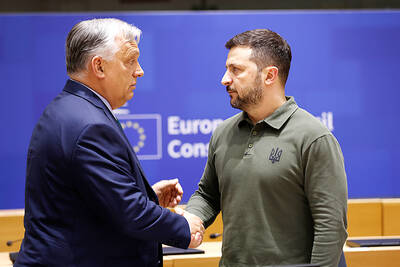
Hungarian authorities temporarily detained seven Ukrainian citizens and seized two armored cars carrying tens of millions of euros in cash across Hungary on suspicion of money laundering, officials said on Friday. The Ukrainians were released on Friday, following their detention on Thursday, but Hungarian officials held onto the cash, prompting Ukraine to accuse Hungary’s Russia-friendly government of illegally seizing the money. “We will not tolerate this state banditism,” Ukrainian Minister of Foreign Affairs Andrii Sybiha said. The seven detained Ukrainians were employees of the Ukrainian state-owned Oschadbank, who were traveling in the two armored cars that were carrying the money between Austria and
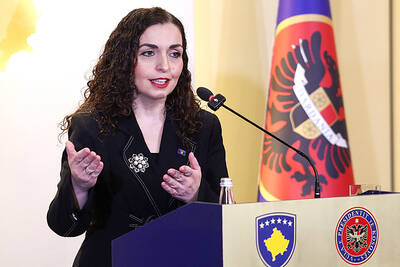
Kosovar President Vjosa Osmani on Friday after dissolving the Kosovar parliament said a snap election should be held as soon as possible to avoid another prolonged political crisis in the Balkan country at a time of global turmoil. Osmani said it is important for Kosovo to wrap up the upcoming election process and form functional institutions for political stability as the war rages in the Middle East. “Precisely because the geopolitical situation is that complex, it is important to finish this electoral process which is coming up,” she said. “It is very hard now to imagine what will happen next.” Kosovo, which declared

MORE BANS: Australia last year required sites to remove accounts held by under-16s, with a few countries pushing for similar action at an EU level and India considering its own ban Indonesia on Friday said it would ban social media access for children under 16, citing threats from online pornography, cyberbullying, online fraud and Internet addiction. “Accounts belonging to children under 16 on high-risk platforms will start to be deactivated, beginning with YouTube, TikTok, Facebook, Instagram, Threads, X, Bigo Live and Roblox,” Indonesian Minister of Communications and Digital Meutya Hafid said. “The government is stepping in so that parents no longer have to fight alone against the giants of the algorithm. Implementation will begin on March 28, 2026,” she said. The social media ban would be introduced in stages “until all platforms fulfill their


 RSS
RSS