


Philippine President Gloria Arroyo was defiant yesterday in the face of harsh US criticism of the recall of Philippine troops from Iraq to save a hostage's life, as the freed man arrived in his impoverished hometown to a hero's welcome.
The US envoy to Manila, Francis Ricciardone, was meanwhile en route to Washington to explain domestic pressures that led to Arroyo's decision to pull out the Philippines' 51-member contingent of troops earlier than scheduled.
US Secretary of State Colin Powell on Thursday added to previous US criticism of the troop withdrawal, which was completed on Monday -- a month ahead of schedule, saying that "in effect the kidnappers were rewarded for kidnapping."

PHOTO: EPA
"We were very disappointed in the actions of the Philippine government," he said. "I'm pleased that the Filipino gentleman was returned home safely, but I think a very high price was paid for the policy position that the Philippine government took."
Arroyo said she did not regret her decision to recall the country's small contingent to serve national interest by saving kidnapped truck driver Angelo de la Cruz.
While denying a "break in strategic partnership" with the US, Arroyo said her government had to protect the millions of Filipino workers abroad.
"I trust that our allies will come to understand that the Philippines is in a special circumstance unlike the US, Australia, Bulgaria and other countries," Arroyo said, referring to other countries that have troops in Iraq.
"And as Angelo comes home, I am not about to bare a bleeding heart to defend my position," Arroyo said during a major policy speech. "It won't take more than three lines to summarize my case, and let me say them."
"One, I take responsibility. Two, I make no apologies. Three, I stuck to my oath," she said.
Arroyo had vowed to save de la Cruz, who was seized while driving a truck on July 4. The Iraqi militants who captured him had threatened to behead him if the Philippines did not withdraw its troops.
Analysts said she was afraid of angering the estimated 7 million Filipinos working abroad if she let de la Cruz die. These workers are a formidable constituency, whose billions of dollars in remittances keep the economy afloat.
De la Cruz arrived back in the Philippines on Thursday and yesterday traveled home to his village of Buenavista, north of Manila.
Thousands milled the streets to greet him as marching bands preceded the entry of the van carrying him and his family. Crowds mobbed the vehicle, eager to get a glimpse of the figure that Arroyo dubbed "a Filipino everyman."
"I want to thank President Arroyo and our government," de la Cruz told the crowd. "Our president gave first priority to saving my life. I won't forget that."
He was to join Arroyo later yesterday for a thanksgiving mass.
The US envoy to Manila traveled to Washington on Thursday for talks with officials that would include the troop withdrawal, US charge d'affaires Joseph Mussomeli said.
The issue was not the life of one man or the war in Iraq, he said. Rather, it was "that the Philippines is seen as taking orders from terrorists" to save a hostage, Mussomeli said.
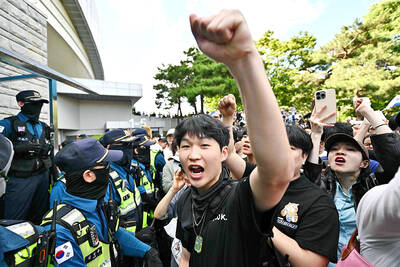
‘ABSURD MISTAKE’: The election commission said that there had been a failure to anticipate turnout after 14 polling stations ran short of ballot papers South Korean riot police yesterday cleared protesters from a Seoul polling station after a 35-hour blockade sparked by a shortage of ballot papers during local elections earlier this week. Wednesday’s election was the first nationwide vote since South Korean President Lee Jae-myung took office following the ouster of Yoon Suk-yeol over his short-lived martial law declaration. Lee’s ruling Democratic Party swept most races, but failed to flip the crucial Seoul mayoral seat. The South Korean National Election Commission apologized, blaming a failure to anticipate turnout after 14 polling stations in Seoul ran short of ballot papers. Some polling stations stayed open until 10pm to

France experienced its hottest spring on record, the French weather service said on Tuesday, after an exceptional early heat wave that also broke highs for the season in England and Wales. Meteo-France said the average nationwide temperature over March to May was 13.8°C — about 1.7°C above the norm, and surpassing records set in 2011 and 2020. “The warmest spring since records began in 1900,” it said in a bulletin. All three months were warmer than average, but the onset of an “unprecedented heatwave” late last month pushed the mercury to highs typically seen at the height of the summer. “Our country had never
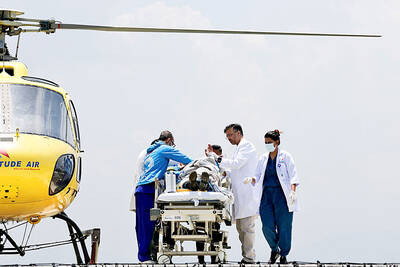
A Sherpa guide was found crawling to base camp on Mount Everest a week after he went missing and was reunited with his family, who had given up hope he would return. Dawa Sherpa was last seen on Friday last week descending the mountain, but he did not reach base camp even though his client did. The pair were among the last climbers on the mountain as the climbing season came to an end and the route was dismantled. Dawa was located by a cleaning crew on Thursday morning as he was crawling down the snowy slopes around the Khumbu Icefall, just above
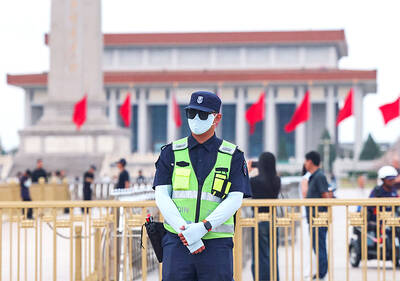
Chinese authorities are snuffing out any remembrance of the deadly 1989 military crackdown on student-led pro-democracy protests in Tiananmen Square, which happened 37 years ago yesterday, in a further tightening of a years-long campaign to erase what happened from public memory. Police told relatives of the victims they would not be allowed to visit a cemetery in Beijing on the anniversary of the crackdown, a person with knowledge of the matter said. Relatives of the victims visited the cemetery on the anniversary for more than 30 years to read memorial statements with police keeping watch, Amnesty International said. Hundreds of people,


 RSS
RSS