


Palestinian Prime Minister Ahmed Qureia told Palestinian President Yasser Arafat on Tuesday that he was determined to quit unless the Palestinian leader yielded more power to the Cabinet, leaving the government embroiled in crisis.
The confrontation between Arafat and Qureia centers on whether Arafat is willing to cede any of his absolute authority. Israel considers Arafat's stranglehold on Palestinian affairs as an obstacle to peace in the Middle East.
At the end of an emergency meeting in Arafat's ruined West Bank headquarters, the two men deadlocked over who would have ultimate control over the security services and whether Qureia would stay in his job.
"President Arafat insisted in rejecting the resignation. Abu Ala insists on his resignation. The crisis goes on," said Saeb Erekat, a senior Cabinet minister, using Qureia's common name.
Other ministers said Qureia had ended the meeting by telling Arafat, "My resignation stands. I consider my government to be a caretaker government."
Late on Tuesday, gunmen shot and wounded lawmaker Nabil Amr, a vocal critic of Arafat. The shooting took place outside Amr's Ramallah home, Palestinians said. He was not seriously hurt. Though the assailants were unknown, some Palestinians felt the shooting was a message to stop criticizing Arafat.
The crisis has been brewing since late last week, when Qureia submitted his resignation over his frustration with the breakdown of authority in Gaza and discontent over the disorder in the security services.
If he resigns and the government falls after less than a year in office, it would be a setback for Arafat, who wants to show some movement toward establishing democratic institutions in the Palestinian territories.
The first prime minister of the Palestinian government, Mohammed Abbas, resigned after just four months in office because he found himself without any effective power. Now Qureia is making similar complaints.
Israel and the US refuse to deal with Arafat, and Israeli Prime Minister Ariel Sharon says the lack of a Palestinian negotiating partner was one reason behind his decision to unilaterally withdraw from the Gaza Strip next year. He has not met Qureia since the latter became prime minister, though the two met before that.
Israel has confined Arafat in his Ramallah office building for more than two years. Most of the other buildings in the city block-sized compound were destroyed in various Israeli attacks and raids.
Most Palestinians consider Arafat their main symbol of struggle and independence, though many disagree with his latest moves.
Qureia "told Arafat that his government must have real authority, especially over the security branches, in order for it to be effective," said Qadoura Fares, a minister without portfolio.
Qureia left the meeting through a rear door of Arafat's headquarters to avoid reporters, leaving it unclear how long he would remain in the post or what his next move would be.
"Arafat decided to reject Abu Ala's resignation and renewed his confidence in him," Arafat aide Nabil Abu Rdeneh said, referring to Qureia.
"Accordingly, the resignation is officially rejected," he said.
Tension has been building in Gaza since December, when Sharon pledged to withdraw the army and vacate Jewish settlements without coordination with Palestinian authorities -- leaving a Palestinian power vacuum and setting competing forces against each other.
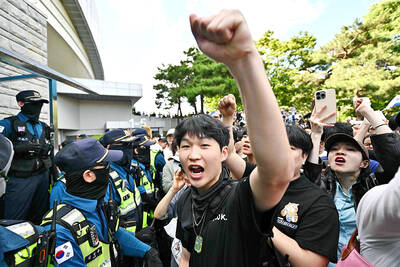
‘ABSURD MISTAKE’: The election commission said that there had been a failure to anticipate turnout after 14 polling stations ran short of ballot papers South Korean riot police yesterday cleared protesters from a Seoul polling station after a 35-hour blockade sparked by a shortage of ballot papers during local elections earlier this week. Wednesday’s election was the first nationwide vote since South Korean President Lee Jae-myung took office following the ouster of Yoon Suk-yeol over his short-lived martial law declaration. Lee’s ruling Democratic Party swept most races, but failed to flip the crucial Seoul mayoral seat. The South Korean National Election Commission apologized, blaming a failure to anticipate turnout after 14 polling stations in Seoul ran short of ballot papers. Some polling stations stayed open until 10pm to

France experienced its hottest spring on record, the French weather service said on Tuesday, after an exceptional early heat wave that also broke highs for the season in England and Wales. Meteo-France said the average nationwide temperature over March to May was 13.8°C — about 1.7°C above the norm, and surpassing records set in 2011 and 2020. “The warmest spring since records began in 1900,” it said in a bulletin. All three months were warmer than average, but the onset of an “unprecedented heatwave” late last month pushed the mercury to highs typically seen at the height of the summer. “Our country had never
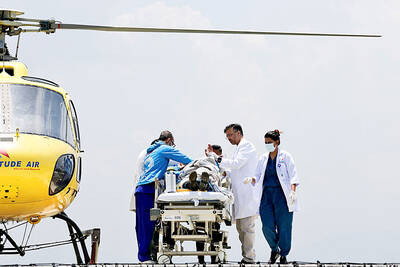
A Sherpa guide was found crawling to base camp on Mount Everest a week after he went missing and was reunited with his family, who had given up hope he would return. Dawa Sherpa was last seen on Friday last week descending the mountain, but he did not reach base camp even though his client did. The pair were among the last climbers on the mountain as the climbing season came to an end and the route was dismantled. Dawa was located by a cleaning crew on Thursday morning as he was crawling down the snowy slopes around the Khumbu Icefall, just above
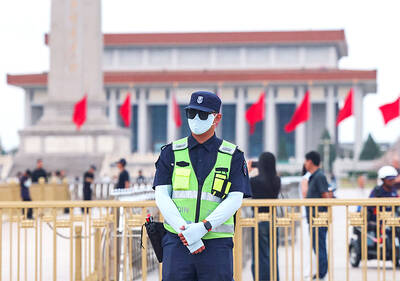
Chinese authorities are snuffing out any remembrance of the deadly 1989 military crackdown on student-led pro-democracy protests in Tiananmen Square, which happened 37 years ago yesterday, in a further tightening of a years-long campaign to erase what happened from public memory. Police told relatives of the victims they would not be allowed to visit a cemetery in Beijing on the anniversary of the crackdown, a person with knowledge of the matter said. Relatives of the victims visited the cemetery on the anniversary for more than 30 years to read memorial statements with police keeping watch, Amnesty International said. Hundreds of people,


 RSS
RSS