


President Ma Ying-jeou (馬英九) yesterday promised to uncover the truth behind the 228 Incident and said the government should apologize for its past mistakes to eliminate hatred in society.
“I believe we should face the 228 Incident and history, and focus discussions on the issue itself. We should eliminate the hatred and feel sympathy for each other,” Ma said yesterday when attending a symposium at Academia Sinica.
“The truth should be made public, regardless of the controversy it may cause. [Revealing the truth] gives families of the victims the justice they deserve and is what a responsible government should do,” Ma said.
Ma said the government began its efforts to acknowledge the mistakes and offer public apologies over the incident under former president Lee Teng-hui’s (李登輝) administration, and he expected the government’s acknowledgment of its mistakes to bring social reconciliation.
Several family members of those murdered, however, erupted into a war of words shortly after Ma left.
Lin Li-tsai (林黎彩), a 228 victim family member, condemned the organizers for refusing to let her inside the symposium during Ma’s speech. She also urged the Chinese Nationalist Party (KMT) to return its party assets to the public.
Lin’s remarks were not welcomed by other participants, who urged her not to politicize the issue.
Also yesterday, Ma reaffirmed that the government would continue to support the operations of the 228 Memorial Foundation.
Last month, the legislature passed a motion proposed by KMT Legislator Hung Hsiu-chu (洪秀柱) to cancel the NT$300 million (US$8.6 million) budget for the 228 Memorial Foundation, saying that the Act for Handling and Compensation for the 228 Incident (二二八事件賠償及處理條例), which created the foundation, was a temporary law and should have been abolished seven years after it’s enactment in 1995.
Hung’s move met with strong criticism from pan-green politicians and 228 victims’ families.
“The 228 Memorial Foundation is not only about handing out compensation — it is also researching the incident’s history and educating people about it,” Ma said at a ceremony to inaugurate a special exhibition at the Taipei 228 Memorial Museum. “Therefore, the foundation’s operations should continue.”
“As most of the survivors of the 228 Incident have passed away, it’s time for us to find out the facts about the 228 Incident without the involvement of personal emotions,” Ma said.
Ma also said that he would keep his campaign promise to establish a national 228 memorial museum.
“But this should be done only after a law is created to provide a legal basis for the museum’s budget,” he said.
SEE EDITORIAL ON PAGE 8
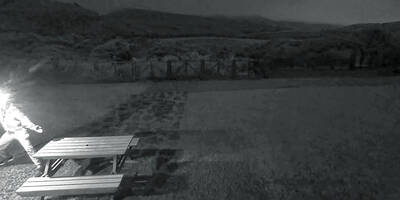
Yangmingshan National Park authorities yesterday urged visitors to respect public spaces and obey the law after a couple was caught on a camera livestream having sex at the park’s Qingtiangang (擎天崗) earlier in the day. The Shilin Police Precinct in Taipei said it has identified a suspect and his vehicle registration number, and would summon him for questioning. The case would be handled in accordance with public indecency charges, it added. The couple entered the park at about 11pm on Thursday and began fooling around by 1am yesterday, the police said, adding that the two were unaware of the park’s all-day live
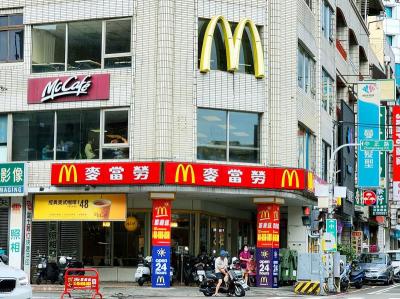
Fast food chain McDonald's is to raise prices by up to NT$5 on some products at its restaurants across Taiwan, starting on Wednesday next week, the company announced today. The prices of all extra value meals and sharing boxes are to increase by NT$5, while breakfast combos and creamy corn soup would go up by NT$3, the company said in a statement. The price of the main items of those meals, if ordered individually, would remain the same. Meanwhile, the price of a medium-sized lemon iced tea and hot cappuccino would rise by NT$3, extra dipping sauces for chicken nuggets would go up
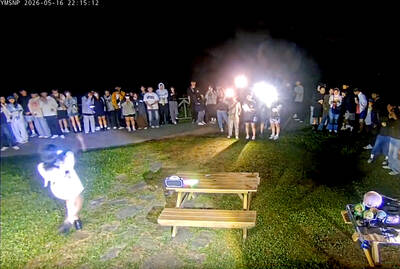
Yangmingshan National Park’s Qingtiangang (擎天崗) nature area has gone viral after a park livestream camera observed a couple in the throes of intimate congress, which was broadcast live on YouTube, drawing large late-night crowds and sparking a backlash over noise, bright lights and disruption to wildlife habitat. The area’s livestream footage appeared to show a couple engaging in sexual activity on a picnic table in the park on Friday last week, with the uncensored footage streamed publicly online. The footage quickly spread across social media, prompting a tide of visitors to travel to the site to “check in” and recreate the

Minister of Digital Affairs Lin Yi-ching (林宜敬) yesterday cited regulatory issues and national security concerns as an expert said that Taiwan is among the few Asian regions without Starlink. Lin made the remarks on Facebook after funP Innovation Group chief executive officer Nathan Chiu (邱繼弘) on Friday said Taiwan and four other countries in Asia — China, North Korea, Afghanistan and Syria — have no access to Starlink. Starlink has become available in 166 countries worldwide, including Ukraine, Malaysia, the Philippines and Vietnam, in the six years since it became commercial, he said. While China and North Korea block Starlink, Syria is not


 RSS
RSS