


The Ministry of Foreign Affairs (MOFA) yesterday voiced dissatisfaction with the Comprehensive and Progressive Agreement for Trans- Pacific Partnership (CPTPP), whose latest meeting, concluded earlier the same day, appeared not to address the country’s application.
In a statement, MOFA said the CPTPP commission had "once again failed to fairly process Taiwan’s application," attributing the inaction to the bloc’s "succumbing to political pressure," without elaborating.
Taiwan submitted its CPTPP application under the name "Separate Customs Territory of Taiwan, Penghu, Kinmen and Matsu" on Sept. 22, 2021 -- less than a week after China filed its bid.
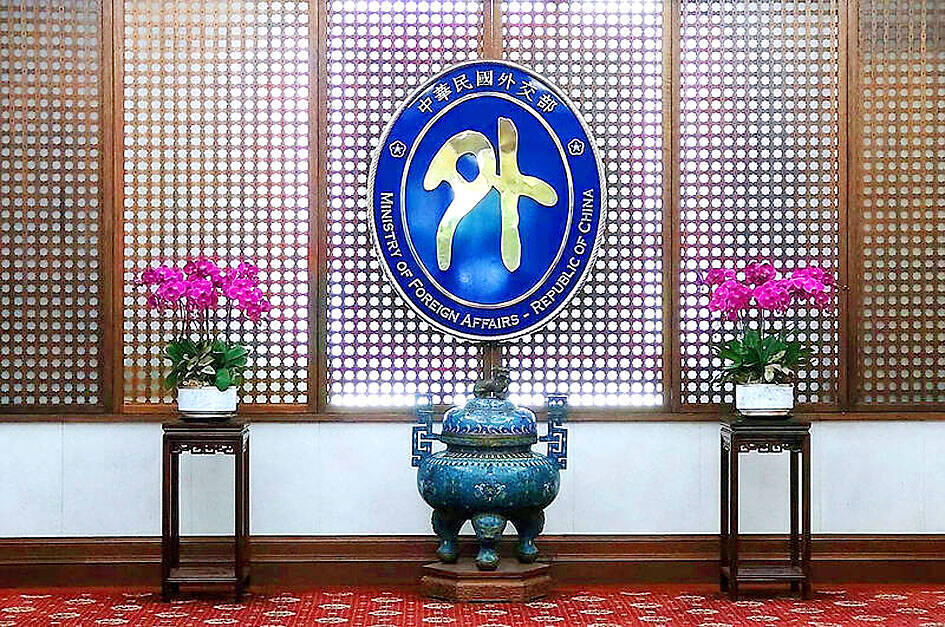
Photo: Yang Cheng-yu, Taipei Times
Beijing, which considers Taiwan part of its territory, has publicly opposed Taiwan’s membership, raising concerns among Taiwanese officials that a successful Chinese bid could sink Taiwan’s hopes of joining the CPTPP.
MOFA’s comments came after the CPTPP commission concluded its meeting in Melbourne, Australia, earlier yesterday, where member states agreed to start Uruguay’s accession process.
In a joint statement, the CPTPP members said they "have identified four aspirants who are in line with the Auckland Principles, namely Uruguay, the United Arab Emirates, the Philippines, and Indonesia."
"We have decided to commence an accession process with Uruguay, and will commence with the others in 2026, if appropriate," said the statement, which made no mention of Taiwan or China.
In its statement, MOFA said it would continue efforts to show CPTPP members that Taiwan meets the high standards required by the bloc, which currently has 12 members and represents approximately 15 percent of the global economy, and to secure their support for its membership.
The ministry also highlighted Taiwan’s commitment to align its trade practices and regulations with international standards and noted that the island has signed trade or investment agreements with multiple CPTPP members, including Singapore, New Zealand, and the United Kingdom.

ALIGNED THINKING: Taiwan and Japan have a mutual interest in trade, culture and engineering, and can work together for stability, Cho Jung-tai said Taiwan and Japan are two like-minded countries willing to work together to form a “safety barrier” in the Indo-Pacific region, Premier Cho Jung-tai (卓榮泰) yesterday said at the opening ceremony of the 35th Taiwan-Japan Modern Engineering and Technology Symposium in Taipei. Taiwan and Japan are close geographically and closer emotionally, he added. Citing the overflowing of a barrier lake in the Mataian River (馬太鞍溪) in September, Cho said the submersible water level sensors given by Japan during the disaster helped Taiwan monitor the lake’s water levels more accurately. Japan also provided a lot of vaccines early in the outbreak of the COVID-19 pandemic,

Kaohsiung Mayor Chen Chi-mai (陳其邁) on Monday announced light shows and themed traffic lights to welcome fans of South Korean pop group Twice to the port city. The group is to play Kaohsiung on Saturday as part of its “This Is For” world tour. It would be the group’s first performance in Taiwan since its debut 10 years ago. The all-female group consists of five South Koreans, three Japanese and Tainan’s Chou Tzu-yu (周子瑜), the first Taiwan-born and raised member of a South Korean girl group. To promote the group’s arrival, the city has been holding a series of events, including a pop-up

TEMPORAL/SPIRITUAL: Beijing’s claim that the next Buddhist leader must come from China is a heavy-handed political maneuver that will fall flat-faced, experts said China’s requirement that the Dalai Lama’s reincarnation to be born in China and approved by Beijing has drawn criticism, with experts at a forum in Taipei yesterday saying that if Beijing were to put forth its own Dalai Lama, the person would not be recognized by the Tibetan Buddhist community. The experts made a remarks at the two-day forum hosted by the Tibet Religious Foundation of His Holiness the Dalai Lama titled: “The Snow Land Forum: Finding Common Ground on Tibet.” China says it has the right to determine the Dalai Lama’s reincarnation, as it claims sovereignty over Tibet since ancient times,
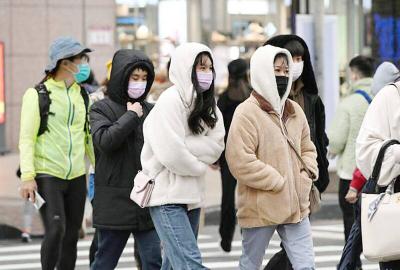
Temperatures in some parts of Taiwan are expected to fall sharply to lows of 15°C later this week as seasonal northeasterly winds strengthen, the Central Weather Administration (CWA) said today. It is to be the strongest cold wave to affect northern Taiwan this autumn, while Chiayi County in the southwest and some parts of central Taiwan are likely to also see lower temperatures due to radiational cooling, which occurs under conditions of clear skies, light winds and dry weather, the CWA said. Across Taiwan, temperatures are to fall gradually this week, dropping to 15°C to 16°C in the early hours of Wednesday


 RSS
RSS