


Two legislative committee meetings were paralyzed yesterday by Democratic Progressive Party (DPP) legislators who locked the doors to committee conference rooms to block three bills that would allow local schools to recruit students from China and recognize Chinese credentials.
Chinese Nationalist Party (KMT) legislators, staff at the legislature’s Conference Department and officials from the Ministry of Education (MOE) were unable to enter the room to the Education and Culture Committee at about 1:30pm.
Police officers stationed at the legislature attempted to open the door with a key and to push the door open, but their efforts were unsuccessful as DPP legislators had blocked the door from inside with tables and chairs.
DPP caucus whip Lee Chun-yee (李俊毅) told reporters by telephone that the DPP caucus was blocking the committee review to avoid physical conflict with KMT lawmakers.
“The bills would have a major impact on students and the nation as a whole, but the government has yet to propose any thorough plan on the matter. We had no choice but to resort to such a self-defense strategy,” Lee said. “Stopping them [KMT] from holding the meetings is the best approach ... the KMT scheduled the review without even negotiating with [the DPP] because the KMT holds the majority of seats in the legislature.”
KMT caucus secretary-general Yang Chiung-ying (楊瓊瓔) called the DPP’s approach “ridiculous,” adding that such a boycott undermined the dignity of the legislature.
Yang said KMT Legislator Huang Chih-hsiung (黃志雄), an Olympic taekwondo medalist, should knock down the door. The KMT retaliated by having its legislators guard the back door to the Education and Culture Committee conference room to block DPP legislators from going to the restroom.
Legislative Speaker Wang Jin-pyng (王金平) condemned the DPP for locking the doors, describing the strategy as “illegal” and “inappropriate.”
“At the very least their move constitutes interference with public functions, seriously impeding the legislative sessions and setting a very bad example,” Wang said.
The face-off lasted approximately four-and-a-half hours, with DPP lawmakers concluding their boycott at 5:56pm after the committee sessions ended.
The DPP’s move came as the legislature’s Internal Administration Committee and the Education and Culture Committee were scheduled to review proposed amendments to the University Act (大學法), the Junior College Act (專科學校法) and the Act Governing the Relations Between the Peoples of the Taiwan Area and the Mainland Area (兩岸人民關係條例).
DPP legislators have accused the KMT of seeking to divide the DPP, which only holds 27 seats, by scheduling the reviews in different committee meetings on the same day.
Earlier yesterday, DPP Legislator Kuan Bi-ling (管碧玲) accused the MOE of trying to create a “one-China market in education” by pushing through the bills. Minister of Education Cheng Jei-cheng (鄭瑞城), however, said the impact on Taiwanese students of allowing Chinese students to enroll in Taiwanese schools would be more positive than negative.
Cheng said passage of the bills would also guarantee the public’s right to choose where to attend school. If the bill were passed, graduate students from China would be able to attend school in Taiwan starting in February next year, while undergraduate students would follow suit in the fall next year, Cheng said.
Meanwhile, the Internal Administration Committee meeting was forced to adjourn in the morning when DPP legislators took over the speaker’s podium and prevented the meeting from proceeding.
DPP lawmakers tried to stop the meeting by demanding that Wu hold a vote to postpone the meeting. Wu, however, waited more than 45 minutes until more KMT lawmakers had arrived before holding the vote. The DPP was outvoted 8:7.
“This is a conspiracy. Wu held off the vote until the KMT was able to mobilize more people. This is anti-democracy. This is dictatorship,” DPP Legislator Lin Shu-fen (林淑芬) said.
The meeting continued, but the standoff between the DPP and the KMT lasted more than three hours before the chairman, KMT lawmaker Wu Yu-sheng (吳育生), announced the meeting was adjourned until 2:30pm.
The committee failed to reconvene in the afternoon and Wu canceled the meeting at 5:30pm.
This was the first time a committee meeting had ended like this, Wu said.
KMT Legislator Yang Chun-ying (楊瓊瓔) panned the DPP for “sabotaging” the democratic system by holding the meeting hostage, while Wu said the DPP’s refusal to leave the podium was “violence by the minority.”
KMT lawmakers yesterday lashed out at the DPP’s behavior at the legislature, calling them “childish” and “barbaric.”
Saying that the DPP was no different from criminals or a three-year-old, Wu said the DPP set a bad example for the public with its “unreasonable” and “emotional” actions and called on the public to spurn it.
Mainland Affair Council Chairwoman Lai Shin-yuan (賴幸媛), who came to the committee at about 5:20pm, said outside the room that the government would ensure that the rights of Taiwanese students were well protected and would only gradually allow Chinese students to study here, beginning with between 1,000 and 2,000 annually.
Vice Minister of Education Lu Mu-lin (呂木琳) said the government would not allow Chinese students to take up the quota reserved for Taiwanese students, steal local students’ jobs, or take national examinations to obtain professional licenses.
DPP lawmakers, who came out at 5:50pm, held banners reading “oppose recognition of Chinese educational credentials” and shouted the slogan “oppose allowing Chinese students to study here.”
DPP caucus whip Ker Chien-ming (柯建銘) told reporters that President Ma Ying-jeou (馬英九) would complete his plans for ultimate unification with China if the legislature passed the bills this week as planned.
“I hope Ma and the KMT administration do not doubt the resolve of DPP or choose to challenge it,” he said. “We will fight to the death to protect Taiwan’s sovereignty and right to survive.”
DPP Legislator Wong Chin-chu (翁金珠) said the issue should be scrutinized in public hearings held nationwide before being submitted for legislative review.
“Students and teachers would be the most affected if Chinese were to come to Taiwan. But until now, they were never given a chance to voice their opinions,” she said.
The KMT argued that opening Taiwan to Chinese students would boost enrollment and stimulate competitiveness.
The proposed amendment says Chinese students would not be given any preferential treatment, be eligible for scholarships or be allowed to hold part-time jobs while at school. Chinese students would be prohibited from working in Taiwan both in the private and public sectors and must leave the country upon graduation.
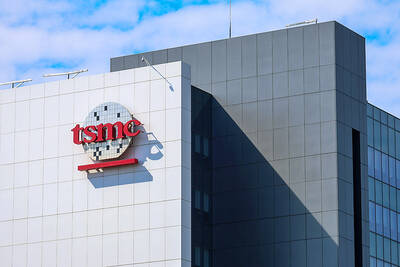
Taiwan Semiconductor Manufacturing Co (TSMC, 台積電), the world’s largest foundry service provider, yesterday said that global semiconductor revenue is projected to hit US$1.5 trillion in 2030, after the figure exceeds US$1 trillion this year, as artificial intelligence (AI) demand boosts consumption of token and compute power. “We are still at the beginning of the AI revolution, but we already see a significant impact across the whole semiconductor ecosystem,” TSMC deputy cochief operating officer Kevin Zhang (張曉強) said at the company’s annual technology symposium in Hsinchu City. “It is fair to say that in the past decade, smartphones and other mobile devices were
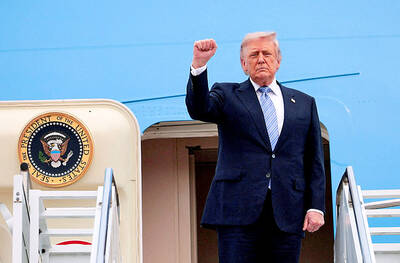
US-CHINA SUMMIT: MOFA welcomed US reassurance of no change in its Taiwan policy; Trump said he did not comment when Xi talked of opposing independence US President Donald Trump yesterday said he has not made a decision on whether to move forward with a major arms package for Taiwan after hearing concerns about it from Chinese President Xi Jinping (習近平). Trump’s comments on Taiwan came as he flew back to Washington after wrapping up critical talks in which both leaders said important progress was made in stabilizing US-China relations even as deep differences persist between the world’s two biggest powers on Iran and Taiwan. “I will make a determination,” Trump said, adding: “I’ll be making decisions. But, you know, I think the last thing we need right

TAIWAN ISSUE: US treasury secretary Scott Bessent said on the first day of meetings that ‘it wouldn’t be a US-China summit without the Taiwan issue coming up’ There were no surprises on the first day of the summit between US President Donald Trump and Chinese President Xi Jinping (習近平), the Mainland Affairs Council (MAC) said yesterday, as the government reiterated that cross-strait stability is crucial to the Asia-Pacific region, as well as the world. As the two presidents met for a highly anticipated summit yesterday, Chinese state media reported that Xi warned Trump that missteps regarding Taiwan could push their two countries into “conflict.” Trump arrived in China with accolades for his host, calling Xi a “great leader” and “friend,” and extending an invitation to visit the White House
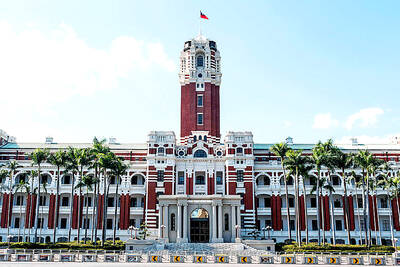
SECURITY: Taipei presses the US for arms supplies, saying the arms sales are not only a reflection of the US security commitment to Taiwan but also serve as a mutual deterrent against regional threats Taiwan is committed to preserving the cross-strait “status quo” and contributing to regional peace and stability, the Presidential Office said yesterday. “It is an undeniable fact that the Republic of China is a sovereign and independent democratic nation,” Presidential Office spokeswoman Karen Kuo (郭雅慧) reiterated, adding that Beijing has no right to claim sovereignty over Taiwan. The statements came after US President Donald Trump warned against Taiwanese independence. Trump wrapped up a state visit to Beijing on Friday, during which Chinese President Xi Jinping (習近平) had pressed him not to support Taiwan. Taiwan depends heavily on US security backing to deter China from carrying


 RSS
RSS