


Ukraine's parliament passed a no-confidence vote yesterday, ousting Prime Minister Victor Yanukovych's government, as the declared winner of the disputed election refused to step down from his post.
Opposition leader Viktor Yushchenko, savoring the momentum generated by mass street protests and Western pressure on outgoing President Leonid Kuchma's government, told thousands of his shivering supporters massed in Kiev's Independence Square on Wednesday night that victory was near.
International mediators brought the two candidates and Kuchma together on Wednesday for compromise talks and won agreement from all sides that they would respect the court's ruling.
The negotiations -- shepherded by EU foreign policy chief Javier Solana, Polish President Aleksander Kwasniewski and other European officials -- came after Ukraine's parliament passed a no-confidence measure in Yanukovych's government with 229 votes, just three more than necessary in the 450-seat parliament.
A no-confidence vote automatically triggers the government's resignation, which the president must accept -- though he can allow it to continue to exercise its powers for up to 60 days until a new Cabinet is formed.
However, many experts questioned the constitutionality of the vote, and Yanukovych called it a "political move that contradicted the law." He refused to step down.
Yushchenko urged the crowds to stay out in the streets until a revote of the Nov. 21 runoff with Kremlin-backed Prime Minister Viktor Yanukovych is called and a date set. Yushchenko, who claims his victory was stolen by government-backed fraud, suggested such a vote could be held as early as Dec. 19.
The Supreme Court was expected to rule yesterdayday on the appeal by Yushchenko's campaign to invalidate the runoff result, based on claims of widespread violations across Yanukovych's eastern and southern strongholds. The runoff has been discredited by both sides, with Yanukovych -- the officially declared winner -- submitting his own appeal against the results, focusing on pro-Yushchenko western provinces and the capital.
Yanukovych's appeal has not yet been taken up for consideration, but if the court rules in Yushchenko's favor and declares the vote invalid, considering Yanukovych's appeal would be pointless.
The Supreme Court yesterdayy rejected Yanukovych's objections to parts of the opposition's appeal, leaving open the possibility that the judges might name Yushchenko the president based on first-round results, which Yushchenko won. The court has not yet started deliberating on the merits of the appeal itself.
While a new election in this bitterly divided nation of 48 million is looking increasingly possible, what remains unclear is whether Ukraine will stage a repeat of the runoff, as Yushchenko is demanding -- or start the election from scratch, as Kuchma proposed.
Kuchma has pushed for a completely new election in apparent hopes of fielding a new, more popular successor as his government scrambles to stay in power with his 10 years in office running out.
Ukrainian media have frequently tipped Yanukovych's former campaign chief, Serhiy Tyhypko, as the most likely choice. Tyhypko, a young and charismatic politician, might fare better against the reform- and Western-oriented Yushchenko than Yanukovych did.
Yushchenko, who has led the opposition for years, firmly rejected Kuchma's proposal and said he would accept only a repeat runoff.
But in a victory for the government, Yushchenko agreed during the compromise talks to quickly call on his supporters to lift their siege of official buildings. The weeklong blockade has paralyzed government business and prevented Yanukovych and Kuchma from entering their main offices.
As of yesterday morning, however, dozens of Yushchenko's supporters stood shoulder-to-shoulder, blocking entrances to the Cabinet complex. Giant speakers blasted rock music, and the crowd kept growing.
"We aren't letting anyone through. Why should we? We are so close to victory, why surrender now?" Natalya Nechipurenko said.
Solana told reporters that changes in the law would be required to stage a new vote, and suggested the process could take a month.
The two candidates signed a deal setting up a group of lawyers to work out proposals for the "completion of the election," a reference to drafting legislation.
Yushchenko, Yanukovych and other participants in the talks emphasized the need to prevent any actions that could split the country.
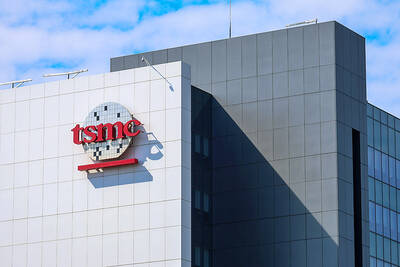
Taiwan Semiconductor Manufacturing Co (TSMC, 台積電), the world’s largest foundry service provider, yesterday said that global semiconductor revenue is projected to hit US$1.5 trillion in 2030, after the figure exceeds US$1 trillion this year, as artificial intelligence (AI) demand boosts consumption of token and compute power. “We are still at the beginning of the AI revolution, but we already see a significant impact across the whole semiconductor ecosystem,” TSMC deputy cochief operating officer Kevin Zhang (張曉強) said at the company’s annual technology symposium in Hsinchu City. “It is fair to say that in the past decade, smartphones and other mobile devices were
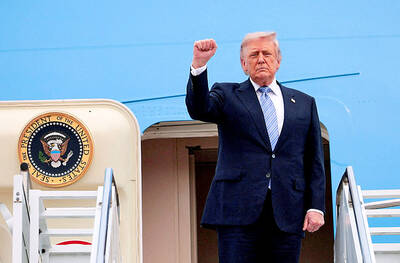
US-CHINA SUMMIT: MOFA welcomed US reassurance of no change in its Taiwan policy; Trump said he did not comment when Xi talked of opposing independence US President Donald Trump yesterday said he has not made a decision on whether to move forward with a major arms package for Taiwan after hearing concerns about it from Chinese President Xi Jinping (習近平). Trump’s comments on Taiwan came as he flew back to Washington after wrapping up critical talks in which both leaders said important progress was made in stabilizing US-China relations even as deep differences persist between the world’s two biggest powers on Iran and Taiwan. “I will make a determination,” Trump said, adding: “I’ll be making decisions. But, you know, I think the last thing we need right
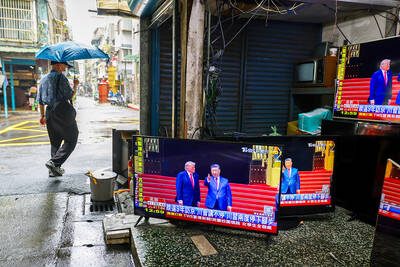
TAIWAN ISSUE: US treasury secretary Scott Bessent said on the first day of meetings that ‘it wouldn’t be a US-China summit without the Taiwan issue coming up’ There were no surprises on the first day of the summit between US President Donald Trump and Chinese President Xi Jinping (習近平), the Mainland Affairs Council (MAC) said yesterday, as the government reiterated that cross-strait stability is crucial to the Asia-Pacific region, as well as the world. As the two presidents met for a highly anticipated summit yesterday, Chinese state media reported that Xi warned Trump that missteps regarding Taiwan could push their two countries into “conflict.” Trump arrived in China with accolades for his host, calling Xi a “great leader” and “friend,” and extending an invitation to visit the White House
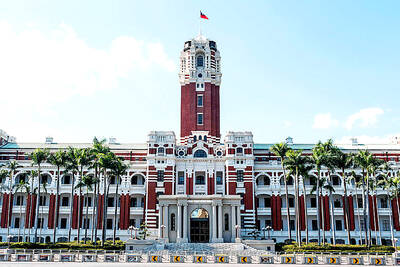
SECURITY: Taipei presses the US for arms supplies, saying the arms sales are not only a reflection of the US security commitment to Taiwan but also serve as a mutual deterrent against regional threats Taiwan is committed to preserving the cross-strait “status quo” and contributing to regional peace and stability, the Presidential Office said yesterday. “It is an undeniable fact that the Republic of China is a sovereign and independent democratic nation,” Presidential Office spokeswoman Karen Kuo (郭雅慧) reiterated, adding that Beijing has no right to claim sovereignty over Taiwan. The statements came after US President Donald Trump warned against Taiwanese independence. Trump wrapped up a state visit to Beijing on Friday, during which Chinese President Xi Jinping (習近平) had pressed him not to support Taiwan. Taiwan depends heavily on US security backing to deter China from carrying


 RSS
RSS