


Liou Jer-jyh’s (劉哲志) solo show, Brightness Comes from the Orient (光.來自東方), is currently on view at Taichung’s Huludun Cultural Center. The title of the exhibition is inspired by the sun’s rising in the east. In his paintings, Liou combines distinctively Eastern brushwork reminiscent of calligraphy and ink wash paintings with traditionally Western mediums, such as oil and watercolor, to form a new blend of aesthetics. Finer lines are juxtaposed with broad strokes or washes of color to allow viewers to feel relaxed while not losing the emotional tension within the works.
■ Huludun Cultural Center 2F Gallery II (葫蘆墩文化中心2樓展覽室II), 782 Yuanhuan E Rd, Taichung City (台中市圓環東路782號), tel: (04) 2526-0136. Open Tuesdays to Sundays from 9am to 5:30pm
■ Until Dec. 1
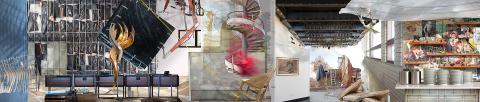
Photo courtesy of Bluerider Art
An Awakening Everyday Life: 20th Anniversary of Jiji Earthquake (甦醒的日常:九二一地震20週年展) looks back at more than 40 reconstruction efforts launched in the aftermath of the 7.6-magnitude 921 Earthquake. Hosted by Tainan’s Cultural Affairs Bureau and curated by Huang Sun-quan (黃孫權), the exhibition features, among other works, photography by Lee Kuo-min (李國民) and two documentaries: 2006’s An Encounter with Chungliao (在中寮相遇) by director Huang Shu-mei (黃淑梅) and 2005’s Three Fork Village (三叉坑) by director Chen Liang-feng (陳亮丰). An opening reception will be held at the Sinying Cultural Center at 1:30pm tomorrow, followed by a forum with the curator, Sediq Presbyterian pastor Watan Diro and Taiwan Indigenous Dinavun Development Association director Lin Chien-chih (林建治) from 2pm to 4pm.
■ Sinying Cultural Center (新營文化中心), 23 Jhongjheng Rd, Tainan City (台南市中正路23號), tel: (06) 6321-047. Open Wednesdays to Sundays from 9am to 5pm
■ Until Nov. 17
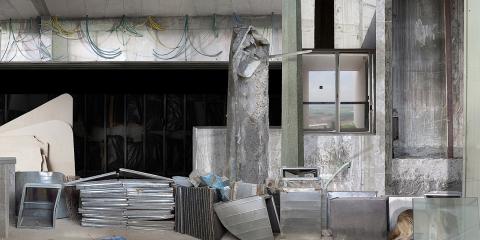
Photo courtesy of Bluerider Art
Sun Yat-sen Memorial Hall is exhibiting the works of the 38 recipients of this year’s Chung-Shan Youth Art Awards. The awards, given to artists aged 20 to 45, are divided into three categories: ink wash painting, calligraphy and oil painting. This year, organizers received 135 submissions. The jury included Lo Cheng-hsien (羅振賢), Edward Yeh (葉國新) and Su Hsien-fa (蘇憲法), among others. Wu Hung-chun (吳弘鈞), Wu Chi-lin (吳啟林) and Tsai Han-ting (蔡函庭) were each selected for a Chung-Shan Award, the top prize in each category. For the first time in the awards’ history, the winning works will also be displayed outside Taipei. After its Taipei run, the exhibition is scheduled to travel to the Tainan Art Museum before making stops at Taichung’s Dadun Cultural Center and Kinmen County.
■ Sun Yat-sen Memorial Hall Bo-ai Gallery (國立國父紀念館博愛藝廊), 505 Renai Rd Sec 4, Taipei City (台北市仁愛路四段505號), tel: (02) 2758-8008. Open daily from 9am to 6pm
■ Starts Monday; until Nov. 20
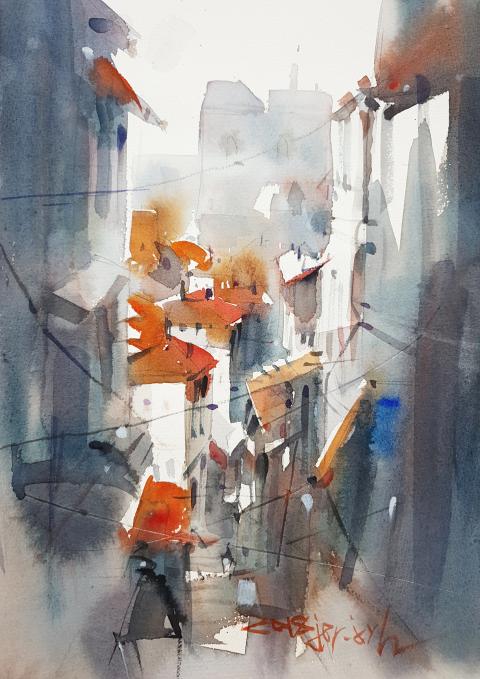
Photo courtesy of Huludun Cultural Center
Bluerider Art is presenting Regarding Silences , a series of photographs from 2008 to this year by the Tel Aviv-based artist Ilit Azoulay. Azoulay captures a building in the northern Israeli town of Zikhron Ya’akov that was used by the Israeli army in 1974 to interrogate soldiers who had been taken prisoners in Egypt during the Yom Kippur War the previous year. As part of their interrogation, some of the former Israeli prisoners of war were forced to take drugs that caused them to relive the trauma they experienced, Azoulay says. Acting as archaeologist, archivist and artist, she records and pieces together the wreckage. For the series, she and her team also interviewed several of the veterans. Ironically, the building was later turned into a luxury hotel. Regarding Silences is, along with Implicit Manifestation (2013-2014) and No Thing Dies (2014-2017), one of three major projects in Azoulay’s career. The artist, whose works can be found in the collections of the Guggenheim Museum, the Pompidou Center and the Israel Museum, among others, will be speaking about the projects during an artist talk, Behind All Projects, at the gallery from 2:20pm to 3:30pm tomorrow when the show opens. Registration is required via: www.accupass.com/go/ilitazoulay-talk.
■ Bluerider Art Ren-Ai Gallery (藍騎士藝術空間仁愛館), 10F, 25-1 Renai Rd Sec 4, Taipei City, (台北市仁愛路四段25-1號10樓), tel: (02) 2752-2238. Open Tuesdays to Saturdays from 9am to 6pm
■ Starts tomorrow; until Dec. 28
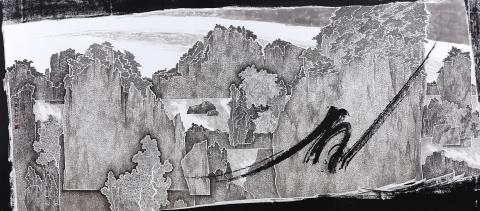
Photo courtesy of Sun Yat-sen Memorial Hall
YX Art Space presents Breathing as Time and Space (時空的呼吸), a solo exhibition by Liu Yung-jen (劉永仁). Liu’s oil paintings draw inspiration from memories of a childhood spent in Taitung County’s Chihshang Township (池上). His artwork is characterized by the colors yellow and orange that mix to recall the golden rice fields of his hometown. Under his brush, these scenes are transformed into large blocks of color and semi-abstract symbols. The gallery will be hosting an opening reception for the exhibition at 3pm on Sunday.
■ YX Art Space (有璽藝術空間), 26, Ln 136, Sanmin Rd, Taipei City, (台北市三民路136巷26號), tel: (02) 2761-2881. Open Tuesdays to Saturdays from 11am to 6pm
■ Starts Sunday; until Nov. 30
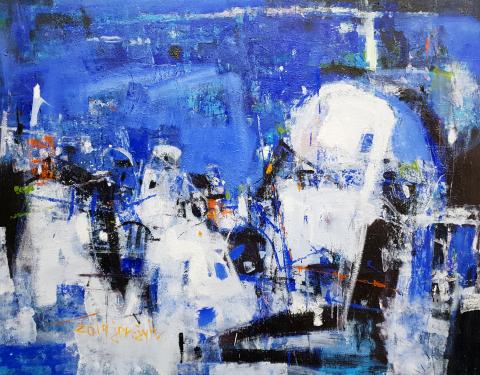
Photo courtesy of Huludun Cultural Center
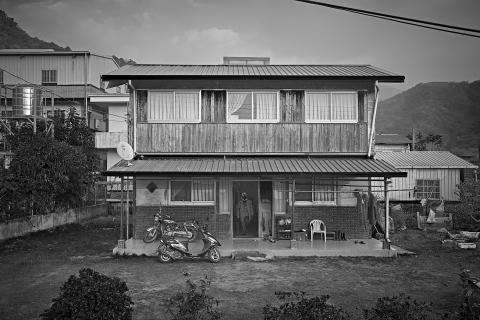
Photo courtesy of Co-Art Co-Ops
Ajay Verma, a consultant gastroenterologist at Kettering general hospital in Northamptonshire, says our gut is a “complex machine.” “It is constantly providing us with the nutrition we need, initially to grow and develop, and then for us to survive, thrive and repair from injury and illness.” How can we keep it functioning well? Put simply: “Make sure what you put into it is balanced, and that you clear out its waste products adequately,” Verma says. “In a general gastroenterology clinic, the most common conditions we see are irritable bowel syndrome (IBS), gastroesophageal reflux disease, inflammatory bowel disease and constipation,” says Nisha
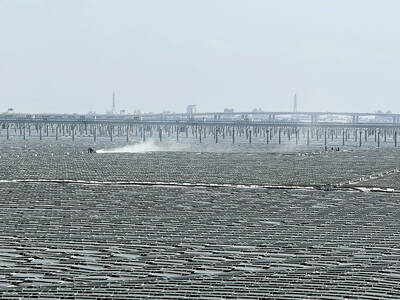
The arithmetic is straightforward and uncomfortable. By the end of 2025, Taiwan had committed itself to a 50-30-20 electricity mix — half natural gas, 30 per cent coal, 20 per cent renewables. The Ministry of Economic Affairs’s (MOEA) own monthly energy reports tell a different story. Natural gas reached 47.8 per cent of generation last year. Coal stood at 35.4 per cent, comfortably above its target ceiling. Renewables came in at 13.1 per cent, well short of the 20 per cent Taipei had pledged a decade earlier. Installed renewable capacity reached roughly half of the 12 gigawatts (GW) the government

Last week US President Donald Trump was asked by a reporter whether he would speak on the phone to the President of Taiwan. “l’ll speak to him. I speak to everybody. We have that situation very well in hand,” Trump said. This marked the second time in a couple of weeks he had said he would talk to the President of Taiwan. In 2016 he famously took a call from then-president Tsai Ing-wen (蔡英文), when he was president-elect. Despite warnings that the apocalypse was nigh because of a phone call, the world quickly forgot about the conversation between two democratically-elected presidents.
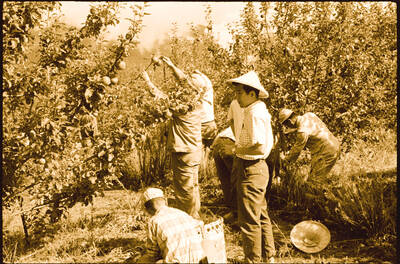
May 25 to May 31 Few believed that apples could be cultivated on a commercial scale in Taiwan’s high mountains. When horticulturalist Cheng Chao-hsiung (程兆熊) first proposed the idea in 1955, both American and Taiwanese colleagues dismissed it as implausible, arguing that temperate fruit could not be reliably grown on a subtropical island, especially on rugged terrain. However, it was this terrain in the Central Mountain Range where many Chinese Civil War veterans were resettled in the late 1950s. With limited job prospects and no family in Taiwan, they were placed on cooperative farms aimed toward self-sufficiency. Some say the conditions


 RSS
RSS