


When a young woman with rainbow hair and a reputation for hostility towards sexual predators won a Swedish lawyer of the year award late last year, the online reaction came in two waves.
The first was unpleasant, a torrent of bile from people who objected to Linnea Claeson’s looks, her feminist politics, her gender, her youth and her Instagram account @assholesonline.
The second was less familiar: a blizzard of positive messages — congratulations, praise for her bravery and for acting as a role model despite the abusive comments.

Photo: Reuters
The surge of support was orchestrated by an organization called #Jagarhar (#Iamhere), a Facebook group of about 75,000 people, most of them in Sweden. Fed up with the rude, confrontational nature of online conversation and the way that a few bad mouths can ruin a discussion, they have made it their business to turn bad threads good.
Every day, the group aims to do what government and social media companies have failed to do: defend people being attacked online by trolls and push back against the spread of misinformation.
MOBILIZING POSITIVITY
#Jagarhar mobilizes members to add positive notes on comment sections where hatred and misinformation is being spread. This, they believe, rebalances the discussion online and disrupts Facebook’s algorithm.
“Of course, social media does not reflect the overall population, but when you read the comment field, you often get the sense that 80 percent of the population thinks that homosexuality is a disease, for example,” said Mina Dennert , #Jagarhar’s founder. “We want the comment section to look more like society and the way to do this is enable people to speak and participate.”
After #Jagarhar intervened in the comment sections talking about Claeson, the tone of the conversation improved palpably. The daily Swedish newspaper Aftenbladet even began moderating comments on its Facebook page, deleting the worst examples of hate speech.
“It’s so tiring that everything that has to do with me has such a negative connotation. Thank you for the love,” Claeson said in a Facebook post in the #Jagarhar group.
Dennert, a journalist, launched her initiative in 2016, after seeing more and more disturbing remarks on social media.
“What made me want to do something was seeing people I didn’t expect this from starting to repost really racist things,” she said.
She created a small Facebook group which started out by asking those spreading misinformation for facts to back up their statements.
The morning after Donald Trump was elected, Dennert was overwhelmed with requests from thousands of people to join her group. In the months that followed, #Jagarhar would change its approach, espousing neutrality in how its members reacted, and in most cases, simply mobilizing support for people who were being harassed online.
Dennert has won several awards for her work, including the prestigious Anna Lindh prize in 2017 for supporting just and democratic ideals. The Swedish rock group, Kent, even donated the proceeds of a photo auction to the group.
BACKLASH
But the attention also brought a massive backlash. Dennert regularly receives death threats, and at one point her father received bullets in the post. Trolls also doxed Dennert and her husband, Magnus Dennert, also a journalist, publishing sensitive personal data which they said related to the pair.
As the personal attacks mounted, Dennert saw a sharp decline in support.
At the beginning, many companies wanted to collaborate. But that changed.
“The first year, we were so loved and we won all these prizes, and everyone wanted to work with us. But once the attacks started, the people who wanted to collaborate with us, they completely stopped. They were scared.”
Critics call #Jagarhar censorship, but Dennert and the moderators on the group are quick to emphasize that #Jagarhar never comes with an agenda. They don’t tell people what to say. They simply want to defend those who are being attacked online.
Orla Vigso is a professor in the journalism, media and communication department at the University of Gothenburg. He is skeptical that #Jagarhar can actually have an influence on the social media algorithms because trolls and people on the far right are much more prolific and are very organized. He hopes that #Jagarhar is reducing the amount of online hate speech and misinformation people see, but he adds that it is “extremely hard to measure” and it may be wishful thinking on his part.
Roger Wiklander, one of 18 group administrators for #Jagarhar, says that for him the group is about speaking up against hate and misinformation in a united way and giving others the courage to do the same.
One comment really sticks out to Wiklander. On an article encouraging people to donate clothes to refugees, a person wrote “Ha-ha-ha, garbage for trash!”
For him, it’s comments like this one that make him do this sort of work.
Since 2016, the Swedish online love army has spread to other countries in Europe. Sister groups have been created and are now active across the continent, most notably in Germany and Slovakia, whose groups have 45,000 and 6,000 members respectively. The groups largely function independently.

Just after 6am, I walked up to the ticket gate at Taipei Main Station and entered the Taiwan Railway platform without scanning any ticket; instead, I flashed the Sanrio Fun Rail pass on my phone to the gate worker and was admitted. I found my train and prepared to board. My destination? This very same station. I was embarking on a 13-hour journey on one of two round-the-island trains operated by ezTravel. They run each day, one counterclockwise around the island and one clockwise. They differ in a number of ways from an ordinary Taiwan Railway train and can make for
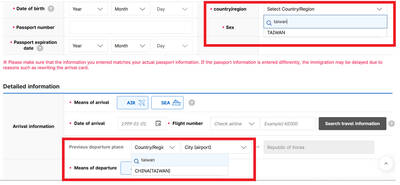
Jason Han says that the e-arrival card spat between South Korea and Taiwan shows that Seoul is signaling adherence to its “one-China” policy, while Taiwan’s response reflects a reciprocal approach. “Attempts to alter the diplomatic status quo often lead to tit-for-tat responses,” the analyst on international affairs tells the Taipei Times, adding that Taiwan may become more cautious in its dealings with South Korea going forward. Taipei has called on Seoul to correct its electronic entry system, which currently lists Taiwan as “China (Taiwan),” warning that reciprocal measures may follow if the wording is not changed before March 31. As of yesterday,

The Portuguese never established a presence on Taiwan, but they must have traded with the indigenous people because later traders reported that the locals referred to parts of deer using Portuguese words. What goods might the Portuguese have offered their indigenous trade partners? Among them must have been slaves, for the Portuguese dealt slaves across Asia. Though we often speak of “Portuguese” ships, imagining them as picturesque vessels manned by pointy-bearded Iberians, in Asia Portuguese shipping between local destinations was crewed by Asian seamen, with a handful of white or Eurasian officers. “Even the great carracks of 1,000-2,000 tons which plied

On Thursday, former Taipei mayor and founder of the Taiwan People’s Party (TPP) Ko Wen-je (柯文哲) was sentenced to 17 years in prison and had his civil rights suspended for six years over corruption, embezzlement and other charges. Seven others related to the case were also handed prison sentences, while two were found not guilty. It has been a bad week for the TPP. On Tuesday, prosecutors charged Chinese immigrant Xu Chunying (徐春鶯) with suspicion of taking part in Beijing-directed election interference. Xu has strong links to the TPP, which once offered her a party list legislator nomination. Tuesday also


 RSS
RSS