


Two Indonesian fishermen who escaped slavery aboard a Honolulu-based tuna and swordfish vessel when it docked at San Francisco’s Fisherman’s Wharf are suing the boat’s owner for tricking them into accepting dangerous jobs they say they weren’t allowed to leave.
Attorneys for Abdul Fatah and Sorihin, who uses one name, say in a lawsuit filed in federal court Thursday that they were recruited in Indonesia seven years ago to work in Hawaii’s commercial fishing fleet without realizing they would never be allowed onshore. They have since been issued visas for victims of human trafficking and are living in the San Francisco area.
The lawsuit alleges that San Jose, California, resident Thoai Nguyen, owner and captain of the Sea Queen II, forced Sorihin and Fatah to work up to 20-hour shifts, denied them medical treatment and demanded thousands of dollars if they wanted to leave before their contracts expired. Nguyen did not return calls seeking comment.
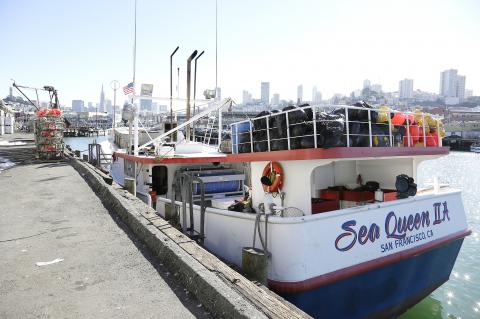
Photo: AP
The lawsuit seeks payment for debts the men incurred, fees they paid and compensation promised without specifying a dollar amount, and asks for unspecified damages for “mental anguish and pain.”
“I want to be compensated because of the suffering I felt on the boat and all the suffering I have endured after I got off the boat,” Sorihin said last week through a translator at his lawyer’s San Francisco office. “And I hope no one will suffer what I have suffered.”
COMMON PRACTICE
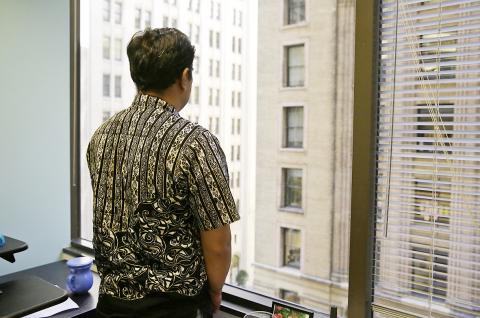
Photo: AP
The lawsuit comes two weeks after an AP investigation found around 140 fishing boats based in Honolulu, including Sea Queen II, were crewed by hundreds of men from impoverished Southeast Asia and Pacific Island nations (“Foreign crews confined to boats catch Hawaiian seafood,” Sept. 12, page 7). The seafood is sold at markets and upscale restaurants across the US. A legal loophole allows them to work without visas as long as they don’t set foot on shore. The system is facilitated by the US Coast Guard, as well as Customs and Border Protection who require boat owners to hold workers’ passports.
AP found some men are paid as little as 70 cents an hour. Others had to use buckets instead of toilets, suffered running sores from bed bugs or sometimes lacked sufficient food.
In response, the Hawaii Longline Association representing fishing boat owners has created a universal crew contract that will be required on any boat wanting to sell fish in the state’s seafood auction starting Oct. 1. The group says it deplores human trafficking, and that the contract will protect workers.
The contracts let owners continue to set their own minimum salaries, allow workers to spend the entire year at sea (15 trips, 10 to 40 days each), and reiterate that they must remain on board with passports held by owners.
Cornell University law professor Stephen Yale-Loehr said the new contract “reinforces the current deplorable situation by emphasizing that the crew members have no real rights.”
“Congress should repeal the loophole that exempts US fishing captains from having to provide basic labor protections to their crew,” he said.
PRISON-LIKE CONDITIONS
Here’s what Sorihin and Fatah say happened to them.
They signed contracts promising US$350 a month plus bonuses. They borrowed about US$300 to pay an agent in Jakarta. They flew from Jakarta to Singapore, then Sydney, on to Fiji and Pago Pago, American Samoa, an exhausting, 12,500-mile trip.
Because docking is inconvenient and potentially costly, the fishermen had to swim from one boat to another before sailing to Honolulu to begin fishing.
Then it got worse.
One day as Sorihin wrestled a shark onto the Sea Queen, a fishing line got wrapped around his finger, nearly breaking it off. He said his captain set it straight with a chopstick, rubbing ginger and honey on it.
Another time a winch cable snapped, cracking Sorihin in his shoulder; swollen and sore, he was allowed a two-hour rest. A swordfish sliced his face as he pulled it aboard, according to the lawsuit.
They say the captain was verbally abusive and gave them only torn and worn-out gear. There was new protective gear on the boat but the captain said they would have to pay for it. Both men asked to see a doctor at various times but were told there was no health insurance.
“I knew if I stayed on that boat I was going to die,” said Sorihin in an interview.
They worked from 6am to 6pm without a food break. Then, after a meal and a few hours’ rest, they’d fish some more. After a few trips, three relatives of the captain’s joined them as crew.
“The captain’s nephew kicked me with his feet to wake me up. I never felt safe working on that boat,” Fatah said in an interview.
Although there was a toilet on board, they had to go to the bathroom in plastic buckets and baggies on deck. And the money, a few hundred dollars a month, just wasn’t worth it.
After a few 20-day trips out of Hawaii, they began docking in San Francisco about once a month. They would gaze from Fisherman’s Wharf dock over to Scoma’s, a classic San Francisco seafood restaurant where diners enjoyed the freshest catch.
Then they’d head out to sea again. One day Fatah got washed onto a railing by a huge wave. He shivered, cried and cramped up. “I thought, ‘This is probably the end,’” he said.
They asked to go home, but were told they would have to reimburse the captain the US$6,000 he spent to bring them there.
THE ESCAPE
Finally, they decided to run. It was before dawn, six years ago, when the skipper was gone and drunken crewmembers slept. Sorihin and Fatah sneaked into a private room and grabbed their passports. They dashed through San Francisco’s historic waterfront and eventually boarded a southbound train toward San Jose, where they sought help from an Indonesian man they knew of.
“I didn’t think I’d have another chance to survive at sea,” said Fatah. “I was really afraid.”
The man took them in and found them help, through the Catholic Church, a shelter, social workers and eventually immigration attorneys.
Today they both work two jobs. They clerk at a liquor store, and Sorihin also drives a car for hire. Fatah takes inventory at a department store. Neither goes anywhere near Fisherman’s Wharf.
Earlier this year, before filing their lawsuit, they looked at photos of the Sea Queen II and their former captain.
“That’s him,” said Sorihin, shaking his head when asked if he would take a short walk to see the boat. “I’m afraid of this man.”
— Additional reporting by Margie Mason and Sudhin Thanawala
The breakwater stretches out to sea from the sprawling Kaohsiung port in southern Taiwan. Normally, it’s crowded with massive tankers ferrying liquefied natural gas from Qatar to be stored in the bulbous white tanks that dot the shoreline. These are not normal times, though, and not a single shipment from Qatar has docked at the Yongan terminal since early March after the Strait of Hormuz was shuttered. The suspension has provided a realistic preview of a potential Chinese blockade, a move that would throttle an economy anchored by the world’s most advanced and power-hungry semiconductor industry. It is a stark reminder of
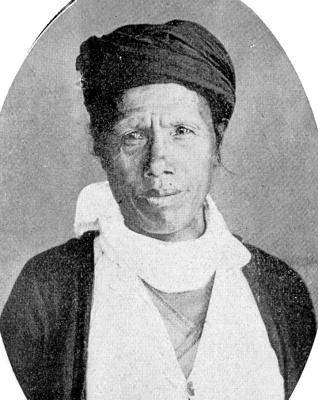
May 11 to May 17 Traversing the southern slopes of the Yushan Range in 1931, Japanese naturalist Tadao Kano knew he was approaching the last swath of Taiwan still beyond colonial control. The “vast, unknown territory,” protected by the “fierce” Bunun headman Dahu Ali, was “filled with an utterly endless jungle that choked the mountains and valleys,” Kano wrote. He noted how the group had “refused to submit to the measures of our authorities and entrenched themselves deep in these mountains … living a free existence spent chasing deer in the morning and seeking serow in the evening,” even describing them as
The last couple of weeks spectators in Taiwan and abroad have been treated to a remarkable display of infighting in the Chinese Nationalist Party (KMT) over the supplementary defense budget. The party has split into two camps, one supporting an NT$800 billion special defense budget and one supporting an NT$380 billion budget with additional funding contingent on receiving letters of acceptance (LOA) from the US. Recent media reports have said that the Taiwan People’s Party (TPP) is leaning toward the latter position. President William Lai (賴清德) has proposed NT$1.25 trillion for purchases of US arms and for development of domestic weapons

As a different column was being written, the big news dropped that Chinese Nationalist Party (KMT) caucus whip Fu Kun-chi (傅?萁) announced that negotiations within his caucus, with legislative speaker Han Kuo-yu (韓國瑜) of the KMT, party Chair Cheng Li-wun (鄭麗文), Taichung Mayor Lu Shiow-yen (盧秀燕) and Taiwan People’s Party (TPP) Chair Huang Kuo-chang (黃國昌) had produced a compromise special military budget proposal. On Thursday morning, prior to meeting with Cheng over a lunch of beef noodles, Lu reiterated her support for a budget of NT$800 or NT$900 billion — but refused to comment after the meeting. Right after Fu’s


 RSS
RSS