


Cheng Wei-hao’s (程偉豪) debut feature, The Tag-Along (紅衣小女孩), contain an element that will terrify movie-goers in a way that foreign horror flicks can’t: a familiarity with Taiwanese folklore. The ghost in this smartly-written film comes from a famous home video broadcast on television in 1988. Shot by a group of climbers, the video shows a little girl in a red dress following them on a mountain trail. No one in the team knew or saw the girl, but she is believed to be Moxina (魔神仔), a kind of mountain demon known to steal humans — usually children and the elderly.
The first half of the film centers on Wei (River Huang, 黃河), a real estate broker who was raised by and lives with his grandmother (Liu Yin–shang, 劉引商). Their sleepy neighborhood is roused one day by the disappearance of an old man. Wei doesn’t pay much attention to the missing-person case, nor does he have time for his grandmother. Wei has his own worries.
Like many Taiwanese, Wei works long hours, but feels he can’t afford to start a family. His girlfriend Yi-chun (Tiffany Ann Hsu, 許瑋甯) repeatedly turns down his marriage proposals, claiming that marriage and babies are not her thing.

Photo courtesy of Vievision Pictures
One night, Wei’s grandmother disappears. Creepy things begin to happen, including the appearance of a strange-looking girl in a red dress who is caught on a surveillance camera.
Then, Wei vanishes.
Distraught, Yi-chun suddenly realizes Wei’s importance in her life. Frightened residents begin to suspect that the mountain demon has appeared because humans have encroached on its mountain home.
With The Tag-Along, Cheng reveals his talent for storytelling, offering a new interpretation of the mountain demon story, effectively placing it in the genre of eco-horror cinema, where disastrous ecological consequences of human activity transform into an vengeful evil force.
The thrills are effectively crafted. The girl from the ghost video is brought back to life and roams the neighborhood in search of victims. Cheng creates a familiar, everyday setting where the specter lurks in a dark corridor or squats on top of a bookshelf.
The characters and their surroundings are never contrived. They seem to have the same worries as we do and face the same emotional struggles because their hectic, urban lifestyle leaves them exhausted. The suspense is mostly psychological, relying on characters’ fears, guilt and beliefs.
Huang looks as suitably weary as a man torn between family and work. The film’s narrative weight, however, is largely carried by Hsu’s character as a smart, independent woman who overcomes her fear of intimacy and regains the ability to love. The actress proves she has both the look and intellect to deliver a convincing performance.
The other actors has also been well cast. Acting veterans Liu and Chang Po-chou (張柏舟) make a rare onscreen appearance, showing how a solid supporting performance can take a film up a notch.
For those who haven’t seen the legendary ghost video, The Tag-Along does a good job of making sure that the original image is clearly restored.

Just after 6am, I walked up to the ticket gate at Taipei Main Station and entered the Taiwan Railway platform without scanning any ticket; instead, I flashed the Sanrio Fun Rail pass on my phone to the gate worker and was admitted. I found my train and prepared to board. My destination? This very same station. I was embarking on a 13-hour journey on one of two round-the-island trains operated by ezTravel. They run each day, one counterclockwise around the island and one clockwise. They differ in a number of ways from an ordinary Taiwan Railway train and can make for
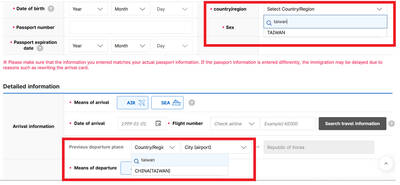
Jason Han says that the e-arrival card spat between South Korea and Taiwan shows that Seoul is signaling adherence to its “one-China” policy, while Taiwan’s response reflects a reciprocal approach. “Attempts to alter the diplomatic status quo often lead to tit-for-tat responses,” the analyst on international affairs tells the Taipei Times, adding that Taiwan may become more cautious in its dealings with South Korea going forward. Taipei has called on Seoul to correct its electronic entry system, which currently lists Taiwan as “China (Taiwan),” warning that reciprocal measures may follow if the wording is not changed before March 31. As of yesterday,

The Portuguese never established a presence on Taiwan, but they must have traded with the indigenous people because later traders reported that the locals referred to parts of deer using Portuguese words. What goods might the Portuguese have offered their indigenous trade partners? Among them must have been slaves, for the Portuguese dealt slaves across Asia. Though we often speak of “Portuguese” ships, imagining them as picturesque vessels manned by pointy-bearded Iberians, in Asia Portuguese shipping between local destinations was crewed by Asian seamen, with a handful of white or Eurasian officers. “Even the great carracks of 1,000-2,000 tons which plied

On Thursday, former Taipei mayor and founder of the Taiwan People’s Party (TPP) Ko Wen-je (柯文哲) was sentenced to 17 years in prison and had his civil rights suspended for six years over corruption, embezzlement and other charges. Seven others related to the case were also handed prison sentences, while two were found not guilty. It has been a bad week for the TPP. On Tuesday, prosecutors charged Chinese immigrant Xu Chunying (徐春鶯) with suspicion of taking part in Beijing-directed election interference. Xu has strong links to the TPP, which once offered her a party list legislator nomination. Tuesday also


 RSS
RSS