


Above Hell’s Valley in Taipei’s Beitou District (北投區), there’s a clearing where, when the steam dissipates, you can watch tourists circling the volcanic cavity, selfie-sticks waggling like cockroach antennae.
Beitou invites pathetic fallacy. The name derives from the Ketagalan for “witch,” the area evoking a bubbling cauldron. Prospecting for sulfur in 1696, Qing Dynasty official Yu Yonghe (郁永河) described “a big pot in which we are walking on the lid.” Two centuries later, George McKay noted the “hiss and roar.” But these growls hide whispers.
Opposite the hole in the foliage, for example, a distinctive building with a facade of blue wooden slats has long held its peace. Until recently, the story behind this location was suffocated by an obfuscation that even the dense sulfur clouds couldn’t match.
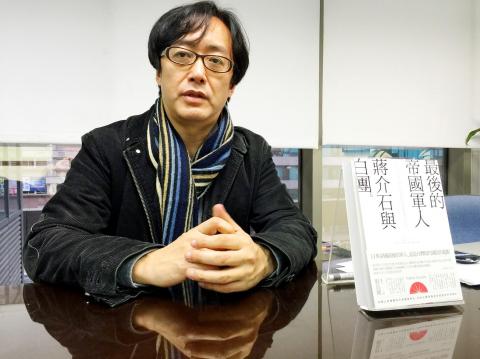
Photo: yang yuan-ting, Taipei Times
clandestine operation
For 30 years, 144 Wenquan Road (溫泉路) was the headquarters of the White Group (白團), a clandestine team of Japanese military advisers to the Chinese Nationalist Party (KMT) government. Now, thanks to the probing of a Japanese journalist, this startling episode of modern Taiwanese history has been laid bare.
For the KMT, the White Group ranks among the dirtiest of rags in an already overflowing basket of soiled laundry, and given the virulently anti-Japanese bent that some of the program’s graduates later assumed, their reticence to see the truth revealed is understandable.
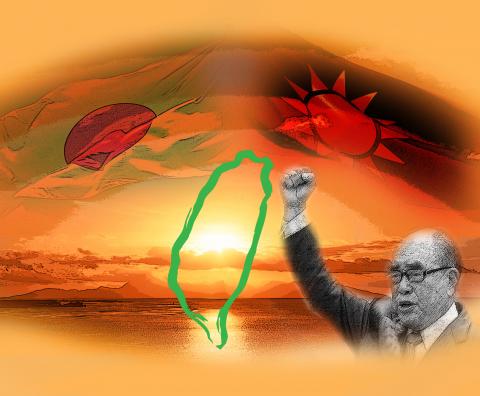
illustration: kevin sheu
In January, Nojima Tsuyoshi, editor of the Chinese-language digital version of the Japanese daily Asahi Shimbun, published Last Empire Soldiers: Chiang Kai-shek and the White Group (最後的帝國軍人:蔣介石與白團), an account of the team’s time in Taiwan.
Covert Japanese assistance to the KMT in Taiwan began in 1949 when Chiang Kai-shek (蔣介石), whose forces had just fled China after losing the civil war, enlisted the services of Lieutenant General Nemoto Hiroshi to repel the communist advance on the outlying island of Kinmen.
Hiroshi’s tactics, which included allowing the People’s Liberation Army (PLA) forces to land so they could be ambushed and nixing a KMT proposal to burn down villages where PLA soldiers had holed up, undoubtedly saved the KMT’s bacon. With the smoke barely cleared, KMT General Hu Lien (胡璉) swanned in to claim the victory. He was nowhere near Kinmen during the action.
While General Keh King-en (葛先才), the leader of an advance party to Taiwan, was publicly berating the nipponized Formosans for being a “degraded people,” Chiang was taking a much more pragmatic tack. In forming the White Group, he sought out top Japanese talent, offering benefits and hefty remuneration.
During the Japanese colonial era, a posting to Taiwan was considered an unenviable drag, but with postwar public sentiment in Japan now against senior military figures and employment hard to come by, Nojima says the White Group personnel looked on their Taiwan adventure as an opportunity.
the japanophile
The Generalissimo had a soft spot for the Japanese. Over the years, this had earned him the scorn and suspicion of party hardliners. Chiang spent six years in Japan, served in the Imperial Japanese Army from 1909 to 1911 and spoke the language. Well aware that Japanese military know-how was a cut above what the KMT officer class had to offer, he was keen to make use of skilled ex-officers. Of course, he wasn’t about to advertise the fact.
As Nojima writes, it wasn’t just about a loss of face. Chiang could ill-afford to have the Americans offside and once the US made it clear that they were not happy with the arrangement, it was conducted in the shadows. Still, it was made just visible enough to provide leverage whenever American assistance wasn’t forthcoming.
Barak Kushner, who has written and spoken extensively on the White Group and the KMT’s complicated ties with Japan, sees the relationship as a marriage of convenience.
“Both [the KMT and Japan] essentially had become pariahs in their own region and their sole means of salvation was ironically in some measure to link up with each other,” Kushner says.
Although the alliance was informed by pragmatism on both sides, Kushner believes that there were other motivations at play.
“Perhaps the idea of pan-Asianism, which certainly was rife in higher KMT circles, many of whom studied in Japan prewar, still remained,” he says.
At the same time, Kushner says that the KMT had to look to all quarters for support. “Many would ask what other choice they had when US support looked desperate and Taiwan was considered a backwater.”
The White Group’s initial 17-man team was smuggled into Taiwan via Hong Kong in 1949. Participants were given Chinese noms de guerre, with the group named after its leader, Tomita Naosuke, who assumed the moniker Pai Hung-liang (白鴻亮). A former major general, Taiwan’s “Mr. White” was well known to Chiang having assisted KMT forces in the final throes of the civil war.
military legacy
Although the group’s remit was largely advisory, it is credited with introducing reserve officer exams and close combat techniques. Overall, at least 10,000 soldiers were trained under the group’s guidance.
At the behest of the US Military Assistance Advisory Group, the White Group was officially disbanded in 1959, though limited operations continued for years after. Tomita was persuaded to remain in Taiwan and was eventually made an honorary Republic of China general, the only foreigner to achieve this distinction.
Tomita continued to live at the house on Wenquan Road until his death in 1979 during a visit to Japan. At his request, his ashes were divided between his homeland and Taiwan. The latter portion of his remains can be found at Haiming Temple (海明寺) in Shulin District (樹林) in New Taipei City where they were placed by Chiang’s adoptive son Chiang Wei-kuo (蔣緯國).
The house at Wenquan Road is currently undergoing renovation. A spokesperson for the Beitou District Office confirmed that the property is now privately owned and unlikely to be open to the public any time soon.
However, early last year, a Japanese tour group, which included relatives of White Group officers, visited the location to mark the 35th anniversary of Tomita’s death. Tomita’s son expressed his pleasure that the historical record had finally been set straight.
raging against the japanese
Some people see things differently. In September last year, former Premier Hau Pei-tsun (郝柏村) addressed a seminar marking the 70th anniversary of Japan’s surrender. As reported in this newspaper, the aim of the event was to “debunk the lies fabricated by the Japanese bandits’ slaves who overstayed in Taiwan (滯臺倭奴) and who have distorted the real history.”
It was just the latest in a long line of anti-Japanese tirades by the 95-year-old Hau. A couple of months later, former vice president Lien Chan (連戰) was at it, branding Taipei Mayor Ko Wen-je’s (柯文哲) family “traitors” for adopting Japanese names when Japan ruled over Taiwan.
These race-card rants by KMT old timers are fairly standard. Yet, as has been pointed out, Lien’s comments are more than a little rich, given the pro-Japanese leanings of his grandfather, the historian Lien Heng (連橫).
One might also expect a little more circumspection from Hau. As one of the White Group’s most illustrious alumni, the four-star general was on intimate terms with the Japanese during a period when ordinary Taiwanese faced persecution for perceived Japanese proclivities.
Nojima has revealed that during his research he made three separate requests for an interview with Hau. On each occasion his correspondence went unanswered. This is hardly surprising. Coming clean now would expose the hypocrisy of a stance that has become an article of faith.
For all the harping about the importance of “true history,” the KMT has always been selective about what that history should include. For Hau and his ilk, the details of what went on behind the doors of 144 Wenquan Road is best left shrouded in Beitou’s mists.
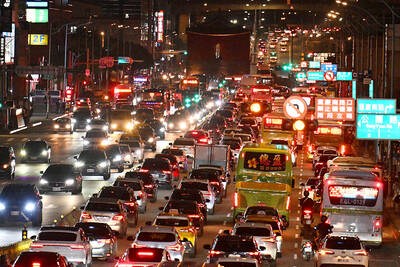
By global standards, the traffic congestion that afflicts Taiwan’s urban areas isn’t horrific. But nor is it something the country can be proud of. According to TomTom, a Dutch developer of location and navigation technologies, last year Taiwan was the sixth most congested country in Asia. Of the 492 towns and cities included in its rankings last year, Taipei was the 74th most congested. Taoyuan ranked 105th, while Hsinchu County (121st), Taichung (142nd), Tainan (173rd), New Taipei City (227th), Kaohsiung (241st) and Keelung (302nd) also featured on the list. Four Japanese cities have slower traffic than Taipei. (Seoul, which has some

In our discussions of tourism in Taiwan we often criticize the government’s addiction to promoting food and shopping, while ignoring Taiwan’s underdeveloped trekking and adventure travel opportunities. This discussion, however, is decidedly land-focused. When was the last time a port entered into it? Last week I encountered journalist and travel writer Cameron Dueck, who had sailed to Taiwan in 2023-24, and was full of tales. Like everyone who visits, he and his partner Fiona Ching loved our island nation and had nothing but wonderful experiences on land. But he had little positive to say about the way Taiwan has organized its
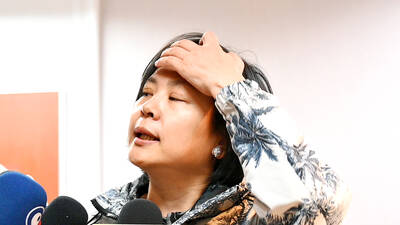
The entire Li Zhenxiu (李貞秀) saga has been an ugly, complicated mess. Born in China’s Hunan Province, she moved to work in Shenzhen, where she met her future Taiwanese husband. Most accounts have her arriving in Taiwan and marrying somewhere between 1993 and 1999. She built a successful career in Taiwan in the tech industry before founding her own company. She also served in high-ranking positions on various environmentally-focused tech associations. She says she was inspired by the founding of the Taiwan People’s Party (TPP) in 2019 by Ko Wen-je (柯文哲), and began volunteering for the party soon after. Ko
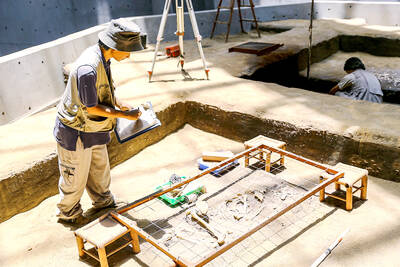
Writing of the finds at the ancient iron-working site of Shihsanhang (十 三行) in New Taipei City’s Bali District (八里), archaeologist Tsang Cheng-hwa (臧振華) of the Academia Sinica’s Institute of History and Philology observes: “One bronze bowl gilded with gold, together with copper coins and fragments of Tang and Song ceramics, were also found. These provide evidence for early contact between Taiwan aborigines and Chinese.” The Shihsanhang Web site from the Ministry of Culture says of the finds: “They were evidence that the residents of the area had a close trading relation with Chinese civilians, as the coins can be


 RSS
RSS