


Beautifully executed in a vibrant cinematic style, Chung Mong-hong’s (鍾孟宏) latest film, Soul (失魂), is billed as a psychological thriller about a man who loses his soul and whose abandoned body is inhabited by a stranger. But don’t expect a genre flick about supernatural forces. Though it is blessed with the best murder scenes the Taiwanese cinema has seen in years, the film is nevertheless director Chung’s stylish meditation on life, death and family.
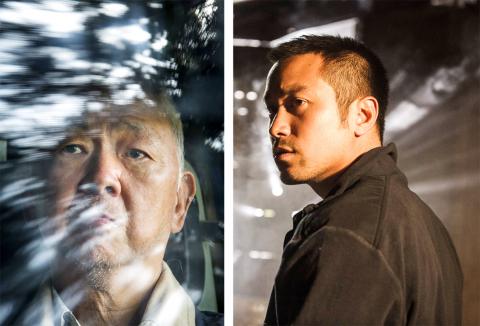
The film begins inside an upscale Japanese restaurant in Taipei, where chef A-chuan (Joseph Chang, 張孝全) is seen filleting a fish. Suddenly he collapses; the fish, most of its flesh sliced off, remains alive, gasping for air. A few days later, A-chuan is sent to live with his aged father, Wang (Jimmy Wong, 王羽), who supports himself by growing orchids among the mists of an isolated mountain.
Having fallen into a strange mental state, A-chuan doesn’t speak or eat. Neither does he respond to the world around him. One day, Wang returns home from work, finding his married daughter Yun, played by Chen Shiang-chyi (陳湘琪), lying dead in a pool of blood.
Photos courtesy of Activator Marketing Company
A-chuan, the killer, remains vacantly calm, looks at the father and says: “I saw this body was empty so I moved in.”
Seemingly impassive to the tragedy, Wang buries his daughter’s body, drugs the young man who appears to be his son and locks him away in the cottage next to the orchid farm. Yet it is beyond the old man’s control to stop more bloodshed from taking place. Meanwhile, strange visions come to A-chuan at night, and little by little, a family secret is revealed.
Under the guise of a psychological thriller, the film is an eerily beautiful reincarnation of the two recurrent themes in Chung’s cinema: death and father-son relationships. In his 2006 documentary Doctor (醫生), the filmmaker follows a Taiwanese-born physician in the US, who lost his teenage son to suicide. His second feature film The Fourth Portrait (第四張畫, 2010) revolves around a little boy who must cope with a brutal stepfather after the death of his biological one.
In his latest work, Chung, who doubles as the film’s cinematographer, tells the story of an estranged father and son haunted by their past, while imbuing the peculiar tale with the opulent aesthetics that have become his trademark. Profound sentiments are conveyed purely through visual forms, by way of close-ups on small creatures and insects such as a beetle inside a flower, two slimy earthworms intertwined and moths flapping their wings in the air as if they are the bearer of deep meaning and share an inexplicable connection with their human counterparts.
Audiences rarely have the chance to indulge in the characters’ pain and suffering, as the director finds tearjerkers and exaggerated emotions distasteful. Rather, feelings and moods are conveyed through expressive colors, striking mise-en-scene and lighting that make up Chung’s unique sense of cinematography. Under his lens, the lush forests in Lishan Mountain (梨山) become wild and enigmatic where human instinct and desires transcend the boundary of civil behavior, while the incessant chirping of cicadas turns hauntingly poetic as they resonate through the murderous valley.
The murders, portrayed by the stroke of a poet’s pen, are among the most gruesome and exquisite that Taiwanese cinema has seen in decades.
Exploring cruelty and pain in a cold, detached manner, the film nevertheless offers a glimpse of hope and human warmth through humor and the possibility of redemption. In the end, A-chuan survives, either as A-chuan or the stranger who inhabits his body, and is able to face the father, albeit in the enclosure of a mental institution.
Graced by the topnotch performances of seasoned thespians including Chin Shih-chieh (金士傑), Leon Dai (戴立忍) and Tuo Tsung-hua (庹宗華), the film affords audiences a delightful surprise by casting Wong as the father who lives in solitude and persists to lead a normal life after a stroke. A kung-fu legend noted for his commanding on-screen presence, Wong admirably invests in his aged character unflinching strength and a sense of fragility.

Just after 6am, I walked up to the ticket gate at Taipei Main Station and entered the Taiwan Railway platform without scanning any ticket; instead, I flashed the Sanrio Fun Rail pass on my phone to the gate worker and was admitted. I found my train and prepared to board. My destination? This very same station. I was embarking on a 13-hour journey on one of two round-the-island trains operated by ezTravel. They run each day, one counterclockwise around the island and one clockwise. They differ in a number of ways from an ordinary Taiwan Railway train and can make for
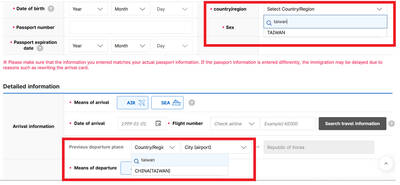
Jason Han says that the e-arrival card spat between South Korea and Taiwan shows that Seoul is signaling adherence to its “one-China” policy, while Taiwan’s response reflects a reciprocal approach. “Attempts to alter the diplomatic status quo often lead to tit-for-tat responses,” the analyst on international affairs tells the Taipei Times, adding that Taiwan may become more cautious in its dealings with South Korea going forward. Taipei has called on Seoul to correct its electronic entry system, which currently lists Taiwan as “China (Taiwan),” warning that reciprocal measures may follow if the wording is not changed before March 31. As of yesterday,

The Portuguese never established a presence on Taiwan, but they must have traded with the indigenous people because later traders reported that the locals referred to parts of deer using Portuguese words. What goods might the Portuguese have offered their indigenous trade partners? Among them must have been slaves, for the Portuguese dealt slaves across Asia. Though we often speak of “Portuguese” ships, imagining them as picturesque vessels manned by pointy-bearded Iberians, in Asia Portuguese shipping between local destinations was crewed by Asian seamen, with a handful of white or Eurasian officers. “Even the great carracks of 1,000-2,000 tons which plied
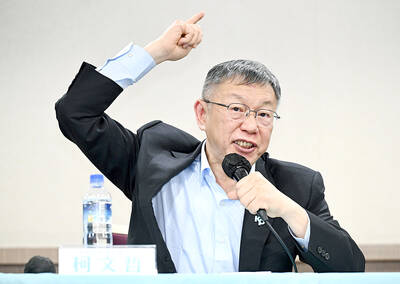
On Thursday, former Taipei mayor and founder of the Taiwan People’s Party (TPP) Ko Wen-je (柯文哲) was sentenced to 17 years in prison and had his civil rights suspended for six years over corruption, embezzlement and other charges. Seven others related to the case were also handed prison sentences, while two were found not guilty. It has been a bad week for the TPP. On Tuesday, prosecutors charged Chinese immigrant Xu Chunying (徐春鶯) with suspicion of taking part in Beijing-directed election interference. Xu has strong links to the TPP, which once offered her a party list legislator nomination. Tuesday also


 RSS
RSS