


The death of veteran UK conductor Colin Davis last month has led to many tributes, plus many assessments of his recorded legacy. How to choose from such riches? I used to proclaim the extraordinary beauty of his early version of Berlioz’s L’Enfance du Christ (The Childhood of Christ) with Peter Pears, the Goldsbrough Orchestra and the St Anthony Singers. The transparency of the writing was superbly brought out by the young Davis, and everything about this recording was imbued with the sense of a magical dream.
Commenting on another recording he made of L’Enfance, released in 2007 (LSO 0606, also recommendable), Davis called Berlioz “a clear-minded, straight-thinking, but very original, gifted man.” Some people claimed not to like melodies, Davis went on, but he did, and this particular Berlioz work, at least, was awash with them.
Berlioz is said to have written L’Enfance in the spirit of remembering what it was like to have faith. All I can say to that is “What fruitful nostalgia!”

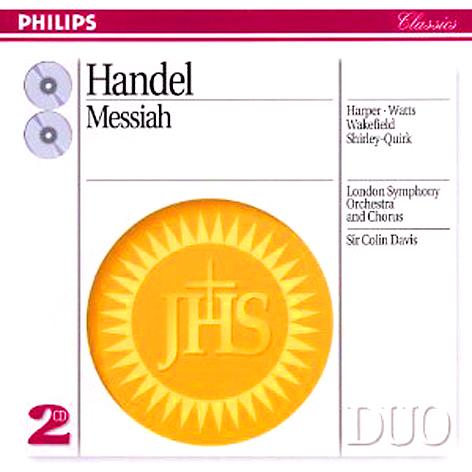
Berlioz was a composer who Davis was especially close to, but his range was extremely wide. His 1966 version of Handel’s Messiah (available complete on You Tube) has probably given joy to millions. It’s appeared on several different labels in a range of countries and is currently most easily found on the Philips Duo bargain label. It was made with the London Symphony Orchestra, and though it came before the fashion for period instruments for 18th century music, few can object to anything about this magnificent recording. It’s overflowing with feeling, the most important consideration, arguably, with any performance.
Again commenting on a later version he conducted, Davis remarked of Messiah that it was frequently cited as one of the greatest musical works ever penned, and not without reason. Handel’s musical inventiveness seemed to know no limits, with melodies characteristically developed in later appearances in utterly original and attractive ways.
The main interest of Prokofiev’s opera The Love of Three Oranges (here The Love for Three Oranges) is that it’s based on the play of the same name by the Venetian playwright Carlo Gozzi (1720-1806). We in the Anglo-Saxon world — and no doubt in the pan-Chinese world as well — are the poorer for knowing so little about classical Italian drama.
The greatest Venetian dramatist was Goldoni, but Gozzi, who reverted to older Italian styles rather than the French forms Goldoni was imitating, also deserves to be read. Why we don’t read these great classics rather than the ephemeral trivia that publishers are so eager to promote is an easy question to answer — publishers can make a quick profit from new works, but rarely from older texts that are out of copyright.
Gozzi’s conception in this particular play is extraordinary in that it includes surrealist material hugely ahead of its time. A prince is afflicted with melancholia and nothing can succeed in making him laugh until an evil agent, Fata Morgana, falls over revealing her underwear. When he does now indeed laugh, she curses him — his fate is the absurdist one that he will fall in love with three oranges.
The production by Laurent Pelly for the Nederlandse Opera with the Rotterdam Philharmonic Orchestra is stunning indeed. Card games feature early on in the story, so giant, movable playing cards form the essential idea for the sets (by Chantal Thomas). Opus Arte are to be congratulated for coming up with a spectacular DVD, filmed in Amsterdam’s Musiektheater. It’s sung in French, as at the premiere in Chicago in 1921, with English, French, German, Spanish, Italian and Dutch subtitles.
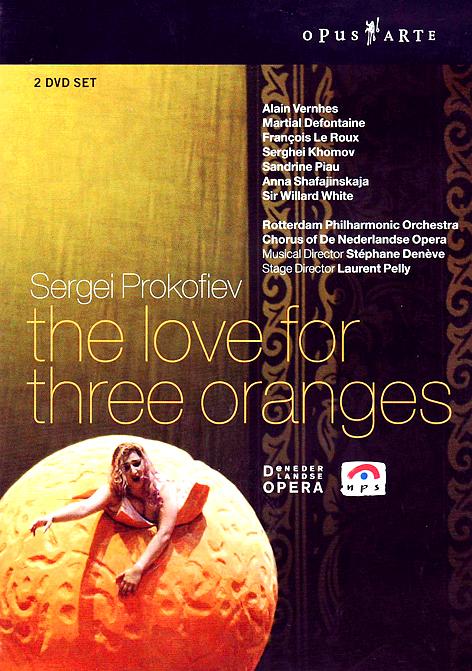
Alain Vernhes is funny as the king, and Martial Defontaine acts the Prince appropriately in all his shifting moods. Anna Shafajinskaja is rightly grotesque as Fata Morgana, while Sandrine Piau manages real innocence as Ninette, the third orange and the only one to survive.
Carlo Gozzi’s contribution to the history of opera isn’t limited to this one item. His play about the Chinese princess Turandot also provided the storyline for Puccini’s famous opera. His Useless Memoirs (1797) were translated into English by John Addington Symonds in 1890 (and can be read on Project Gutenberg, www.gutenberg.org). Goldoni’s judgement, that Gozzi was a man who had a smile on his lips but poison in his heart, is only partly borne out by this quirky, irascible book.
Mozart’s five violin concertos are mostly youthful, crowd-pleasing exercises, though the slightly later Sinfonia Concertante, a double-concerto for violin and viola, is a more substantial work. The young Hungarian violinist Barnabas Kelemen performs them all on two DVDs for the Hungaraton label as Mozart’s Complete Works for Violin and Orchestra, together with a couple of other minor items. He might even convince you of the value of the five concertos, so great is his commitment, and so seemingly unpremeditated — and persuasive — his facial expressions.
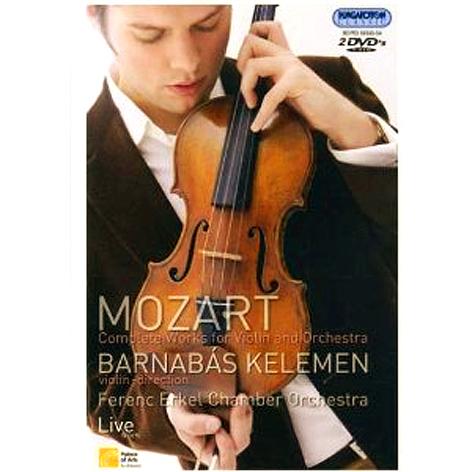
He registers astonishment, for instance, at some technical device of Mozart’s the significance of which might otherwise have escaped the unlearned. In the Sinfonia Concertante he’s joined by the less demonstrative Katalin Kokas.
These are an engagingly accessible pair of DVDs in which listeners who wish they could appreciate Mozart’s violin concertos better might find a key to their charms that’s genuinely useful.


The US war on Iran has illuminated the deep interdependence of Asia on flows of oil and related items as raw materials that become the basis of modern human civilization. Australians and New Zealanders had a wake up call. The crisis also emphasizes how the Philippines is a swatch of islands linked by jet fuel. These revelations have deep implications for an invasion of Taiwan. Much of the commentary on the Taiwan scenario has looked at the disruptions to world trade, which will be in the trillions. However, the Iran war offers additional specific lessons for a Taiwan scenario. An insightful

The problem with Marx’s famous remark that history repeats itself, first as tragedy, the second time as farce, is that the first time is usually farce as well. This week Chinese Nationalist Party (KMT) Chair Cheng Li-wun (鄭麗文) made a pilgrimage to the People’s Republic of China (PRC) “to confer, converse and otherwise hob-nob” with Chinese Communist Party (CCP) officials. The visit was an instant international media hit, with major media reporting almost entirely shorn of context. “Taiwan’s main opposition leader landed in China Tuesday for a rare visit aimed at cross-strait ‘peace’”, crowed Agence-France Presse (AFP) from Shanghai. Rare!

What is the importance within the Chinese Nationalist Party (KMT) of the meeting between Xi Jinping (習近平), the leader Chinese Communist Party (CCP), and Cheng Li-wun (鄭麗文), the leader of the KMT? Local media is an excellent guide to determine how important — or unimportant — a news event is to the public. Taiwan has a vast online media ecosystem, and if a news item is gaining traction among readers, editors shift resources in near real time to boost coverage to meet the demand and drive up traffic. Cheng’s China trip is among the top headlines, but by no means

Sunflower movement superstar Lin Fei-fan (林飛帆) once quipped that the Democratic Progressive Party (DPP) could nominate a watermelon to run for Tainan mayor and win. Conversely, the DPP could run a living saint for mayor in Taipei and still lose. In 2022, the DPP ran with the closest thing to a living saint they could find: former Minister of Health and Welfare Chen Shih-chung (陳時中). During the pandemic, his polling was astronomically high, with the approval of his performance reaching as high as 91 percent in one TVBS poll. He was such a phenomenon that people printed out pop-up cartoon


 RSS
RSS