


It’s understandable that when you hear the name Designer Drugs, you’re not sure what to think. Half the DJ-and-producer duo didn’t know what to think either. It was Michael Vincent Patrick, one half of Designer Drugs, who came up with name and the other half, Theodore Paul Nelson, who was skeptical. Actually, it’s nothing more than a cool name inspired by a chapter of a drug awareness book. They laughed and joked that they wanted to “try it.” Now, Designer Drugs is a household name among electronic music enthusiasts and club heads.
Tonight is their third official show in Taiwan, but Patrick has been spotted around town more often than that. Although he regularly plays in New York, Los Angeles and in pretty much every corner of the world, in interviews he always mentions Taiwan as his favorite place.
“Friendly people who have a high appreciation for art are hard to find on this planet,” he said in an interview with the Taipei Times. “I find Taiwan’s modernity appealing and I’m a bit of a xenophile, so I really enjoy the contrast in culture.”

Photo courtesy of Designer Drugs
Nelson hasn’t been here yet, so he’s extended his trip to over a week so he has time to experience the fashion, food and people. And Asia, he said, is his favorite place to tour. “It’s the future. It’s a rapidly developing place in the world, and I think it’s often more developed than the USA.”
For a few years, Nelson had been busy finishing up medical school while Patrick toured the world solo. Now for the first time in their career, both of them can focus on Designer Drugs. Patrick said people can expect to see an improvement in productivity, production quality and integrity. “I think we’ll become more prolific again,” he said.
Except that I think they’ve been prolific all along. The duo recently produced hundreds of remixes and original productions that are distorted with a gritty, hardcore and punk rock sound. And they managed to keep it classy. “We like to change it up once in a while,” said Nelson. “We also have a soft side for high quality vocal recordings like Flo Rida, or an amazing voice like Mariah Carey’s.”
Going back to Datamixes — their long-running DJ mix series that is currently in the 19th edition — their sound has shifted from somewhat dark and aggressive to softer and more harmonious. That’s consistent with what’s happening to electronic music as a genre. Patrick thinks of Designer Drugs as an experiment rooted in the contemporary music they hear. “As the music scene evolves, the Designer Drugs project will evolve around that with our spin on it,” he said.
And yes, the electronic music scene is evolving — something Patrick is cautious about. “It’s equally good and bad. It’s good for money but bad for music,” he said. But Nelson said the motivation that comes from so much competition is a good thing, and that there are still plenty of sub-genres, like theirs, that are not yet popular and manage to exude an underground vibe.
■ Designer Drugs plays tonight at Danceport 2013 from 10pm and 6am. The event is located between Greater Kaohsiung and Tainan at the Xingda Port (高雄市茄萣區興達港情人碼頭海上劇場). Transportation information in English and Chinese: www.spunite.com. Tickets are NT$1,000 in advance and can be purchased at any 7-11 iBon machine. Admission at the venue is NT$1,200.

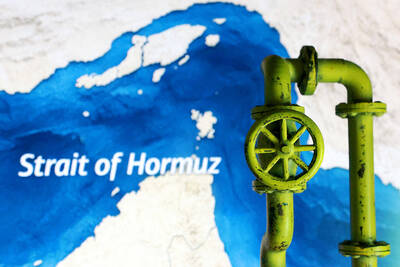
The US war on Iran has illuminated the deep interdependence of Asia on flows of oil and related items as raw materials that become the basis of modern human civilization. Australians and New Zealanders had a wake up call. The crisis also emphasizes how the Philippines is a swatch of islands linked by jet fuel. These revelations have deep implications for an invasion of Taiwan. Much of the commentary on the Taiwan scenario has looked at the disruptions to world trade, which will be in the trillions. However, the Iran war offers additional specific lessons for a Taiwan scenario. An insightful
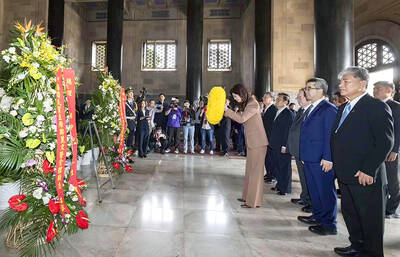
The problem with Marx’s famous remark that history repeats itself, first as tragedy, the second time as farce, is that the first time is usually farce as well. This week Chinese Nationalist Party (KMT) Chair Cheng Li-wun (鄭麗文) made a pilgrimage to the People’s Republic of China (PRC) “to confer, converse and otherwise hob-nob” with Chinese Communist Party (CCP) officials. The visit was an instant international media hit, with major media reporting almost entirely shorn of context. “Taiwan’s main opposition leader landed in China Tuesday for a rare visit aimed at cross-strait ‘peace’”, crowed Agence-France Presse (AFP) from Shanghai. Rare!
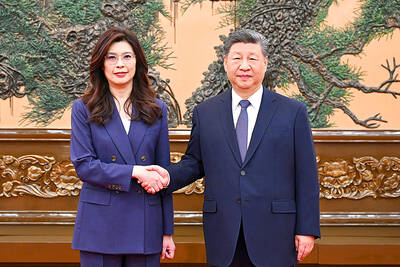
What is the importance within the Chinese Nationalist Party (KMT) of the meeting between Xi Jinping (習近平), the leader Chinese Communist Party (CCP), and Cheng Li-wun (鄭麗文), the leader of the KMT? Local media is an excellent guide to determine how important — or unimportant — a news event is to the public. Taiwan has a vast online media ecosystem, and if a news item is gaining traction among readers, editors shift resources in near real time to boost coverage to meet the demand and drive up traffic. Cheng’s China trip is among the top headlines, but by no means

Sunflower movement superstar Lin Fei-fan (林飛帆) once quipped that the Democratic Progressive Party (DPP) could nominate a watermelon to run for Tainan mayor and win. Conversely, the DPP could run a living saint for mayor in Taipei and still lose. In 2022, the DPP ran with the closest thing to a living saint they could find: former Minister of Health and Welfare Chen Shih-chung (陳時中). During the pandemic, his polling was astronomically high, with the approval of his performance reaching as high as 91 percent in one TVBS poll. He was such a phenomenon that people printed out pop-up cartoon


 RSS
RSS