


Greeting cards are not just a good way to keep in touch with your loved ones — they are also a kaleidoscope of trends, past and present. To make the point, Taipei Story House (台北故事館) is holding a special exhibition of over a thousand vintage greeting cards from around the world.
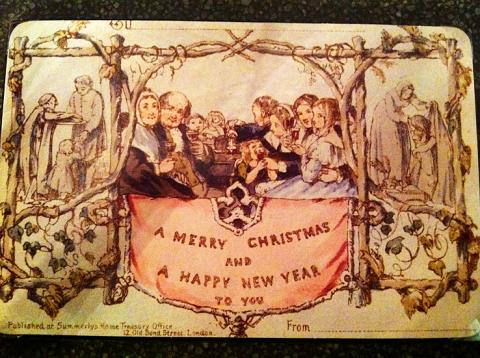
The tradition of exchanging holiday greetings through cards most likely began in London in the 1840s, when Sir Henry Cole hired an artist to design a Christmas card that he could distribute among his friends, according to Sally Chen (陳淑美), head of Taipei Story House’s promotion section.
The practice of sending and receiving greeting cards of all sorts gained traction soon after, thanks to the introduction of postage stamps and advances in printing. The tradition remains strong even today, and designers have enriched the form by injecting cultural elements from their era.
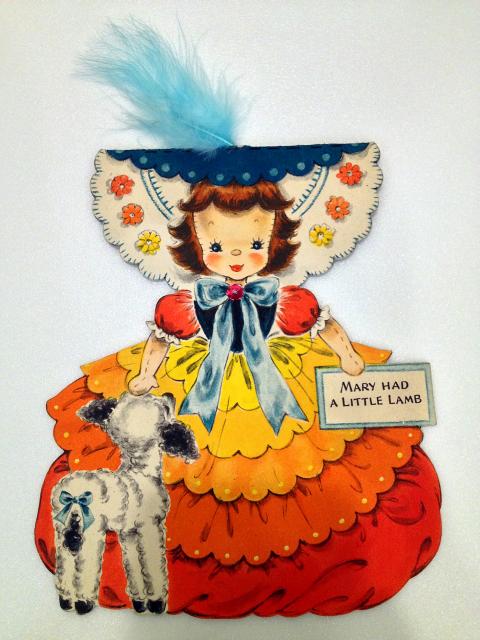
Courtesy of Taipei Story House
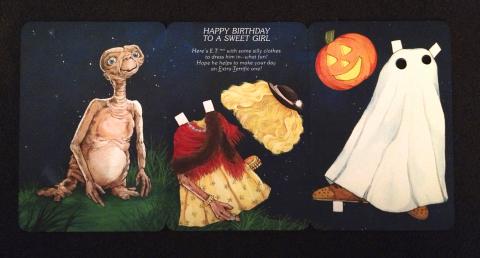
Take a batch of birthday cards printed in the 1980s, for example. These card covers are populated with ET, Darth Vader and Barbie cut-outs — reflections of pop culture and lifestyle at the time, according to Chen.
“There weren’t many play toys back then, so it was fashionable to have paper doll cut-outs in greeting cards. It’s like killing two birds with one stone: keeping the children happy and saving money on their birthday present,” she said.
Visitors can also peek into the past by reading the messages penned inside used greeting cards.
Courtesy of Taipei Story House
“For the past eighteen years Billy dear, you have been the most perfect son a mother could ever have,” a card reads. This mother chose a birthday card with a smoking gentleman, which reflects the prominent cigarette culture of the 1940s.
“It’s interesting how much you can see in the cards,” Chen said.
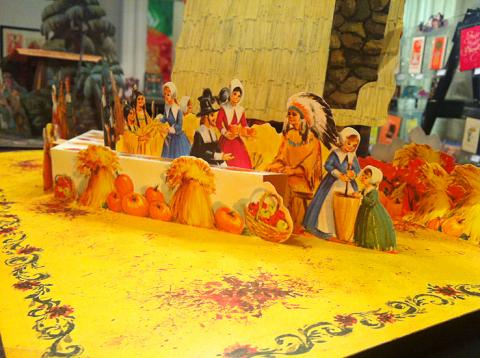
To make the exhibition more colorful, one room is wholly dedicated to unique holiday greeting cards from 15 different cultures. India, a community that highly values family bonds, is represented by Brother and Sister Day. Men’s Day is a Russian creation that marked the establishment of the Red (Soviet) Army in 1918.
Courtesy of Taipei Story House
“The cards will definitely take you on a life’s journey of big and small moments, happy and challenging times,” Chen said.
Courtesy of Taipei Story House

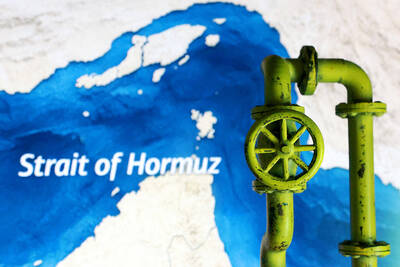
The US war on Iran has illuminated the deep interdependence of Asia on flows of oil and related items as raw materials that become the basis of modern human civilization. Australians and New Zealanders had a wake up call. The crisis also emphasizes how the Philippines is a swatch of islands linked by jet fuel. These revelations have deep implications for an invasion of Taiwan. Much of the commentary on the Taiwan scenario has looked at the disruptions to world trade, which will be in the trillions. However, the Iran war offers additional specific lessons for a Taiwan scenario. An insightful
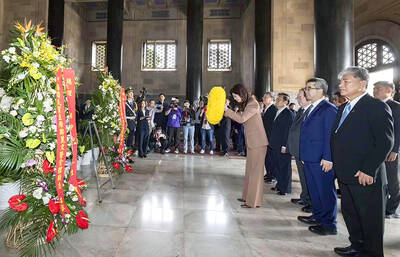
The problem with Marx’s famous remark that history repeats itself, first as tragedy, the second time as farce, is that the first time is usually farce as well. This week Chinese Nationalist Party (KMT) Chair Cheng Li-wun (鄭麗文) made a pilgrimage to the People’s Republic of China (PRC) “to confer, converse and otherwise hob-nob” with Chinese Communist Party (CCP) officials. The visit was an instant international media hit, with major media reporting almost entirely shorn of context. “Taiwan’s main opposition leader landed in China Tuesday for a rare visit aimed at cross-strait ‘peace’”, crowed Agence-France Presse (AFP) from Shanghai. Rare!
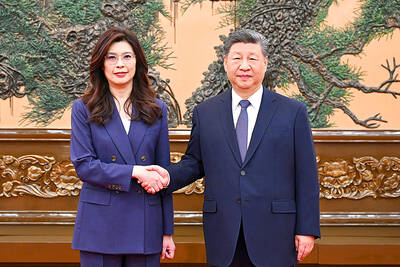
What is the importance within the Chinese Nationalist Party (KMT) of the meeting between Xi Jinping (習近平), the leader Chinese Communist Party (CCP), and Cheng Li-wun (鄭麗文), the leader of the KMT? Local media is an excellent guide to determine how important — or unimportant — a news event is to the public. Taiwan has a vast online media ecosystem, and if a news item is gaining traction among readers, editors shift resources in near real time to boost coverage to meet the demand and drive up traffic. Cheng’s China trip is among the top headlines, but by no means
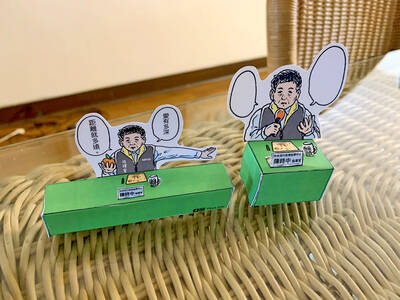
Sunflower movement superstar Lin Fei-fan (林飛帆) once quipped that the Democratic Progressive Party (DPP) could nominate a watermelon to run for Tainan mayor and win. Conversely, the DPP could run a living saint for mayor in Taipei and still lose. In 2022, the DPP ran with the closest thing to a living saint they could find: former Minister of Health and Welfare Chen Shih-chung (陳時中). During the pandemic, his polling was astronomically high, with the approval of his performance reaching as high as 91 percent in one TVBS poll. He was such a phenomenon that people printed out pop-up cartoon


 RSS
RSS