


Taiwan should be interested in Tash Aw. He was born here, to Chinese-Malaysian parents, but the family moved back to Malaysia two years later. He then moved to the UK for his university education, and got himself into Cambridge where he read law. His fictional debut, The Harmony Silk Factory, appeared in 2005 and won the Whitbread Prize for a first novel. This new book, Five Star Billionaire, is his third. It features five characters, all Chinese from Malaysia, living and struggling to succeed in modern Shanghai. One of them is a pop-singer who found his first success in Taipei.
The five are Phoebe, who travels to Shanghai to take up a job that no longer exists; Gary (the pop star) who is far less certain of himself than his public performances would suggest, and who gets into a pub brawl with disastrous consequences; Justin, the off-shoot of a family with a long history of entrepreneurial success, who’s also less than perfectly fitted for his role; the ambitious Yinghui; and the enigmatic Walter, the only character to speak in the first person and, among other things, a writer.
Inevitably the lives of these characters interact. This involves coincidences, but this wouldn’t be a novel without them, and anyway they’re much less unbelievable than the coincidences that proliferate so enjoyably in Anthony Powell’s classic A Dance to the Music of Time.
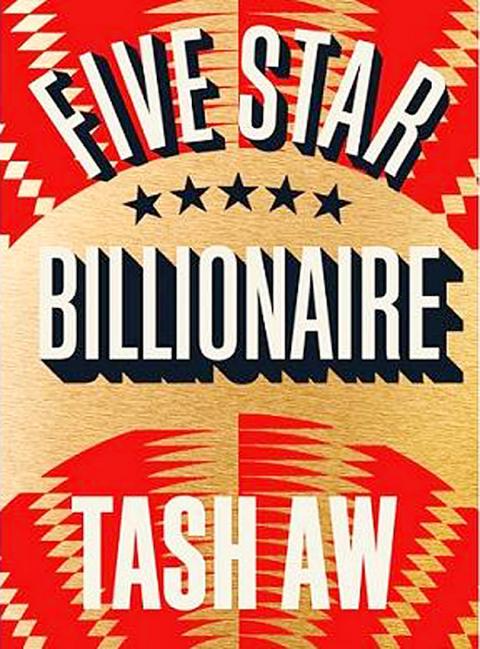
I wish I could have enjoyed this ambitious novel more than I did. In an interview Aw has said that the novel that most influenced him was Moby Dick, but there isn’t a shred in this new publication of Melville’s poetic, world-ranging romanticism, let alone any obvious concern for nature (except in passages about Walter’s father, who’s trying to restore an old hotel back in Kota Bharu) or sense of the wonder and mystery of the world. Instead, it’s all about Shanghai’s commercial life, and the characters’ attempts to come to terms with it. In any event I found this depressing, even claustrophobic.
None of the characters show any interest in matters unrelated to the commercial life of the city. There’s no one concerned with medicine, say, or scholarship, as there are in George Eliot’s Middlemarch, the inevitable bench-mark when considering long novels with interacting characters. Five Star Billionaire might form the basis for a good TV series, where characters don’t usually have intellectual interests, but I for one expect a novel to display greater imaginative daring.
It’s arguable that Aw is highly critical of Shanghai’s commercialism, and that this is the whole point of his novel. This would make it a work of social criticism, but if this is the case then it should display its author’s attitudes far more openly and vibrantly than it does. As it is, the book lacks any sense of danger, any caustic bite, and, inevitably, any comedy. This makes it a bland read, an especially serious shortcoming in a work of social criticism.
Presumably the great novel about this city is Han Bangqing’s (韓邦慶) The Sing-song Girls of Shanghai [reviewed in the Taipei Times June 22, 2008]. This novel is characterized by the tricks and ploys used in classic urban stage comedies, with “extortionists, blackmailers, con-men, messengers, locked boxes, abductions, hen-pecked husbands, cheating lovers and meddling mothers,” as I wrote about it five years ago. Five Star Billionaire needs a liberal dose of this sort of thing to relieve it from the aura of sameness that tends to characterize its pages.
This, in other words, is an attempt at a major novel that in important ways fails. Great books have an unmissable originality and flair about them, but I found this novel, by contrast, distinctly hard-going.
Yet the publishers have spared themselves no pains in their pre-publicity. They even promise that “proposed social media activity will create online profiles for the novel’s characters to allow direct interaction with readers.” Who will monitor the resulting activity, you wonder? Teams of scribes trained in the thought-patterns of the five? Presumably Aw won’t be directly involved.
It so happens that there’s a Taiwanese novelist, also with a Malaysian background, whose work is preferable to this novelist’s. He’s Zhang Guixing (張貴興), whose exotic novel My South Seas Sleeping Beauty was reviewed in these pages on May 13, 2007.
One chapter of Zhang’s colorful evocation of life in Borneo, replete with ghosts and magical monsters, and very funny, is for me worth all of Aw’s meticulous depiction of the victims of the neuroses fed by Shanghai’s commercial modernity.
One thing that characterizes Aw’s sensibility, but is certainly not at all typical of Zhang Guixing’s, is Englishness. Maybe our author has spent too long living in close contact with the fastidiousness induced by the UK’s cold and misty climate, and needs to get back East to re-experience its more seductive aromas. Who knows, he might even find some of them lurking in Shanghai itself.

The US war on Iran has illuminated the deep interdependence of Asia on flows of oil and related items as raw materials that become the basis of modern human civilization. Australians and New Zealanders had a wake up call. The crisis also emphasizes how the Philippines is a swatch of islands linked by jet fuel. These revelations have deep implications for an invasion of Taiwan. Much of the commentary on the Taiwan scenario has looked at the disruptions to world trade, which will be in the trillions. However, the Iran war offers additional specific lessons for a Taiwan scenario. An insightful
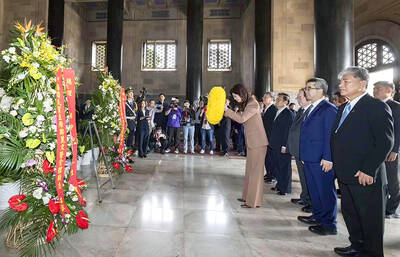
The problem with Marx’s famous remark that history repeats itself, first as tragedy, the second time as farce, is that the first time is usually farce as well. This week Chinese Nationalist Party (KMT) Chair Cheng Li-wun (鄭麗文) made a pilgrimage to the People’s Republic of China (PRC) “to confer, converse and otherwise hob-nob” with Chinese Communist Party (CCP) officials. The visit was an instant international media hit, with major media reporting almost entirely shorn of context. “Taiwan’s main opposition leader landed in China Tuesday for a rare visit aimed at cross-strait ‘peace’”, crowed Agence-France Presse (AFP) from Shanghai. Rare!
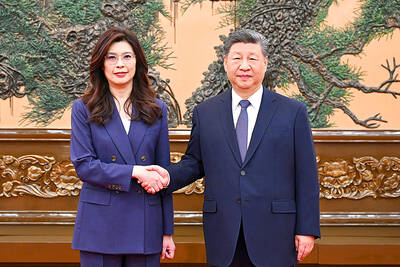
What is the importance within the Chinese Nationalist Party (KMT) of the meeting between Xi Jinping (習近平), the leader Chinese Communist Party (CCP), and Cheng Li-wun (鄭麗文), the leader of the KMT? Local media is an excellent guide to determine how important — or unimportant — a news event is to the public. Taiwan has a vast online media ecosystem, and if a news item is gaining traction among readers, editors shift resources in near real time to boost coverage to meet the demand and drive up traffic. Cheng’s China trip is among the top headlines, but by no means

Sunflower movement superstar Lin Fei-fan (林飛帆) once quipped that the Democratic Progressive Party (DPP) could nominate a watermelon to run for Tainan mayor and win. Conversely, the DPP could run a living saint for mayor in Taipei and still lose. In 2022, the DPP ran with the closest thing to a living saint they could find: former Minister of Health and Welfare Chen Shih-chung (陳時中). During the pandemic, his polling was astronomically high, with the approval of his performance reaching as high as 91 percent in one TVBS poll. He was such a phenomenon that people printed out pop-up cartoon


 RSS
RSS