


Filmmaker and author Mickey Chen (陳俊志), 44, said he did not sleep the night before our interview in his cluttered Taipei apartment. The documentary director has been in a frenzy since his book Taipei Father, New York Mother (台北爸爸,紐約媽媽) hit the bookshelves in January and quickly climbed up the bestseller chart.
We settled down on the sofa, one of the few spots not covered with stacks of books or DVDs. Apologizing for his “casual attire,” the author explained that he had stayed up all night working on a documentary project that he started six years ago. The film’s subject matter is the same as that of his autobiographic book: Chen’s family history and personal scandals.
In the book, Chen’s story begins with his wealthy family falling on hard times during the 1970s energy crisis. Chen’s mother, whose own parents were born in China, and father move to the US to make money to feed their family in Taiwan, leaving Chen to be raised by his grandparents. After his parents split up, Chen’s father returns to Taiwan. Chen’s elder sister runs away from home and dies of a drug overdose aged 19, and his father, the embodiment of patriarchal oppression, is blamed for the Chen family’s many woes.
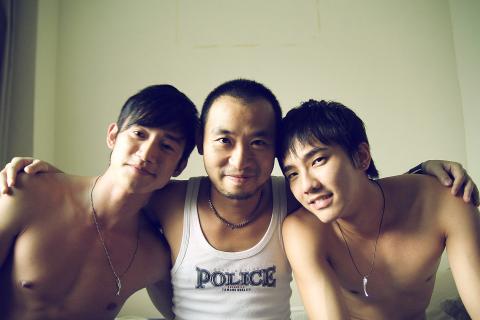
Photo courtesy of Mickey Chen
Chen is now an established documentary director and an outspoken homosexual activist who often refers to himself using the feminine nickname Lao Niang (老娘).
Here he discusses his artistic career, what it’s like to come from a broken family and his plan to adapt his book for the big screen, a project that has reportedly drawn the interest of Lee Lieh (李烈), producer of the Taiwanese blockbuster Monga (艋舺).
Taipei Times: You once said that cinema is your mother. Why?
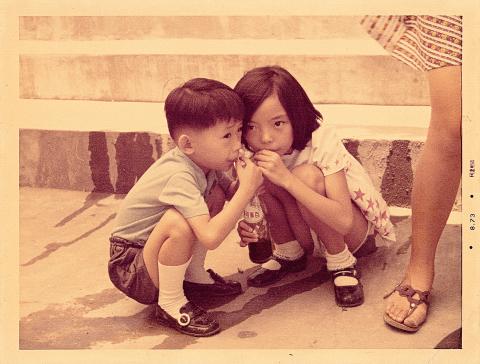
Photos courtesy of Mickey Chen
Mickey Chen: Children from dysfunctional families have different ways of licking their wounds. My brother is addicted to gambling, my older sister died of an overdose, and my younger sister spends her life in the frantic pursuit of love. I choose to hide in the abstract world of literature and the arts. I became parentless at the age of 10. Cinema taught me how to become the person I wanted to be.
TT: After graduating from the Department of Foreign Languages and Literatures at National Taiwan University (國立台灣大學), you went to the City University of New York to study documentary filmmaking. Is that where you learned the theory and practice of activist filmmaking?
MC: Yes. Our school has a strong tradition of black cinema, and there’s a strong belief that minorities should write their own histories. It also has a lot to do with me being a foreign student in the US when China increased the missile threat to Taiwan in 1996. My homosexual identity and my awareness of being Taiwanese are somewhat related in the sense that I clearly understand the meaning of being a minority.
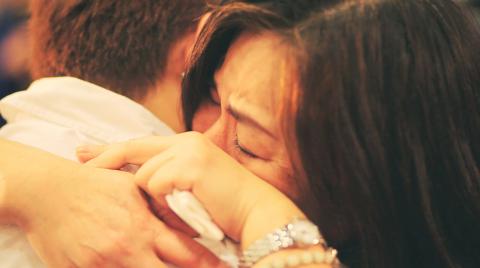
Photo courtesy of Mickey Chen
Chen is best known for making documentaries that focus on Taiwan’s gay community. His first, Not Simply a Wedding Banquet (不只是喜宴, 1997), was codirected with Mia Chen (陳明秀). The film follows Hsu Yu-sheng (許佑生) and his American partner Gary Harriman, who in 1996 became the first gay couple to hold a public, though not legally recognized, wedding in Taiwan. Chen’s Boys for Beauty (美麗少年, 1999) and Scars on Memory (無偶之家,往事之城, 2005) explore the lives of gay teens and older homosexuals in Taiwan, while the 2003 documentary Memorandum on Happiness (幸福備忘錄) explores the issue of domestic violence among homosexual couples.
TT: In recent years, you have dropped your activist role and focused on filmmaking. Why the change?
MC: I struggled between the roles of activist and filmmaker and realized that it was impossible for me to play both. After Boys for Beauty in 1999, I dedicated most of my time to the [gay rights] movement, and it exhausted me. Activists give themselves over to the movement, leaving individual activists nameless. The artist inside me is too strong to remain silent. Memorandum on Happiness from 2003 was a key point in my filmmaking career. That film is my Dogme 95 Manifesto. It is very simple and devoid of stylish trappings. To me, the film is a return to the basics: storytelling.
TT: So you see yourself as a storyteller?
Chen: If you look at all my works, you will see what separates me from other documentary filmmakers, such as Huang Ting-fu (黃庭輔), Lin Tai-chou (林泰洲) and Yang Li-chou (楊力州), is my strength in storytelling. When it comes to creating forms and styles, I am neither experimental nor avant-garde, but I am a storyteller who can be understood by the grandmother next door. My artistic challenge and achievement are to compose different narrative variations, to explore different approaches to storytelling. I am a witch of narration.
TT: In other interviews, you have said that as an artist, you are fond of exploring intertextual relations among different genres. Could you elaborate?
MC: Literature always plays an important part in my films. It is integral to the content, as in Boys for Beauty, or parts of the narrative structure, as in Memorandum on Happiness and Scars on Memory. But for the Taipei Father, New York Mother project, I will be creating three different types of cultural products — a documentary, a feature film and a book — from the same material. The interplay between the three will be much more complicated and exciting than any of my previous works.
TT: As far as the documentary project is concerned, will you change your approach to filmmaking because the subjects are people very close to you?
MC: No, it is exactly the same. All the documentary films I have made in the past 12 years deal with issues and people that cannot really come out of the closet. So I am trained to never find the answer I want by asking. I wait till the answer comes out by itself. In the book, I wonder how my mother deals with grief as we have never heard her talking about our sister after she passed away. My camera found the answer by accident one day when it captured the name of my late sister written on the first page of my mother’s schedule book.
TT: Your book is regarded as a work of diaspora literature that sheds light on the collective experience of 1970s Taiwan. What is your view point regarding that observation?
MC: My mother was forced to go to the US 30 years ago in much the same way that a Filipino worker comes to Taiwan today — to earn money to feed her family in an undeveloped country. We spent each and every day in our childhoods living the diaspora experience under global capitalism. The book is culturally challenging in the sense that it calls for a paradigm shift. Why do we still talk about 1949?
Big River, Big Sea — Untold Stories of 1949 (大江大海一九四九) is Taiwanese writer Lung Ying-tai’s (龍應台) account of her parent’s generation, which fled to Taiwan after the Chinese Nationalist Party (KMT) lost the Chinese Civil War to the communists. Chen speaks of two great splits in Taiwan. The first occurring in 1949 when the KMT forces fled to Taiwan, the second happening in the 1970s when many Taiwanese worked abroad to support their families.
MC: Haven’t the Mainlanders claimed the right to interpret history long enough already? We, the 40-something Taiwanese, have our own great split, stories to tell. We should have the guts to seize the right to speak out. Enough already with 1949. Time to talk about the poor tribulations of an orphaned girl such as me some 30 years ago (laughing).
TT: Is it true that when you wrote the book, you saw Indian American author Jhumpa Lahiri as an inspiration and wanted to become a better writer than she is?
MC: Yes, because I am a competitive A+ student (laughing). No, seriously, Lahiri is a second-generation immigrant who has a nostalgic view of her cultural roots. I am an aggressive minority who wants to lay bare the hidden parts of history.
TT: Many book reviews focus on the antagonism between father and son in your autobiography. What’s your take on it?
MC: In the process of becoming a man, how many boys dream of killing their fathers? Not many people readily admit it, but I say it out loud. In my book, they [male critics] see themselves in the past as boys who battle against their oppressive fathers.
In the book, Chen speaks of his father as an overbearing patriarch, and holds him responsible for his sister’s death. At a book promotion event held in January, Chen said that he had formulated a plan to make the documentary about his family 12 years ago, but his proposals for funding were repeatedly rejected and he said his work was criticized as “shameless and disrespectful.”
TT: Why do you refer to yourself with feminine nicknames, such as Sister Chi (琪姐) or Lao Niang?
MC: It’s about queer spirit. We can all be free if the world is completely topsy-turvy and mixed-up. Sister Chi is definitely a taimei (台妹) [meaning Taiwanese hot chick]. I have a ... friend who didn’t have a chance to receive a good education. He loves fashion design and always dreams of making a wedding dress in black and red. I asked why. He said white is a Western color, but in Taiwanese culture, red and black are the grandest. Taiwan has a distinct aesthetic that is very different from China. Since [Chinese director] Zhang Yimou (張藝謀) is so good at selling the Chinese look, I will tackle him on the international film festival circuit (laughing). I have already been contacted by Chen Kuo-fu (陳國富) [a Taiwanese director who moved to China and became a film producer making big-budget movies with crews and casts from Taiwan, Hong Kong and China and money mostly from Chinese investors], but I don’t want China’s money [for the film adaptation of the book]. The theme of homosexuality [a taboo subject in the eyes of Chinese censors] is an essential part of my film. To me, it would never be an option to play down my Taiwanese subjectivity just to cater to the Chinese market.
TT: What is your current plan for the film adaptation?
MC: It will be a trilogy and filled with divas. The roles of my three aunts will be accentuated in the family drama. It will be like Pedro Almodovar’s movies, in which the female narrative is painted on the flamboyant canvas of male bodies and queer sexuality.
TT: Has your family read the book? What were their reactions?
MC: Yes. Even my father — he’s 73 now — received it with the kind of love that comes from a typical Taiwanese family. It is artless, plebeian and forgiving.
This interview has been condensed and edited.

Just after 6am, I walked up to the ticket gate at Taipei Main Station and entered the Taiwan Railway platform without scanning any ticket; instead, I flashed the Sanrio Fun Rail pass on my phone to the gate worker and was admitted. I found my train and prepared to board. My destination? This very same station. I was embarking on a 13-hour journey on one of two round-the-island trains operated by ezTravel. They run each day, one counterclockwise around the island and one clockwise. They differ in a number of ways from an ordinary Taiwan Railway train and can make for
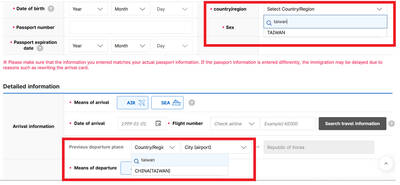
Jason Han says that the e-arrival card spat between South Korea and Taiwan shows that Seoul is signaling adherence to its “one-China” policy, while Taiwan’s response reflects a reciprocal approach. “Attempts to alter the diplomatic status quo often lead to tit-for-tat responses,” the analyst on international affairs tells the Taipei Times, adding that Taiwan may become more cautious in its dealings with South Korea going forward. Taipei has called on Seoul to correct its electronic entry system, which currently lists Taiwan as “China (Taiwan),” warning that reciprocal measures may follow if the wording is not changed before March 31. As of yesterday,
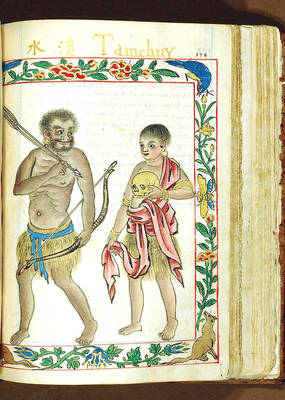
The Portuguese never established a presence on Taiwan, but they must have traded with the indigenous people because later traders reported that the locals referred to parts of deer using Portuguese words. What goods might the Portuguese have offered their indigenous trade partners? Among them must have been slaves, for the Portuguese dealt slaves across Asia. Though we often speak of “Portuguese” ships, imagining them as picturesque vessels manned by pointy-bearded Iberians, in Asia Portuguese shipping between local destinations was crewed by Asian seamen, with a handful of white or Eurasian officers. “Even the great carracks of 1,000-2,000 tons which plied
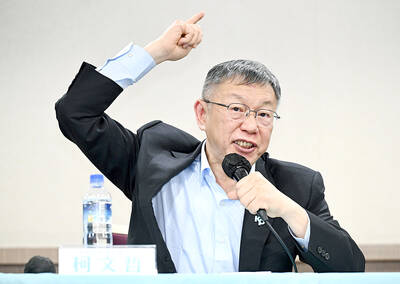
On Thursday, former Taipei mayor and founder of the Taiwan People’s Party (TPP) Ko Wen-je (柯文哲) was sentenced to 17 years in prison and had his civil rights suspended for six years over corruption, embezzlement and other charges. Seven others related to the case were also handed prison sentences, while two were found not guilty. It has been a bad week for the TPP. On Tuesday, prosecutors charged Chinese immigrant Xu Chunying (徐春鶯) with suspicion of taking part in Beijing-directed election interference. Xu has strong links to the TPP, which once offered her a party list legislator nomination. Tuesday also


 RSS
RSS