


The leader of the Catholics in England in Wales rejected accusations that Pope Benedict was fishing for converts and said “delicate and difficult” issues existed between his church and the Anglican Communion.
His comments come two weeks before Pope Benedict’s four-day trip to England and Scotland, the first papal visit since John Paul II’s pastoral visit in 1982 and the first-ever official papal visit to Britain.
Relations between the two churches have been tense since the pope offered disaffected Anglicans opposed to their church’s ordination of women and homosexual bishops the chance to convert to Rome while keeping some of their traditions.
“There are delicate, difficult issues between our two churches at the moment,” Archbishop of Westminster Vincent Nichols, head of the 5.2 million Catholics in England and Wales, said.
But, Nichols said the offer came after groups of Anglicans repeatedly asked for a response to their request for special provision to enter into full communion with the Catholic Church.
“Sometimes people want to say ‘oh, this is the initiative of the pope who is going fishing for Anglicans.’ That is not true. He is responding to requests that he has received, and those requests we have to handle sensitively on both sides.”
Pope Benedict is due to meet Archbishop of Canterbury Rowan Williams, spiritual head of the Anglican Communion and leader of its mother church, the Church of England, during his stay.
Many Anglicans believe Williams was humiliated by last October’s offer, which was made with little advance warning, while some Catholics are unhappy at the terms of the offer, which would allow married Anglican priests to convert.
Nichols said that although the issue was sensitive it would not break the strong relationship between the two churches.
“We have work to do, but we will do it together,” he said. “We will not be having harsh words with each other.”
It is not clear how many intend to convert, he said. In July the traditionalist Anglican Bishop of Fulham, John Broadhurst, suggested several hundred clergy and many laity would leave in the next three years.
Nichols also suggested the pope would not be affected by the adverse media attention ahead of the trip and the protests planned by secularists, gay rights groups, women ordination campaigners and those angry at the child-abuse scandal which has spread throughout the Catholic Church globally.
He pointed to recent papal visits where intense media criticism dissipated, he said, when people listened to what the pope had to say.
“I don’t think they will affect him deeply. No. Because I think he is a man who intelligently studies the world, and he knows the ebb and flow of opinion,” he said.
Meanwhile, he said the cost of the pope’s visit between Sept. 16 to Sept. 19 was likely to rise above £9 million (US$13.92 million) — higher than the initial estimate of £7 million.
The state’s share of the bill is likely to rise by 50 percent to £12 million. The Church has raised nearly £6 million, and Nichols was confident of raising the outstanding sum.
He also rejected media reports that there was a lack of interest in tickets for the public masses in Glasgow, London and Birmingham, saying “they are pretty well packed out now.”
For a fuller version of this interview click on http://blogs.reuters.com/faithworld


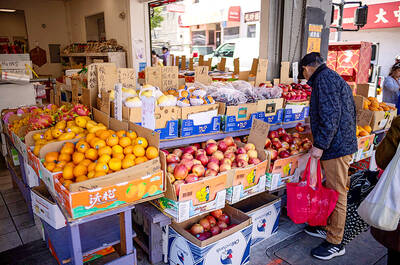
Ajay Verma, a consultant gastroenterologist at Kettering general hospital in Northamptonshire, says our gut is a “complex machine.” “It is constantly providing us with the nutrition we need, initially to grow and develop, and then for us to survive, thrive and repair from injury and illness.” How can we keep it functioning well? Put simply: “Make sure what you put into it is balanced, and that you clear out its waste products adequately,” Verma says. “In a general gastroenterology clinic, the most common conditions we see are irritable bowel syndrome (IBS), gastroesophageal reflux disease, inflammatory bowel disease and constipation,” says Nisha
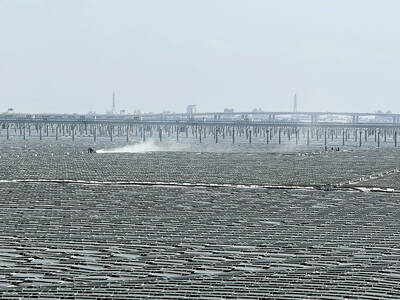
The arithmetic is straightforward and uncomfortable. By the end of 2025, Taiwan had committed itself to a 50-30-20 electricity mix — half natural gas, 30 per cent coal, 20 per cent renewables. The Ministry of Economic Affairs’s (MOEA) own monthly energy reports tell a different story. Natural gas reached 47.8 per cent of generation last year. Coal stood at 35.4 per cent, comfortably above its target ceiling. Renewables came in at 13.1 per cent, well short of the 20 per cent Taipei had pledged a decade earlier. Installed renewable capacity reached roughly half of the 12 gigawatts (GW) the government

Last week US President Donald Trump was asked by a reporter whether he would speak on the phone to the President of Taiwan. “l’ll speak to him. I speak to everybody. We have that situation very well in hand,” Trump said. This marked the second time in a couple of weeks he had said he would talk to the President of Taiwan. In 2016 he famously took a call from then-president Tsai Ing-wen (蔡英文), when he was president-elect. Despite warnings that the apocalypse was nigh because of a phone call, the world quickly forgot about the conversation between two democratically-elected presidents.
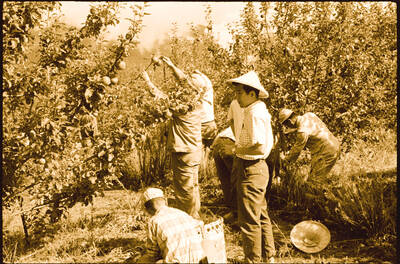
May 25 to May 31 Few believed that apples could be cultivated on a commercial scale in Taiwan’s high mountains. When horticulturalist Cheng Chao-hsiung (程兆熊) first proposed the idea in 1955, both American and Taiwanese colleagues dismissed it as implausible, arguing that temperate fruit could not be reliably grown on a subtropical island, especially on rugged terrain. However, it was this terrain in the Central Mountain Range where many Chinese Civil War veterans were resettled in the late 1950s. With limited job prospects and no family in Taiwan, they were placed on cooperative farms aimed toward self-sufficiency. Some say the conditions


 RSS
RSS