


Steve Ilardi is slim and enthusiastic, with intense eyes. The clinical psychologist is 7,000km from me, in Kansas, and we are chatting about his new book via Skype, the online videophone service. “I’ve spent a lot of time pondering Skype,” he says. “On the one hand it provides a degree of social connectedness. On the other, you’re still essentially by yourself.” But, he concludes, “a large part of the human cortex is devoted to the processing of visual information, so I guess Skype is less alienating than voice calls.”
Social connectedness is important to Ilardi. In The Depression Cure, he argues that the brain mistakenly interprets the pain of depression as an infection. Thinking that isolation is needed, it sends messages to the sufferer to “crawl into a hole and wait for it all to go away.” This can be disastrous because what depressed people really need is the opposite: more human contact.
Which is why social connectedness forms one-sixth of his “lifestyle based” cure for depression. The other five elements are meaningful activity (to prevent “ruminating” on negative thoughts); regular exercise; a diet rich in omega-3 fatty acids; daily exposure to sunlight; and good-quality, restorative sleep.
The program has one glaring omission: anti-depressant medication. Because according to Ilardi, the drugs simply don’t work. “Meds have only around a 50 percent success rate,” he says. “Moreover, of the people who do improve, half experience a relapse. This lowers the recovery rate to only 25 percent. To make matters worse, the side effects often include emotional numbing, sexual dysfunction and weight gain.”
As a respected clinical psychologist and university professor, Ilardi’s views are hard to dismiss. A research team at his workplace, the University of Kansas, has been testing his system — known as TLC (Therapeutic Lifestyle Change) — in clinical trials. The preliminary results show, he says, that every patient who put the full program into practice got better.
Ilardi is convinced that the medical profession’s readiness to prescribe anti-depression medication is obscuring an important debate. Up to 20 percent of the UK population will have clinical depression at some point, he says — twice as many as 30 years ago. Where has this depression epidemic come from?
The answer, he suggests, lies in our lifestyle. “Our standard of living is better now than ever before, but technological progress comes with a dark underbelly. Human beings were not designed for this poorly nourished, sedentary, indoor, sleep-deprived, socially isolated, frenzied pace of life. So depression continues its relentless march.”
Our environment may have evolved rapidly but our physical evolution hasn’t kept up. “Our genome hasn’t moved on since 12,000 years ago, when everyone on the planet were hunter-gatherers,” he says. “Biologically, we still have Stone Age bodies. And when Stone Age body meets modern environment, the health consequences can be disastrous.”
To counteract this Ilardi focuses on the aspects of a primitive lifestyle that militate against depression. “Hunter-gatherer tribes still exist today in some parts of the world,” he says, “and their level of depression is almost zero. The reasons? They’re too busy to sit around brooding. They get lots of physical activity and sunlight. Their diet is rich in omega-3, their level of social connection is extraordinary, and they regularly have as much as 10 hours of sleep.” Ten hours? “We need eight. At the moment we average 6.7.”
So we should all burn our possessions and head out into the forest? “Of course not,” Iladi shudders. “That would be like a lifelong camping trip with 30 close relatives for company. Nobody would recommend that.”
Instead we can adapt our modern lifestyle to match our genome by harnessing modern technology, such as fish oil supplements to increase our intake of omega-3. All well and good. But I can’t escape the feeling that the six-step program seems like common sense. Isn’t it obvious that more sleep, exercise and social connectedness are good for you?
“The devil is in the detail,” replies Ilardi. “People need to know how much sunlight is most effective, and at which time of day. And taking supplements, for example, is a complex business. You need anti-oxidants to ensure that the fish oil is effective, as well as a multivitamin. Without someone spelling it out, most people would never do it.” Ilardi practices the program himself. He’s never been depressed, he tells me, but it increases his sense of well-being and reduces his absentmindedness (his college nickname was “Spaced”).
It all makes sense, but will I try it myself? I don’t suffer from depression, but well-being sounds nice. I’m not so sure about the fish oil, but I might just give it a go.



For many people, Bilingual Nation 2030 begins and ends in the classroom. Since the policy was launched in 2018, the debate has centered on students, teachers and the pressure placed on schools. Yet the policy was never solely about English education. The government’s official plan also calls for bilingualization in Taiwan’s government services, laws and regulations, and living environment. The goal is to make Taiwan more inclusive and accessible to international enterprises and talent and better prepared for global economic and trade conditions. After eight years, that grand vision is due for a pulse check. RULES THAT CAN BE READ For Harper Chen (陳虹宇), an adviser

The breakwater stretches out to sea from the sprawling Kaohsiung port in southern Taiwan. Normally, it’s crowded with massive tankers ferrying liquefied natural gas from Qatar to be stored in the bulbous white tanks that dot the shoreline. These are not normal times, though, and not a single shipment from Qatar has docked at the Yongan terminal since early March after the Strait of Hormuz was shuttered. The suspension has provided a realistic preview of a potential Chinese blockade, a move that would throttle an economy anchored by the world’s most advanced and power-hungry semiconductor industry. It is a stark reminder of

The last couple of weeks spectators in Taiwan and abroad have been treated to a remarkable display of infighting in the Chinese Nationalist Party (KMT) over the supplementary defense budget. The party has split into two camps, one supporting an NT$800 billion special defense budget and one supporting an NT$380 billion budget with additional funding contingent on receiving letters of acceptance (LOA) from the US. Recent media reports have said that the Taiwan People’s Party (TPP) is leaning toward the latter position. President William Lai (賴清德) has proposed NT$1.25 trillion for purchases of US arms and for development of domestic weapons
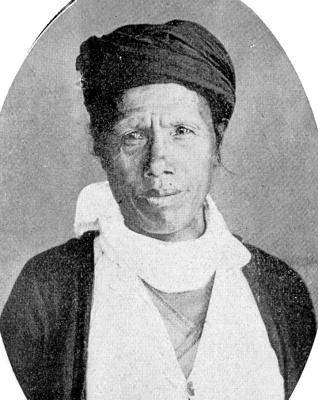
May 11 to May 17 Traversing the southern slopes of the Yushan Range in 1931, Japanese naturalist Tadao Kano knew he was approaching the last swath of Taiwan still beyond colonial control. The “vast, unknown territory,” protected by the “fierce” Bunun headman Dahu Ali, was “filled with an utterly endless jungle that choked the mountains and valleys,” Kano wrote. He noted how the group had “refused to submit to the measures of our authorities and entrenched themselves deep in these mountains … living a free existence spent chasing deer in the morning and seeking serow in the evening,” even describing them as


 RSS
RSS