


Australia circa 2050, population 35 million, rising sea levels have flooded the Gold Coast resort region, apartment blocks are now used to grow food and people commute in monorail pods above the sea.
In another city, Australians live on floating island pods with apartments both below and above sea level. The population has shifted from land to the sea because of the sky-rocketing value of disappearing arable land.
Climate change has also forced many Australians to move inland and create new cities in the outback, relying on solar power to exist in the inhospitable interior.
These are just a few urban scenarios by some of Australia’s leading architects short-listed for Ideas for Australian Cities 2050+, to be presented at this year’s Venice Architecture Biennale.
While these images may sound like science fiction, many architects and demographers say Australian cities must radically transform to cope with the pressures of population growth and climate change or face social unrest and urban decay.
“If we don’t get this right ... all hell breaks loose, or our cities break down, there’s not enough water, there’s not enough power,” said Bernard Salt, one of Australia’s leading demographers.
Australia survived the global financial crisis, due largely to China buying its resources, and while resource exports will continue to bolster its economy for decades, future prosperity may be threatened by a growing, ageing population, according to an Australian government report released last month.
The report said Australia’s population was set to rise by 60 percent to 35 million by 2050, mainly through migration, yet cities are already groaning under the present population.
“One of the major frontier issues for Australia over the next decade will be the future of our cities,” said Heather Ridout, chief executive of the Australian Industry Group, which is calling for major infrastructure investment in cities.
Among the beneficiaries of such development would be property firms like Lend Lease, Stockland and Mirvac Group, building material groups Boral Ltd and CSR, Australia’s top engineering contractor Leighton Holding Ltd, and the country’s biggest private hospital operator, Ramsay Health.
But demographers warn that Australian cities need to not only expand infrastructure, but ensure future residents have equal access to city facilities.
Race riots at Sydney’s Cronulla beach
in 2005 and a series of attacks against
Indian students in the past year are signs of growing social tensions in Australian cities, say demographers.
“If we have a rising population, we need to make sure that we have appropriate infrastructure, so that we don’t lose the social cohesion that we take for granted,” said Larissa Brown from the Centre for Sustainable Leadership. “We need affordable access to housing, to transport, to health care.”
While Australia is double the size of Europe, three-quarters of the country is sparsely populated countryside or harsh outback, leaving the bulk of the population to inhabit a thin strip down the southeast coast. Around 50 percent of the population lives in the three largest cities — Sydney, Melbourne and Brisbane — on a combined land area that is about the size of Brunei or Trinidad & Tobago.
TRANSPORT KEY TO FUTURE CITIES
Australia’s post-World War II sprawling suburbia is under strain because of inadequate transport and public facilities.
“We’re at risk of seeing increasingly dysfunctional cities ... we’re starting to see a sort of fragmentation and breakdown of the transport systems and increasing frustration for the residents of those cities trying to get around,” said Jago Dodson, urban researcher at Griffith University.
A State of Cities 2010 report released earlier this month said Australia’s major cities contribute nearly 80 percent of GDP, but warned that worsening urban congestion would have a serious negative impact on economic growth if not addressed.
The Bureau of Infrastructure, Transport and Regional Economics estimates the cost of road congestion for Australia’s cities was about US$8.7 billion for 2005. Left unchecked, this is projected to rise to US$18.2 billion by 2020.
“Urban congestion contributes to traffic delays, increased greenhouse gas emissions, higher vehicle running costs and more accidents,” said Infrastructure Minister Anthony Albanese.
“It is a tragedy that many parents spend more time traveling to and from work, than at home with their kids. Relieve urban congestion and we improve our quality of life as well as our productivity,” said Albanese.
Last month, a 10-year, US$45.6 billion transport blueprint was announced for Sydney that will see a new heavy rail network, 1,000 new buses and possibly a fast train linking Sydney with the port city of Newcastle, to its north.
Sydney, Australia’s biggest city, is daily gridlocked, forcing a motorist who travels 22km a day to spend three days stuck in traffic each year.
Private transport currently accounts for about 90 percent of urban journeys in Australia and Transurban Group, which operates the nation’s major tollways, believes car usage will continue to rise, despite a move to public transport.
“Despite concern about climate change, road use in our cities is predicted to grow significantly in the next 20 to 30 years,” said Transurban in a sustainability report last year.
“New road projects will increasingly be part of integrated transport solutions for entire cities or transport corridors.”
But the company warned future road projects will cost more to build and develop because of climate change, with Australia’s government seeking to introduce a carbon emissions trading scheme and pre-approval analysis of new projects’ climate impact.
Prime Minister Kevin Rudd’s government plans to invest US$32.8 billion in transport infrastructure in the next five years.
Improving efficiency in energy and transport infrastructure could increase GDP by nearly 2 percent, or the equivalent of US$68.5 billion, says Australia’s Productivity Commission.
Australia has one of the world’s highest home ownership rates, but the generational dream of a suburban home and garden looks set to be shattered.
Over the next few decades, more Australians will be living in high-density housing, in what some demographers call the ‘Manhattanization’ of cities.
A new Sydney urban plan released last month calls for 700,000 new dwellings by 2036, with 70 percent of development to occur within existing suburbs and only 30 percent in new suburbs.
If Sydney does not consolidate, the city would need to expand 1.5 times in size to accommodate its growing population and would run out of available land within 30 years, said the New South Wales state government plan.
Demographer Salt questions whether Australians will give up the Neighbours dream, citing the worldwide TV hit about life in a suburban Australian street. “Neighbours ... is absolutely integral to the Australian psyche,” said Salt, a partner at KPMG.
Whether Sydney adopts a Manhattan or low-rise European urban plan, a rising population will put more pressure on housing stock. Australia already has some of the most expensive house prices in the world and housing affordability is falling.
The Commonwealth Bank’s CommSec forecasts housing prices, which rose 12 percent last year, will rise by 8 percent to 10 percent this year because of a rising population and a lack of stock.
SUSTAINABLE CONURBATIONS
Australia has an inhospitable interior forcing more than a quarter of its 20 million people to live in the southeast corner, where the two biggest cities and jobs are located.
The projected population increase will impact heavily on Australia’s fragile environment and require urban planning to ensure future cities are environmentally sustainable.
Australians have the biggest houses in the world, nicknamed McMansions, and demographers say homes may need to be retro-fitted with water tanks and solar panels to make cities more sustainable and reduce their environmental footprint.
“A bigger Australia doesn’t mean deeper soils, it doesn’t mean larger river flows, it doesn’t mean more rainfall. We’re only bigger in one sense — the increase in the total number of humans crammed into the narrow coastal strip,” said Bob Carr, former New South Wales state premier.
Sydney this month began pumping desalinated ocean water to supplement its drinking water supplies, which are frequently threatened by drought. The plant will generate 250 million liters of water a day or around 15 percent of Sydney’s water supply.
Almost every major Australian city has a desalination plant under construction or already operational.
“Water’s going to be critical to the future of Australia, perhaps more than anything else,” said Mike Young from the Environment Institute at Adelaide University.
Australia has one of the world’s highest greenhouse gas emissions rates per capita, with about 80 percent of electricity generated by coal-fired power stations.
The country’s expanding population means it will need to produce 50 percent more power over the next 20 years, say energy experts, adding that a scarcity of water may stifle urban growth by threatening future power supplies as Australia’s coal-fired power generators are driven by steam and cooled by water.
Climate change will necessitate a change in Australia’s urban design, said last year’s Transforming Australian Cities report.
In January last year, a heat wave in Melbourne resulted in blackouts as power supplies failed and bushfires threatened to cut power to the entire city.
Melbourne’s rail system, designed for cooler conditions, overheated and failed, and water consumption trebled with the city’s water storage at only 33 percent capacity.
“On a daily basis we are witnessing the failure and shortcomings of these traditional systems,” said the report.
“Existing urban settlements and infrastructure are increasingly vulnerable and will need to be protected against these events. Compact cities with high densities are emerging as the most robust in the challenges posed by climate change.”



Just after 6am, I walked up to the ticket gate at Taipei Main Station and entered the Taiwan Railway platform without scanning any ticket; instead, I flashed the Sanrio Fun Rail pass on my phone to the gate worker and was admitted. I found my train and prepared to board. My destination? This very same station. I was embarking on a 13-hour journey on one of two round-the-island trains operated by ezTravel. They run each day, one counterclockwise around the island and one clockwise. They differ in a number of ways from an ordinary Taiwan Railway train and can make for
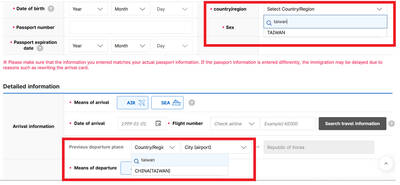
Jason Han says that the e-arrival card spat between South Korea and Taiwan shows that Seoul is signaling adherence to its “one-China” policy, while Taiwan’s response reflects a reciprocal approach. “Attempts to alter the diplomatic status quo often lead to tit-for-tat responses,” the analyst on international affairs tells the Taipei Times, adding that Taiwan may become more cautious in its dealings with South Korea going forward. Taipei has called on Seoul to correct its electronic entry system, which currently lists Taiwan as “China (Taiwan),” warning that reciprocal measures may follow if the wording is not changed before March 31. As of yesterday,

The Portuguese never established a presence on Taiwan, but they must have traded with the indigenous people because later traders reported that the locals referred to parts of deer using Portuguese words. What goods might the Portuguese have offered their indigenous trade partners? Among them must have been slaves, for the Portuguese dealt slaves across Asia. Though we often speak of “Portuguese” ships, imagining them as picturesque vessels manned by pointy-bearded Iberians, in Asia Portuguese shipping between local destinations was crewed by Asian seamen, with a handful of white or Eurasian officers. “Even the great carracks of 1,000-2,000 tons which plied

On Thursday, former Taipei mayor and founder of the Taiwan People’s Party (TPP) Ko Wen-je (柯文哲) was sentenced to 17 years in prison and had his civil rights suspended for six years over corruption, embezzlement and other charges. Seven others related to the case were also handed prison sentences, while two were found not guilty. It has been a bad week for the TPP. On Tuesday, prosecutors charged Chinese immigrant Xu Chunying (徐春鶯) with suspicion of taking part in Beijing-directed election interference. Xu has strong links to the TPP, which once offered her a party list legislator nomination. Tuesday also


 RSS
RSS