


Mattel has launched a new line of black Barbie dolls with fuller lips, a wider nose and more pronounced cheek bones — a far cry from Christie, Barbie’s black friend who debuted in the 1960s and was essentially a white doll painted brown.
The So In Style line, which hit mass retailers last month, features BFFs Grace, Kara and Trichelle, each with her own style and interests and a little sister she mentors: Courtney, Janessa and Kianna. The dolls reflect varying skin tones — light brown, chocolate, and caramel — and Trichelle and Kianna have curlier hair.
Barbie designer Stacey McBride-Irby, who is black and has a six-year-old daughter, said she wanted to create a line of dolls for young black girls that looked like them and were inspirational and career-minded. For example, Kara is interested in math and music.
“I want them to see themselves within these dolls, and let them know that black is beautiful,” she said.
Many black women are praising Mattel for its efforts — Black Barbie hit the shelves in 1980 with white features shared by many of the dolls following her.
But some say the dolls with long straight hair are not “black enough” and do not address the beauty issues that many black girls struggle with. In the black community, long, straight hair is often considered more beautiful than short kinky hair.
Chris Rock highlights the issue in his Good Hair documentary, which opened in select US cities on Friday and shows black women straightening their tight curls with harsh chemicals and purchasing US$1,000 hair weaves.
“Why are we always pushing this standard of long hair on our girls?” asked Gail Parrish, 60, a playwright in Alexandria, Virginia, and a mother of four grown children. “Why couldn’t one of the dolls have a little short Afro, or shorter braids or something?” McBride-Irby said she originally designed all the dolls with long hair. Combing her Barbie’s long hair when she was a girl was the “highlight of my play experience,” she said. She was advised to create some dolls with curlier hair, so she did.
There is a So In Style hairstyling set so girls can curl, straighten and style their dolls’ hair over and over. (It costs US$24.99, more than a pair of dolls at US$19.99.)
That is troubling to Sheri Parks, an associate professor of American Studies at the University of Maryland in College Park, because it actively involves girls in the process of straightening hair. She worries that it reinforces the message that there is something wrong with natural hair.
“Black mothers who want their girls to love their natural hair have an uphill battle and these dolls could make it harder,” Parks said in an e-mail.
Aside from the hair, some black women are concerned about the dolls’ thin frames. Barbie, which celebrated her 50th birthday in March, has for years come under fire for promoting an unrealistic body image, with her long legs, tiny waist and large breasts.
While white girls also deal with body-image issues, Kumea Shorter-Gooden, co-author of Shifting: The Double Lives of Black Women in America, believes Barbie has a more negative impact on black girls. They are already struggling with messages that “black skin isn’t pretty and our hair is too kinky and short,” she said.
Despite those complaints, Mattel seems to have gotten several things right.
Andrea Slaughter, 38, a mom of two in Newnan, Georgia, said she likes how the designer highlighted values that are critical in the black community, such as education and mentoring.
Sheila Adams Gardner, 41, a mother of three in Woodbridge, Virginia, praised the varying skin tones. She said when her daughter was 4, she became very self-conscious about being lighter than everyone else in her family.
“She has always had African-American dolls, but rarely dolls with skin like her own,” she said. “Often the lighter dolls were Hispanic or Indian. It was very heartwarming to look at a series of African-American Barbies and hear my daughter, now 11, exclaim, ‘She looks like me!’” Even Shorter-Gooden acknowledged the facial features “look like real black people.” Mattel doesn’t release sales figures. But Michelle Chidoni of Mattel said the dolls are resonating with girls of all colors and ages.
The line will be expanding next year with Rocawear clothing, new dolls Chandra and her little sister Zahara, and Darren, who will have a little brother he mentors.

Taiwan’s overtaking of South Korea in GDP per capita is not a temporary anomaly, but the result of deeper structural problems in the South Korean economy says Chang Young-chul, the former CEO of Korea Asset Management Corp. Chang says that while it reflects Taiwan’s own gains, it also highlights weakening growth momentum in South Korea. As design and foundry capabilities become more important in the AI era, Seoul risks losing competitiveness if it relies too heavily on memory chips. IMF forecasts showing Taiwan widening its lead over South Korea have fueled debate in Seoul over memory chip dependence, industrial policy and
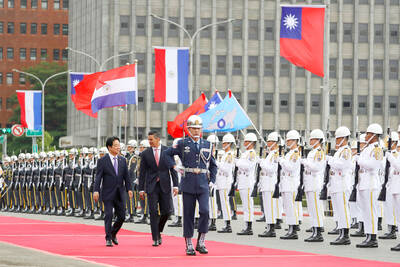
“China wants to unify with Taiwan at the lowest possible cost, and it currently believes that unification will become easier and less costly as time passes,” wrote Amanda Hsiao (蕭嫣然) and Bonnie Glaser in Foreign Affairs (“Why China Waits”) this month, describing how the People’s Republic of China (PRC) is playing the long game in its quest to seize Taiwan. This has been a favorite claim of many writers over the years, easy to argue because it is so trite. Very obviously, if the PRC isn’t attacking Taiwan, it is waiting. But for what? Hsiao and Glaser’s main point is trivial,
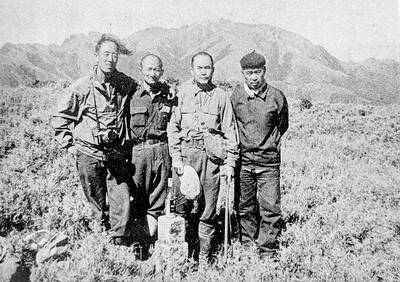
May 18 to May 24 Gathered on Yangtou Mountain (羊頭山) on Dec. 5, 1972, Taiwan’s hiking enthusiasts formally declared the formation of the “100 Peaks Club” (百岳俱樂部) and unveiled the final list of mountains. Famed mountaineer Lin Wen-an (林文安) led this effort for the Chinese Alpine Association (中華山岳協會). Working with other experienced climbers, he chose 100 peaks above 10,000 feet (3,048m) that featured triangulation points and varied in difficulty and character. The list sparked an alpine hiking craze, inspiring many to take up mountaineering and competing to “conquer” the summits. A common misconception is that the 100 Peaks represent Taiwan’s 100 tallest
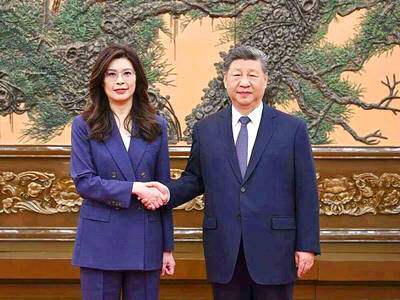
The Chinese Nationalist Party (KMT), alongside their smaller allies the Taiwan People’s Party (TPP), are often accused of acting on behalf of the Chinese Communist Party (CCP). Some go so far as to call them “traitors.” It is not hard to see why. They regularly pass legislation to stymie the normal functioning of the ruling Democratic Progressive Party’s (DPP) administration, and they have yet to pass this year’s annual budget. They slashed key elements of the government’s proposed NT$1.25 trillion (US$40 billion) special military budget, and in the smaller NT$780 billion package they did pass, it is riddled with provisions that


 RSS
RSS