


There was little that doctors could do for a 3-year-old boy brought to Bangkok’s main children’s hospital two weeks ago with dengue fever. Like thousands before him, he had reached the most dangerous phase of the disease, dengue shock syndrome, and he died of internal bleeding and organ failure three days after being admitted.
Directly across the street, in the US Army’s largest overseas medical research laboratory, military scientists are offering hope for future generations: a vaccine. Developed after decades of trying, it is one of two experimental vaccines that experts believe may be commercially available in about 6 years.
Dengue, a mosquito-borne illness once known as breakbone fever for its intense joint and muscle pain and crushing headaches, has a relatively low death rate — about 2.5 percent of hospitalized patients, the WHO reports. But because patients can require constant, careful monitoring, it is one of the costliest diseases in tropical countries. Each year, it leads to about 500,000 hospitalizations around the world.
Dengue is seldom seen in the US or Europe, though it is the second-most common cause (after malaria) of feverish symptoms for Western tourists returning from developing countries.
But it is important to the Army: American soldiers have contracted dengue as recently as the 1990s, on missions in Haiti and Somalia. So it is one of the tropical diseases that are the focus of research here at the Armed Forces Research Institute of Medical Sciences, which the Army has operated with the Royal Thai Army for five decades.
The research center, which employs several hundred people, is housed in an unremarkable 1960s building alongside a greasy alley where food vendors hawk fried grasshoppers and freshly mashed papaya salad.
“There’s no dengue in Kansas,” said Colonel James Boles, the commander at the laboratory. “No malaria, either. That’s why we are here.”
A FORMIDABLE FOE OFF THE BATTLEFIELD
In wars past, disease has often proved a greater foe than opposing armies. During the Anglo-Boer War in South Africa in the late 19th century, more soldiers died of typhoid than in battle. Thousands of cases of hepatitis during the Vietnam War among soldiers spurred Army researchers to help develop two of the vaccines now in use to prevent hepatitis A and B.
“All we care about is that we get a vaccine that protects soldiers,” said Lieutenant Colonel Stephen Thomas, a medical doctor who is director of dengue vaccine development in the Bangkok laboratory. “Fortunately, a lot of our concerns are also global health concerns.”
For many years, the leading drugs used to treat malaria were developed by the Army. Today, research on tropical diseases is spread across a broader constellation; in the hunt for a dengue vaccine, money and research have come from the Thai government, nonprofit organizations like the Bill and Melinda Gates Foundation, and drug companies like GlaxoSmithKline, which is working with the Army.
The other vaccine at an advanced stage of development is being jointly developed by the French drug company Sanofi-Aventis and a Thai university on the same Bangkok street as the Army lab.
“We’re further along with the dengue vaccine than we’ve ever been,” said Duane Gubler, director of the emerging infectious diseases department of the Duke-NUS Graduate Medical School in Singapore. “There’s a good possibility that we’ll have a vaccine in five to seven years.”
The dengue virus is transmitted mainly by a mosquito called Aedes aegypti, which survives on human blood. Aedes rarely travels more than about 90m from its birthplace and thrives in populated areas.
The WHO estimates that 50 million people are infected every year. But most of those infected, perhaps as many as 90 percent, experience only minor flulike symptoms or none at all.
In more serious cases, like that of the boy who died here last month, symptoms include severe headaches, rapid onset of a high fever, debilitating joint and muscle pain, nausea, vomiting and internal bleeding. Generally, though, dengue is considered treatable as long as patients are brought to the hospital on time and the disease is properly diagnosed.
Scientists believe the disease has existed for centuries — an outbreak appears to have occurred in Philadelphia in 1780 — but dengue has become more common and more virulent over the past half-century.
In 1970, only nine countries were known to have had epidemics of the most serious form of the disease, dengue hemorrhagic fever. By the mid-1990s that number had quadrupled, and experts say the disease is particularly well adapted to an age of air travel and international trade.
There are four types of dengue virus. Patients who have been infected with one of them are believed to develop immunity to that type only — and, paradoxically, are more vulnerable to dengue hemorrhagic fever if they are exposed to a second type.
The four types have intermixed as people carried them on airplanes to far-flung places; outbreaks of the hemorrhagic fever have been traced to specific flight paths and trade routes.
“What we’ve done is provided the ideal mechanism for these viruses to move around the world,” said Gubler, who has researched dengue for nearly four decades.
STARTED WITH SOLDIERS
It was probably soldiers who caused the original spread of dengue hemorrhagic fever around Southeast Asia, during World War II.
“You had a movement of soldiers from England, the US, Australia and Japan,” said Suchitra Nimmannitya, a pioneer in dengue research who developed a handbook on how to treat the disease.
A Japanese scientist first isolated the virus during the war, and a US Army physician, Albert Sabin, made the discovery that there were distinct virus types. (Sabin went on to help develop the polio vaccine.)
The development of a vaccine is especially difficult because it will need to counter all four types of virus.
“If dengue was a single virus we would have had a vaccine already, for sure,” said Jean Lang, director of research and development at Sanofi’s emerging vaccine program.
Sanofi’s dengue vaccine, which will undergo trials in 4,000 children in Thailand in a few months, is one of the first vaccines to be produced using genetic engineering.
The Army’s vaccine, which is at a similar stage of development and has been tested on volunteers in the US, Puerto Rico and Thailand, was produced using live, attenuated viruses, a more traditional technique. The two or three doses, spaced months apart, are administered by injection.
Experts say the wide array of researchers involved — some with profit motives and others without — increases the chances of success and could help make the vaccine affordable to people in developing countries.


It’s only half the size of its more famous counterpart in Taipei, but the Botanical Garden of the National Museum of Nature Science (NMNS, 國立自然科學博物館植物園) is surely one of urban Taiwan’s most inviting green spaces. Covering 4.5 hectares immediately northeast of the government-run museum in Taichung’s North District (北區), the garden features more than 700 plant species, many of which are labeled in Chinese but not in English. Since its establishment in 1999, the site’s managers have done their best to replicate a number of native ecosystems, dividing the site into eight areas. The name of the Coral Atoll Zone might
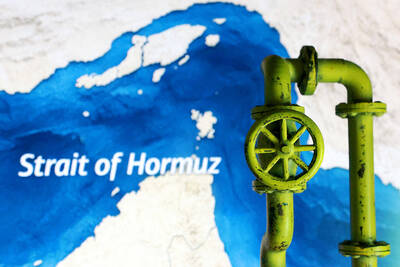
The US war on Iran has illuminated the deep interdependence of Asia on flows of oil and related items as raw materials that become the basis of modern human civilization. Australians and New Zealanders had a wake up call. The crisis also emphasizes how the Philippines is a swatch of islands linked by jet fuel. These revelations have deep implications for an invasion of Taiwan. Much of the commentary on the Taiwan scenario has looked at the disruptions to world trade, which will be in the trillions. However, the Iran war offers additional specific lessons for a Taiwan scenario. An insightful

On Monday morning, in quick succession, the Chinese Communist Party (CCP) and the Chinese Nationalist Party (KMT) released statements announcing “that the Central Committee of the Communist Party of China and General Secretary Xi Jinping (習近平) have invited KMT Chairwoman Cheng Li-wun (鄭麗文) to lead a delegation on a visit to the mainland” as the KMT’s press release worded it. The KMT’s press release added “Chairwoman Cheng expressed her gratitude for the invitation and has gladly accepted it.” Beijing’s official Xinhua news release described Song Tao (宋濤), head of the Taiwan Work Office of the CCP Central Committee, as

Polling data often confirms what we expect, but sometimes it throws up surprises. When examined over time, some patterns appear that speak to something bigger going on. In this column, whenever possible, Formosa’s polls are used. Despite the sometimes cringeworthy antics of Formosa’s Chairman, Wu Tzu-Chia (吳子嘉), the data produced includes detailed breakdowns crucial for analysis. It has also been conducted monthly 11-12 times a year for many years with many of the same questions, allowing for analysis over time. When big shifts do occur between one month and the next it is usually in response to some event in


 RSS
RSS