


It is just after 5pm in what was once one of Latin America’s most sexually conservative countries, and the youth of Chile are bumping and grinding to a reggaeton beat. At the Bar Urbano disco, boys and girls ages 14 to 18 are stripping off their shirts, revealing bras, tattoos and nipple rings.
The place is a tangle of lips and tongues and hands, all groping and exploring. About 800 teenagers sway and bounce to lyrics imploring them to “Poncea! Poncea!”: make out with as many people as they can.
And make out they do — with stranger after stranger, vying for the honor of being known as the “ponceo,” the one who pairs up the most.
Chile, long considered to have among the most traditional social mores in South America, is crashing headlong into that reputation with its precocious teenagers. Chile’s youths are living in a period of sexual exploration that, academics and government officials say, is like nothing the country has witnessed before.
“Chile’s youth are clearly having sex earlier and testing the borderlines with their sexual conduct,” said Ramiro Molina, director of the University of Chile’s Center for Adolescent Reproductive Medicine and Development.
The sexual awakening is happening through a booming industry for 18-and-under parties, an explosion of Internet connectivity and through Web sites like Fotolog, where young people trade suggestive photos of each other and organize weekend parties, some of which have drawn more than 4,500 teenagers. The online networks have emboldened teenagers to express themselves in ways that were never customary in Chile’s conservative society.
“We are not the children of the dictatorship; we are the children of the democracy,” said Michele Bravo, 17, at a recent afternoon party. “There is much more of a rebellious spirit among the young people today. There is much more freedom to explore everything.”
The parents and grandparents of today’s teenagers fought hard to give them such freedoms and to escape the book-burning times of General Augusto Pinochet’s dictatorship. But in a country that legalized divorce only in 2004 and still has a strict ban on abortion, the feverish sexual exploration of the younger generation is posing new challenges for parents and educators. Sex education in public schools is badly lagging, and pregnancy rate among girls under 15 has been on the rise, according to the Health Ministry.
Indeed, adolescent sexuality has changed throughout Latin America, Ramiro said, and underlying much of the newfound freedom is an issue that societies the world over are grappling with: the explosion of explicit content and social networks on the Internet.
Chilean society was shaken last year when a video of a 14-year-old girl eagerly performing oral sex on a teenage boy on a Santiago park bench was discovered on a video-hosting Web site. The episode became a national scandal, stirring finger-pointing at the girl’s school, at the Internet provider — at everyone, it seemed, but the boys who captured the event on a cell phone and distributed the video.
Chile’s stable, market-based economy has helped to drive the changes, spurring a boom in consumer spending and credit unprecedented in the country’s history. Chile has become Latin American’s biggest per-capita consumer of digital technology, including cell phones, cable television and Internet broadband accounts, according to a study by the Santiago consulting firm Everis and the Center for Latin American Studies at the University of Navarra in Spain.
Chileans are plugged into the Internet at higher rates than other South Americans, and the highest use is among children ages 6 to 17. Therein lies a central factor in the country’s newfound sexual exploration, said Miguel Arias, a psychologist and head of the Santiago consulting firm Divergente.
Fotolog, a photo-sharing network created in the US, took off in the last two years in this country. Today Chile, which has a population of 16 million, has 4.8 million Fotolog accounts, more than any other country, the company says. Again, children ages 12 to 17 hold more than 60 percent of the accounts.
Party promoters use Fotolog, as well as MSN Messenger, to organize their weekend gatherings, inviting Fotolog stars — the site’s most popular users, based on the number of comments they get — to help publicize the parties and attend as paid VIPs. Many of the partygoers use their online nicknames exclusively, and some of the wildest events are dominated by teenagers who call themselves the “Pokemones,” with their multiple piercings, dyed and waxed hair, and devil-may-care attitude.
Arias did a study of the Fotolog phenomenon, scrutinizing the kinds of photos teenagers are posting, even the angles and distances of the pictures — all of which are part of an “identifiable” language, he said. “The kids of today are expressing their sexuality in erotic ways for the whole world to see.”
That online world also carries over to Santiago’s parks, plazas and the afternoon parties, where teenagers go to discover the physical side of their digital flirtations. At the Bar Urbano disco on a Friday afternoon, a 17-year-old boy, Claudio, danced with Francisca Duran, also 17, whom he had just met, and soon the two were kissing and rubbing their bodies together. They posed eagerly for photos, sucking each other’s fingers as Claudio put his hands under the girl’s T-shirt. Within minutes they separated and he began playing with the hair of another girl. Soon, they, too, were kissing passionately. Claudio, who declined to give his last name, made out with at least two other girls that night.
“Before, someone would meet and fall in love and start dating seriously here; at a party today, you meet like three people and make out with all three,” said Mario Munoz, 20, co-owner of Imperio Productions, which organizes some of the larger 18-and-under parties.
“There are very few kids having serious relationships,” he said, an observation shared by some doctors trying to reduce teenage pregnancy here.
On a recent Saturday, about 1,500 teenagers piled into the cavernous Cadillac Club, another downtown disco, for Imperio Productions’ weekly event. The partygoers, many no more than 150cm tall, lined up at the bar to buy orange Fanta and Sprite, wearing oversize sunglasses.
Not too long ago, Munoz and his brother Daniel were teenagers attending such parties themselves. Now they defend their parties as good, clean fun. Alcohol is not allowed, and cigarettes are not sold, though smoking was widespread among the teenagers at the Cadillac Club. Security guards monitor bathrooms and regularly throw out boys whose groping crosses the line — if the girls complain.
The Munoz brothers said that party promoters feel pressure to be “hotter” than their competitors.
That includes scantily clad, older male and female dancers; strip shows that hold back just enough to remain legal; and party names intended to titillate, like “What would you do in the dark?” On this night, dancing was interrupted for a “slapping” contest onstage in which a boy, pulled from the crowd, was blindfolded and had his arms held behind his back. A lineup of girls and boys took turns slapping him, with the final blow delivered by a heavyset DJ that sent the slender boy flying across the stage. As he rubbed his reddened face, the boy got his reward: the chance to make out with the girl of his choice in public to the screams of other teenagers.
“Everything starts with the kiss,” Nicole Valenzuela, 14, said during a break from dancing at the Cadillac Club.
“After the kiss follows making out, and after that, penetration and oral sex,” she added. “That’s what’s going on, sometimes even in public places.”
Her mother, Danitza Geisel, a 34-year-old sex therapist, said in an interview that she did not worry about her daughter’s attending the parties and, expressing a somewhat contrarian view among academics here, she said the current generation of teenagers was no more promiscuous than previous ones. But Geisel lamented the dearth of sex education in Chile.
The parents of most adolescents today never received formal sex education. Chile’s first public school programs were put in place at the end of the 1960s. But after the 1973 military coup, the Pinochet government ordered sex education materials destroyed, and moral conservatism took hold. It was not until 20 years later, in 1993, that a new sex curriculum was introduced in the schools. Even so, by 2005, 47 percent of students said they were receiving sex education only once or twice a year, if at all. And now educators say they are struggling to keep up with the avalanche of sexual information and images on the Internet.
“Of course we are not happy with that,” said Maria de la Luz Silva, head of the sexual education unit of the Education Ministry. She said that the explosion of Internet access had created a “tremendous cultural breach” that was straining the limits of educators, but added that the ministry was putting in place a new sex education curriculum this year to better “protect” children.
For now, Chile’s teenagers are making decisions on their own.
“This is about being alive,” Cynthia Arellano, 14, said after the Bar Urbano party. “It is all about dancing, laughing, changing the words of the songs to something dirty.”
And with a slight giggle creeping in, she said, “Well, it’s about making out with other boys.”
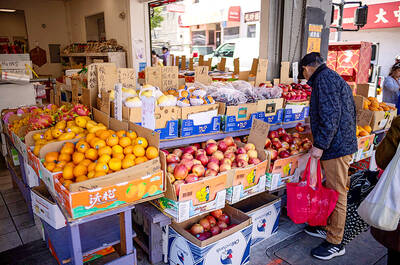
Ajay Verma, a consultant gastroenterologist at Kettering general hospital in Northamptonshire, says our gut is a “complex machine.” “It is constantly providing us with the nutrition we need, initially to grow and develop, and then for us to survive, thrive and repair from injury and illness.” How can we keep it functioning well? Put simply: “Make sure what you put into it is balanced, and that you clear out its waste products adequately,” Verma says. “In a general gastroenterology clinic, the most common conditions we see are irritable bowel syndrome (IBS), gastroesophageal reflux disease, inflammatory bowel disease and constipation,” says Nisha
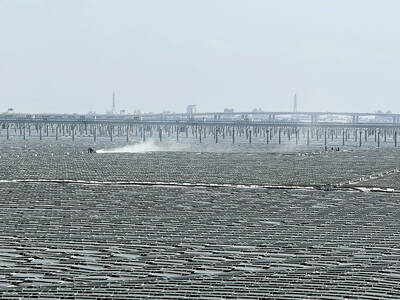
The arithmetic is straightforward and uncomfortable. By the end of 2025, Taiwan had committed itself to a 50-30-20 electricity mix — half natural gas, 30 per cent coal, 20 per cent renewables. The Ministry of Economic Affairs’s (MOEA) own monthly energy reports tell a different story. Natural gas reached 47.8 per cent of generation last year. Coal stood at 35.4 per cent, comfortably above its target ceiling. Renewables came in at 13.1 per cent, well short of the 20 per cent Taipei had pledged a decade earlier. Installed renewable capacity reached roughly half of the 12 gigawatts (GW) the government

Last week US President Donald Trump was asked by a reporter whether he would speak on the phone to the President of Taiwan. “l’ll speak to him. I speak to everybody. We have that situation very well in hand,” Trump said. This marked the second time in a couple of weeks he had said he would talk to the President of Taiwan. In 2016 he famously took a call from then-president Tsai Ing-wen (蔡英文), when he was president-elect. Despite warnings that the apocalypse was nigh because of a phone call, the world quickly forgot about the conversation between two democratically-elected presidents.
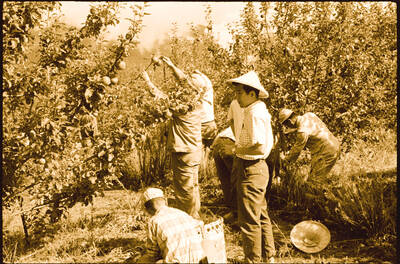
May 25 to May 31 Few believed that apples could be cultivated on a commercial scale in Taiwan’s high mountains. When horticulturalist Cheng Chao-hsiung (程兆熊) first proposed the idea in 1955, both American and Taiwanese colleagues dismissed it as implausible, arguing that temperate fruit could not be reliably grown on a subtropical island, especially on rugged terrain. However, it was this terrain in the Central Mountain Range where many Chinese Civil War veterans were resettled in the late 1950s. With limited job prospects and no family in Taiwan, they were placed on cooperative farms aimed toward self-sufficiency. Some say the conditions


 RSS
RSS