


With the 10th Taipei Arts Festival under way, theater buffs get to see some highly accomplished and well-established performance troupes. But the organizers — Taipei City’s Department of Cultural Affairs (台北市文化局) and the Taipei Cultural Foundation (台北市文化基金會) — also see festival time as an opportunity to showcase new artists, while audiences are in the mood.
Enter the first ever Taipei Fringe Festival, which starts tomorrow and takes place at different venues throughout the city until Sept. 14. The event features 61 local artists in 166 shows over the next two weeks. The performances cover a wide spectrum, from solo theater and modern dance to classical music recitals and rock bands. There’s even a theater performance combined with a real wedding banquet.
The spirit of the festival lies in experimentation, “free of limits for artists,” says Yoyo Kung (貢幼穎), a project manager for both the Taipei Fringe Festival and the Taipei Arts Festival.
The Taipei Fringe Festival is inspired by the Edinburgh Fringe, which started in 1947 as an alternative to the Edinburgh International Festival, a major European event for classical music, opera, theater and dance.
As large crowds were expected at the international festival, alternative and underground theater groups saw an opportunity to try their material on new audiences, so they went to Edinburgh uninvited and put on their own shows in neighboring venues. The number of “fringe” groups grew over the years, which prompted the formation of the Festival Fringe Society, which helped the groups find venues, and handled ticket sales and publicity. Today the Edinburgh Fringe is considered a major training ground for aspiring artists. Past participants have included well-known entertainers such as Hugh Grant, Eddie Izzard and Emma Thompson.
The society adhered to one basic, but important principle: there would be no artistic vetting or juries — a core idea that remains with the festival and other similar events in Australia, Canada and France, and one that the Taipei Fringe Festival has adopted. To participate in Taipei, artists only needed to show that they were either Taiwan citizens or part of a legally registered performing group, and then submit their application on time.
The Taipei version also aims to play a supporting role for “emerging and independent artists,” says Kung. The festival covers all venue, equipment and box-office costs, and helps promote the show.
In keeping with the fringe spirit, participating artists are both novices and experienced performers, and content ranges from silly comedy to avant-garde. Here are a few shows of note:
The Story of a Tiger features Chongtham Jayanta Meetei, an actor and artistic director of Taipei-based Ex-Theater Asia (亞洲劇團). Based on Italian dramatist Dario Fo’s A Tale of a Tiger, Meetei tells the story of a Chinese soldier injured while fighting Chiang Kai-shek’s (蔣介石) army and is saved from starvation by a mother tiger.
The Aiki Art Group (合氣藝團), a group of middle-aged and elderly Aikido students, use music, dance, and drama to tell the story of their master and his teachings in Music and Dance in Honor of the Legend — A Predestined Relationship With Aikido.
World music sensation A Moving Sound is teaming up with rising star DJ Shiuan Liu (劉軒) to present new compositions with improvisational and electronic elements. Come ready to dance.
In Happy Wine of Jimio (張吉米的喜酒), which is already sold out, experimental actor Jimi Zhang is staging his “Taiwanese-style” wedding at the Red House Theater next Wednesday, complete with a traditional banquet dinner. On his blog Zhang says he wanted take advantage of the free venue provided by the Taipei Fringe Festival, but he assures that the event will be “both a wedding and performance.”
The full event schedule and venue locations can be viewed at the festival’s Web site (www.taipeifringe.org), but it’s easier to navigate through the print version of the program, available at Eslite Bookstores and NTCH ticketing outlets.

Just after 6am, I walked up to the ticket gate at Taipei Main Station and entered the Taiwan Railway platform without scanning any ticket; instead, I flashed the Sanrio Fun Rail pass on my phone to the gate worker and was admitted. I found my train and prepared to board. My destination? This very same station. I was embarking on a 13-hour journey on one of two round-the-island trains operated by ezTravel. They run each day, one counterclockwise around the island and one clockwise. They differ in a number of ways from an ordinary Taiwan Railway train and can make for
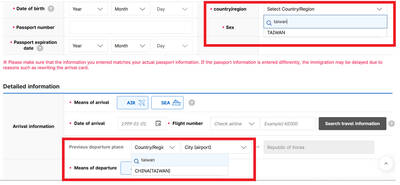
Jason Han says that the e-arrival card spat between South Korea and Taiwan shows that Seoul is signaling adherence to its “one-China” policy, while Taiwan’s response reflects a reciprocal approach. “Attempts to alter the diplomatic status quo often lead to tit-for-tat responses,” the analyst on international affairs tells the Taipei Times, adding that Taiwan may become more cautious in its dealings with South Korea going forward. Taipei has called on Seoul to correct its electronic entry system, which currently lists Taiwan as “China (Taiwan),” warning that reciprocal measures may follow if the wording is not changed before March 31. As of yesterday,
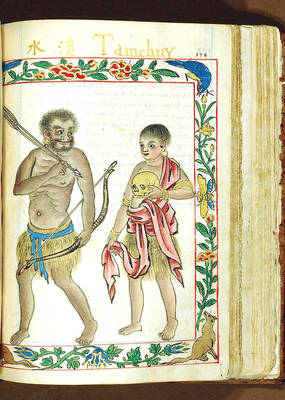
The Portuguese never established a presence on Taiwan, but they must have traded with the indigenous people because later traders reported that the locals referred to parts of deer using Portuguese words. What goods might the Portuguese have offered their indigenous trade partners? Among them must have been slaves, for the Portuguese dealt slaves across Asia. Though we often speak of “Portuguese” ships, imagining them as picturesque vessels manned by pointy-bearded Iberians, in Asia Portuguese shipping between local destinations was crewed by Asian seamen, with a handful of white or Eurasian officers. “Even the great carracks of 1,000-2,000 tons which plied

On Thursday, former Taipei mayor and founder of the Taiwan People’s Party (TPP) Ko Wen-je (柯文哲) was sentenced to 17 years in prison and had his civil rights suspended for six years over corruption, embezzlement and other charges. Seven others related to the case were also handed prison sentences, while two were found not guilty. It has been a bad week for the TPP. On Tuesday, prosecutors charged Chinese immigrant Xu Chunying (徐春鶯) with suspicion of taking part in Beijing-directed election interference. Xu has strong links to the TPP, which once offered her a party list legislator nomination. Tuesday also


 RSS
RSS