


It is always startling, though it probably shouldn't be, to be reminded that airline pilots are human beings. For anyone who is even slightly scared of flying, the process involves an unspoken contract: I'll pretend it's not profoundly absurd to expect a 400-tonne metal tube full of people to stay aloft at 11,000m, provided that you - aviation professionals in general, and pilots above all - pretend to be something between a robot and a deity.
It now seems clear that nobody was ever in any danger during the mid-air incident this week when the co-pilot of an Air Canada flight bound for Heathrow had to be dragged from the cockpit and restrained after suffering a breakdown, yelling and invoking God. For those not on the flight, however, that was almost beside the point. The facade of infallibility had been punctured. No matter how many times this happens - with every new tale of a pilot stopped before take-off with alcohol on his breath, or the story of the two Southwest Airlines pilots fired in 2003 for allegedly flying in the nude - it is always unsettling.
If you are made nervous by the idea that flight is an imperfect business, no less beset by human error and infighting and dysfunctional personalities than any other line of work, you should definitely avoid the Professional Pilots' Rumour Network (PPRuNe), an online forum which is, perhaps surprisingly, publicly accessible at www.pprune.org. But if you ignore this advice and visit anyway, you may find it difficult to leave.
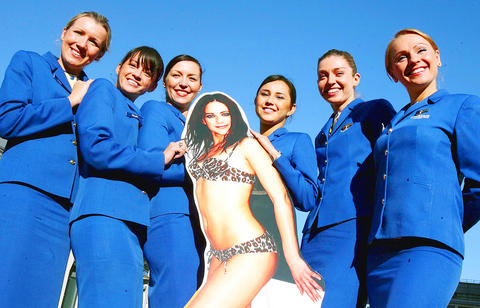
PHOTO: EPA
The site's existence is hardly a secret: it's been around since the turn of the millennium, and its members are regularly quoted by journalists seeking insider reactions to crashes, near-misses and air-rage incidents. Yet for mere passengers (or "self-loading freight," to use the sardonic industry slang rife on PPRuNe), alighting upon it feels like illegitimately gaining access to a staff-only zone at the airport. Once inside, one may eavesdrop at will on the conversations of the forum's regulars, who include - as far as one can tell, since everyone's anonymous - pilots currently working for major airlines including BA, Virgin Atlantic, Ryanair and various American carriers.
Rumors arrive here first: "American 757 diverted: smoke in cabin," "Runway incursions in Dubai," "Monarch incident @ Manchester." Jargon is used, but then undercut to amusing effect: "Suspect nosewheel problem (no steering)." Within hours of this week's Air Canada incident, bar-room stories were being exchanged: "I had a similar episode once ... one minute we were discussing an electronic wiring issue and the next he was claiming to be Jesus Christ and offering to perform miracles."
Journalists - "these rats who work for the rags" - come in for unceasing hostility on PPRuNe, although sometimes it's not hard to see why. It is taken as read among forum regulars that some posters claiming to be pilots, asking innocently for the latest gossip, are actually from the media, and the resultant news coverage often leaves much to be desired. ("Pilot goes crazy on Heathrow jet," explained the London Evening Standard, showing a charming sensitivity to mental illness.) "I think people should be vetted before being allowed to visit this site," wrote one angry contributor, "and strictly limited to genuine aviation professionals."
I hope that never happens, and not just because of the glimpse that PPRuNe affords of pilots letting their hair down. Arguably even more absorbing are the sections of the forum frequented by cabin crew, who use it to gossip in merciless terms about the three banes of their existence - passengers, pilots and airline companies: "Aah, Ryanair, the airline that does for cabin crew what myxomatosis did for rabbits ... . "
It's not all negative. Of particular fascination is the discussion about best and worst celebrity passengers, a debate from which Prince William, Noel Edmonds, Sebastian Coe and Natalie Imbruglia emerge with their reputations significantly enhanced.
Cabin crewmembers' most embarrassing inflight incidents are related at length; mainly, they involve passengers getting hit with things or sprayed with liquids, or safety demonstrations undertaken with flies unzipped. "I have had a few things happen to me," one contributor writes, "that made me almost wish for a decompression and me to get sucked out of the hole in the fuselage." If you're not careful, you can lose track of time, and read this stuff for hours - although not without concluding that a life in the skies is a rather less glamorous one than you might have imagined. If you do eventually tire of the company of airline pilots and cabin crew, you can head to the section for "freight dogs," working in the passenger-free world of cargo aviation, and learn about the challenges involved in shipping, for example, "a white rhino from a zoo in Germany to South Africa."
The only downside is what all my eavesdropping does to the unspoken contract of flight. Once the people in the cockpit stand exposed not as half-robot, half-god, but as gossipy, sometimes curmudgeonly humans, who have all experienced at least one or two close shaves at high altitudes, how can one continue to believe in their inexplicable ability to keep the plane airborne? Sometimes, a little mystery is preferable, but PPRuNe has put an end to that. Now I'm going to have to learn aeronautics.
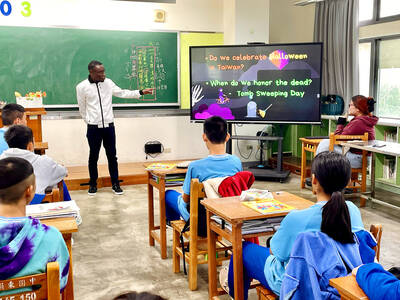
For many people, Bilingual Nation 2030 begins and ends in the classroom. Since the policy was launched in 2018, the debate has centered on students, teachers and the pressure placed on schools. Yet the policy was never solely about English education. The government’s official plan also calls for bilingualization in Taiwan’s government services, laws and regulations, and living environment. The goal is to make Taiwan more inclusive and accessible to international enterprises and talent and better prepared for global economic and trade conditions. After eight years, that grand vision is due for a pulse check. RULES THAT CAN BE READ For Harper Chen (陳虹宇), an adviser
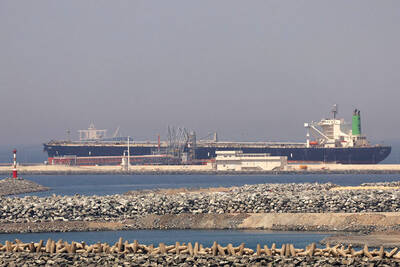
The breakwater stretches out to sea from the sprawling Kaohsiung port in southern Taiwan. Normally, it’s crowded with massive tankers ferrying liquefied natural gas from Qatar to be stored in the bulbous white tanks that dot the shoreline. These are not normal times, though, and not a single shipment from Qatar has docked at the Yongan terminal since early March after the Strait of Hormuz was shuttered. The suspension has provided a realistic preview of a potential Chinese blockade, a move that would throttle an economy anchored by the world’s most advanced and power-hungry semiconductor industry. It is a stark reminder of
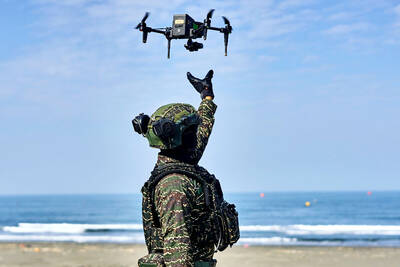
The last couple of weeks spectators in Taiwan and abroad have been treated to a remarkable display of infighting in the Chinese Nationalist Party (KMT) over the supplementary defense budget. The party has split into two camps, one supporting an NT$800 billion special defense budget and one supporting an NT$380 billion budget with additional funding contingent on receiving letters of acceptance (LOA) from the US. Recent media reports have said that the Taiwan People’s Party (TPP) is leaning toward the latter position. President William Lai (賴清德) has proposed NT$1.25 trillion for purchases of US arms and for development of domestic weapons
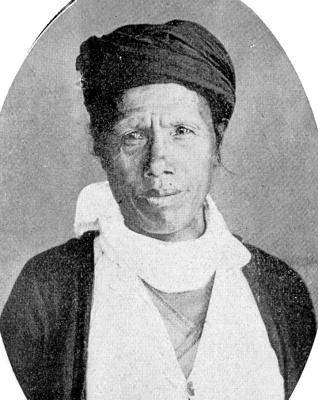
May 11 to May 17 Traversing the southern slopes of the Yushan Range in 1931, Japanese naturalist Tadao Kano knew he was approaching the last swath of Taiwan still beyond colonial control. The “vast, unknown territory,” protected by the “fierce” Bunun headman Dahu Ali, was “filled with an utterly endless jungle that choked the mountains and valleys,” Kano wrote. He noted how the group had “refused to submit to the measures of our authorities and entrenched themselves deep in these mountains … living a free existence spent chasing deer in the morning and seeking serow in the evening,” even describing them as


 RSS
RSS