


Wishes for the future often accompany the celebrations that ring in the start of a new year. And for technology fans, there's plenty to put on the wish list.
For while this year was a big year for product rollouts, in some ways it was transitional: offering us mere glimpses of the better things that might come. Here are a few.
● An iPhone for the rest of us
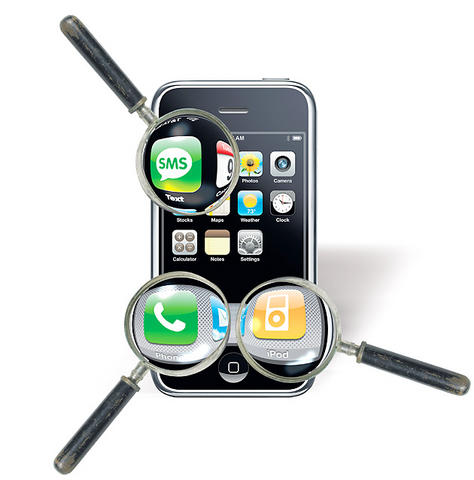
PHOTO: NY TIMES NEWS SERVICE
Apple's iPhone was clearly a hot item this year, but there was just one problem: only those with deep pockets could justify the splurge. In addition to paying around US$500 for this stylish, versatile device, some had to switch cell carriers, since Apple did not have agreements in place with most network providers.
Could we actually see a cheaper iPhone next year? Some think it's inevitable if Apple hopes to achieve wider market penetration. The company does, after all, have a history of making a hot product more affordable. The iPod MP3 player was followed-up by the less expensive Nano and other models. Why not an iPhone Nano?
● A better Vista
Here's to hoping next year is a "do over" year for Windows Vista. Although Microsoft's biggest product offering of this year is selling well, that's mostly because computer makers are delivering it by default on most new PCs and notebooks. Sales of Vista at the retail level and to corporations have been relatively weak. The reason: Vista just doesn't offer enough compelling features to warrant an upgrade from Windows XP.
To make matters worse, Vista's interface overhaul means that users need to put in some significant time relearning things that were second nature in XP. Performance and compatibility have also been widely criticized.
But Microsoft has a chance to make things better with Service Pack 1 of Vista, available now in a beta (pre-release) version. The final Service Pack 1 of Vista is due early next year and will reportedly address concerns about sluggishness and compatibility.
● Faster wireless
The 802.11n wireless networking protocol has not yet been ratified, but it's close. Next year is expected to be the year that 802.11n - which provides wireless networking speeds that easily rival those of today's common wired networks - is finally made official and interoperable products start appearing.
The advantages of 802.11n are significant. With ultra-fast wireless connections, users will not only be able to stream video and music from hot spots around the world, but worthwhile in-house networks can be formed that allow all computers to share files and be backed up safely and quickly. Current 802.11g wireless connections are good for checking e-mail and surfing the Internet, but not much more. May next year be the year that 802.11n truly frees networked computer users from wires.
● An end to the high-def wars
Blu-ray versus HD DVD: the war over a high-definition video standard has been raging for years now, and there's no apparent end in sight. The real victims are consumers with high-definition television sets but no affordable way of playing high-def DVDs on them. Buying a Blu-ray or HD DVD player means two things: locking yourself into one standard over the other and paying a big price premium for the privilege. A typical Blu-ray DVD player costs between US$600 and US$1,000, compared to your average DVD player of just around US$100.
It's true that hybrid Blu-ray/HD DVD players are starting to appear - but again at a price premium. Some pundits predict that the movie studios will pressure the players on either side of the standards war to come up with a single format next year, since no one believes that wide consumer adoption of players will occur until there's a unified standard. Here's to hoping those pundits are right.
● Ubiquitous Internet
Thanks to wireless hot spots, it's getting easier to be online no matter where you are, but we're still not there yet. Existing wireless hot spots needs to be upgraded to 802.11n as soon as it's available, since it offers not only faster wireless speed but also much wider coverage. And public venues such as airports and coffee shops need not only to offer wireless but also to do so at no cost to the user. Quite simply, people will prefer locations that offer free, fast wireless, and there's an obvious commercial advantage in attracting people.
● A surge for open source
There's good reason to hope that next year is a watershed in open source software, a period when computer users learn that there are realistic alternatives to fee-based software. Open source products such as OpenOffice.org (www.openoffice.org) have proven that free software can be not only as powerful as the big-name products from Microsoft, Corel, and others, but they can be entirely compatible with those products as well. Today, a computer user can outfit a machine with virtually any productivity application at no cost whatsoever. Open source can put the power of computing in more hands than ever before.
● A pause for thankfulness
Personal computer technology has advanced at a rate unimaginable when the first PCs were introduced to the public. A little over 20 years ago, a typical computer user was sitting next to a large, expensive 8088-based PC with 256k of RAM and two floppy drives, staring at a green or amber monochrome screen on which flickered a text-based application, probably a word processor or spreadsheet.
Now your typical computer user sits in front of a large, thin flat-panel monitor, multitasking, communicating with people around the world, shopping, or talking for free over the Internet. And all of this capability is powered by a machine that not long ago
So while a new year is for wishing and more gadgets are typically what gets a tech fan's attention, it's helpful to reflect upon how far we've come.
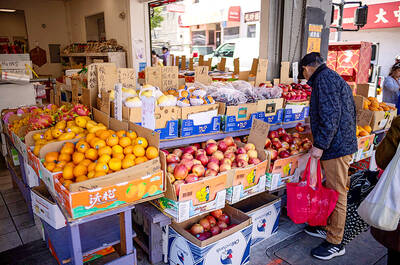
Ajay Verma, a consultant gastroenterologist at Kettering general hospital in Northamptonshire, says our gut is a “complex machine.” “It is constantly providing us with the nutrition we need, initially to grow and develop, and then for us to survive, thrive and repair from injury and illness.” How can we keep it functioning well? Put simply: “Make sure what you put into it is balanced, and that you clear out its waste products adequately,” Verma says. “In a general gastroenterology clinic, the most common conditions we see are irritable bowel syndrome (IBS), gastroesophageal reflux disease, inflammatory bowel disease and constipation,” says Nisha
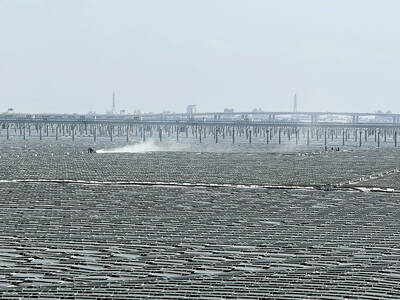
The arithmetic is straightforward and uncomfortable. By the end of 2025, Taiwan had committed itself to a 50-30-20 electricity mix — half natural gas, 30 per cent coal, 20 per cent renewables. The Ministry of Economic Affairs’s (MOEA) own monthly energy reports tell a different story. Natural gas reached 47.8 per cent of generation last year. Coal stood at 35.4 per cent, comfortably above its target ceiling. Renewables came in at 13.1 per cent, well short of the 20 per cent Taipei had pledged a decade earlier. Installed renewable capacity reached roughly half of the 12 gigawatts (GW) the government

Last week US President Donald Trump was asked by a reporter whether he would speak on the phone to the President of Taiwan. “l’ll speak to him. I speak to everybody. We have that situation very well in hand,” Trump said. This marked the second time in a couple of weeks he had said he would talk to the President of Taiwan. In 2016 he famously took a call from then-president Tsai Ing-wen (蔡英文), when he was president-elect. Despite warnings that the apocalypse was nigh because of a phone call, the world quickly forgot about the conversation between two democratically-elected presidents.
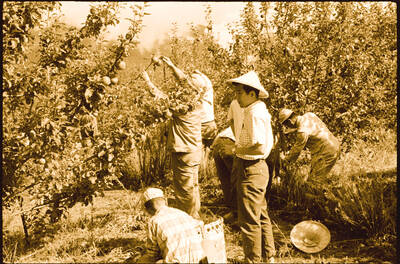
May 25 to May 31 Few believed that apples could be cultivated on a commercial scale in Taiwan’s high mountains. When horticulturalist Cheng Chao-hsiung (程兆熊) first proposed the idea in 1955, both American and Taiwanese colleagues dismissed it as implausible, arguing that temperate fruit could not be reliably grown on a subtropical island, especially on rugged terrain. However, it was this terrain in the Central Mountain Range where many Chinese Civil War veterans were resettled in the late 1950s. With limited job prospects and no family in Taiwan, they were placed on cooperative farms aimed toward self-sufficiency. Some say the conditions


 RSS
RSS