


I don't suppose many Taiwanese people are very interested in the subject of poverty. Taiwan's "tiger economy" has resulted in extensive prosperity, and there are few things the newly rich want to think about less than those who remain poor.
But William Vollmann has dedicated a great deal of energy to researching poverty worldwide. His method has been to interview the very poor wherever he happens to be, paying them to answer some questions, most typically "Why are some people poor and others rich?"
Most of them have no answer. The Marxist belief that the poor are poor because the rich have taken everything from them doesn't seem to be widespread among the poor themselves. If they're Buddhists they think they're poor because they've misbehaved in a previous life, and if they're Muslims they consider that Allah has been good to them in other ways, even if they don't exactly know where their next meal's coming from.
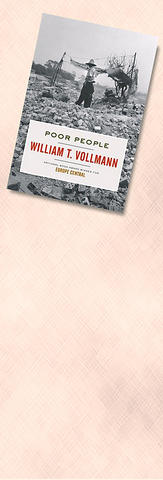
Vollmann considers what it means to have an income of US$1 a day, no savings and no prospect of earning anything at all when you're too old to go on working. He visits 14 countries, including Cambodia, Thailand, Vietnam, China, Japan, Pakistan and the Philippines. A resident of Sacramento, California, he calculates that as a writer he earns around US$100 a day after tax, and hence considers himself by world standards indubitably "rich." What, he asks, does this, in practical terms, mean? And what does it mean to be poor?
Among his answers to the second question are that the poor are effectively invisible, that they have no choice but to do dangerous jobs, that they develop a numbness to setbacks, that their bodies smell of sweat and become misformed through work-related injury. On invisibility, he observes that the rich don't notice the poor because it would be too painful to do so. When someone extremely deformed can be found, the rich will pay to pass by without having to look more than once. The poor, in other words, are usually invisible, but can sometimes profit from their invisibility by drawing it momentarily to other people's attention.
The author's method is conversational and relaxed. He paints vivid pen-pictures of squalid living conditions, then veers off on random thoughts. He quotes classic authors like Rousseau, Turgenev and Montaigne. And he does some sums on the life of self-imposed "philosophic poverty" embarked on by Henry Thoreau (for three years only) in 19th-century Massachusetts.
One of Vollmann's main conclusions is that the opportunity to consider who you are and to speculate on your place in the universe is one of the rewards of having money, and hence genuine leisure. Of course many of the great visionaries, with advanced views on the nature of the world, either extolled the virtues of the poor (as Jesus did) or adopted poverty voluntarily despite being born into riches (the Buddha is one example). Nevertheless, many of the world's really poor have had little or no education, often can't read or write and almost invariably have no developed theory as to why their lives are as they are. That some of them are nonetheless remarkably astute only adds to the desolation of their plight.
This book is in a way untypical of its era. Today we may be interested in crises and war zones, but the permanently poor aren't often written about. But the 19th century was obsessed by them. In England they were subjected to statistical reports, researched in depth and divided up into "deserving" and "undeserving." In the 1840s Dickens, Disraeli and Elizabeth Gaskell wrote novels about "the condition of England" (which meant what to do about the poor), and the successful dramatist Henry Mayhew interviewed them at length for London Labor and the London Poor. Marx filled Das Kapital with descriptions of English 18-hour workdays, atrocious housing, and diseases entirely attributable to bad working conditions.
Many of the same things reappear in this book, only in Bangkok, Ho Chi Minh City or Manila rather than Paris or London. Not all the poor go hungry, the author asserts, because in many Asian countries food is cheap. Instead, they age prematurely, and age, he remarks, is painful. "The rotting teeth, the impotence, the loss of muscle tone and the workplace discrimination are all painful in different ways." The poor, in other words, can't afford dentists or Viagra, let alone regular visits to California Fitness centers, and don't qualify for AIDS medication (except in compassionate Taiwan).
Vollmann considers he may himself be what Thoreau called "that seemingly wealthy, but most terribly impoverished class of all, who have accumulated dross, but know not how to use it, or get rid of it, and thus have forged their own golden or silver fetters." But he prefers to consider himself simply lucky.
Thoreau's disdain for wealth is unfashionable today, but Vollmann is right about luck. In Ho Chi Minh, I was told most workers in the city's five-star foreign-owned hotels earned around US$55 a month, plus a possible bonus that would nevertheless fail to double the sum. Guests in these hotels were paying up to US$250 a night for a room. Were these guests better people? Certainly not. Did they work harder? My suspicion was that they probably worked less hard. Why, then, the enormous disparity? Vollmann's answer is surely right - it's luck, in this case, the luck of being a citizen of one country rather than another.
Reading this fascinating and informative book, I'm reminded of George Orwell's comment in Down and Out in Paris and London, a book about the lives of tramps - that after researching and writing it he could never feel at ease eating in an expensive restaurant ever again.
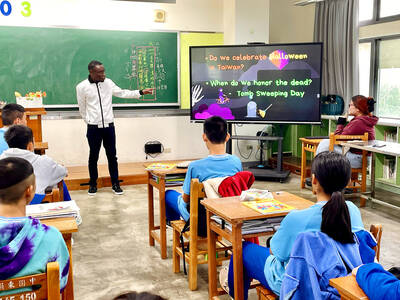
For many people, Bilingual Nation 2030 begins and ends in the classroom. Since the policy was launched in 2018, the debate has centered on students, teachers and the pressure placed on schools. Yet the policy was never solely about English education. The government’s official plan also calls for bilingualization in Taiwan’s government services, laws and regulations, and living environment. The goal is to make Taiwan more inclusive and accessible to international enterprises and talent and better prepared for global economic and trade conditions. After eight years, that grand vision is due for a pulse check. RULES THAT CAN BE READ For Harper Chen (陳虹宇), an adviser
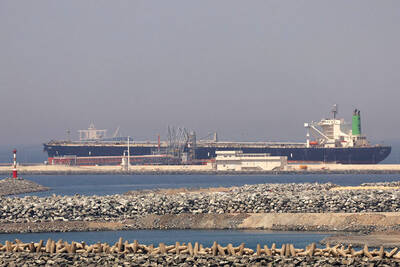
The breakwater stretches out to sea from the sprawling Kaohsiung port in southern Taiwan. Normally, it’s crowded with massive tankers ferrying liquefied natural gas from Qatar to be stored in the bulbous white tanks that dot the shoreline. These are not normal times, though, and not a single shipment from Qatar has docked at the Yongan terminal since early March after the Strait of Hormuz was shuttered. The suspension has provided a realistic preview of a potential Chinese blockade, a move that would throttle an economy anchored by the world’s most advanced and power-hungry semiconductor industry. It is a stark reminder of
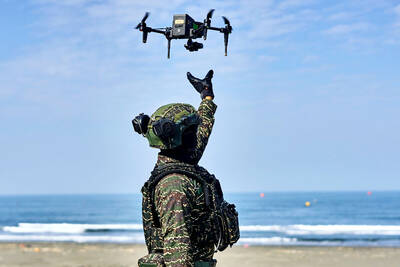
The last couple of weeks spectators in Taiwan and abroad have been treated to a remarkable display of infighting in the Chinese Nationalist Party (KMT) over the supplementary defense budget. The party has split into two camps, one supporting an NT$800 billion special defense budget and one supporting an NT$380 billion budget with additional funding contingent on receiving letters of acceptance (LOA) from the US. Recent media reports have said that the Taiwan People’s Party (TPP) is leaning toward the latter position. President William Lai (賴清德) has proposed NT$1.25 trillion for purchases of US arms and for development of domestic weapons
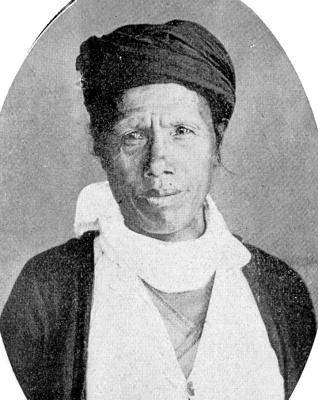
May 11 to May 17 Traversing the southern slopes of the Yushan Range in 1931, Japanese naturalist Tadao Kano knew he was approaching the last swath of Taiwan still beyond colonial control. The “vast, unknown territory,” protected by the “fierce” Bunun headman Dahu Ali, was “filled with an utterly endless jungle that choked the mountains and valleys,” Kano wrote. He noted how the group had “refused to submit to the measures of our authorities and entrenched themselves deep in these mountains … living a free existence spent chasing deer in the morning and seeking serow in the evening,” even describing them as


 RSS
RSS