


Since Russia enshrined freedom of speech as a constitutional right in 1993, a total of 152 journalists have been murdered there. A database set up last month by two media monitoring organizations, the Glasnost Defense Foundation and the Center for Journalism in Extreme Situations, sets out the details of each case. Yelena Tregubova is trying hard not to be the 153rd.
"I am not going to keep silent, because if I do, they will kill me silently," Tregubova declares. "I am in a privileged position because I can speak freely. Many of the colleagues I left behind in Moscow think as I do about what is happening, but they can't speak up. I don't have nuclear weapons, I don't have an organization like the KGB behind me. Journalism is my only weapon."
Tregubova is privileged, if you can call it that, by virtue of the fact that she is under police protection, applying for political asylum in the UK. The story of how she came to be here tells you some unpalatable truths about what is happening in Russia.
She was once a Kremlin pool reporter for one of Russia's brightest newspapers, Kommersant, a daily that glorified Russia's leap into brash capitalism in the 1990s. She got close to the oligarchs and stooges populating the inner court of the country's previous president, Boris Yeltsin; sometimes too close. Based on her experiences, Tregubova published a book adopting the narrative of a kiss-and-tell account. Called Tales of a Kremlin Digger, its contents became an instant talking point in Russia. Among those who featured in her tales of the power elite at the time was Vladimir Putin, whose roles included heading the Federal Security Service (FSB) from 1998 to 1999. He took a shine to her, or tried to recruit her (she says it was never clear to her which). She writes in the book that he invited her to an expensive sushi restaurant, a rarity in Moscow in those days, and hinted that he would rather like to spend New Year's Eve alone with her.
But beyond the personal, the book chronicled how Putin seized control of vital state assets - how, for instance, he destroyed the Yukos oil empire of the jailed oligarch Mikhail Khodorkovsky, whom he saw as a political threat, and how he used the state energy monopoly Gazprom as an instrument of Kremlin control not only over Russia but also its neighbors. With a cover picture of a famous Soviet propaganda image of a woman fighter pilot in the Great Patriotic War, the book was an instant sell-out.
But Tregubova soon felt the earth tremors emanating from the Kremlin. An interview she gave to the weekly news program Namedi on state-controlled NTV was pulled and, she says, the Russian press minister Mikhail Lesin told her editor: "Does Tregubova realize she will never get work again?"
That was October 2003. In February 2004, she says, she got a call from a man, identifying himself as an employee of Moscow's Sheremetyevo International Airport, saying that a parcel had arrived and asking for her home address. She did not supply her address and asked the man what number he was calling from. He hung up. A few days later a bomb exploded outside the door of her apartment in Moscow, as she was about to leave to meet a friend. She had a narrow escape. Police classified the incident as an "act of hooliganism."
Tregubova continued to write, but this time it was for an updated edition of her book that was coming out in Germany, with the even more lurid title, Mutants of the Kremlin. Then came the day last year that all journalists in Russia can remember, the Saturday when Anna Politkovskaya, the journalist who repeatedly exposed and campaigned against human rights abuses in Chechnya, was shot dead in the entrance to her Moscow flat. It was 10 minutes' walk from where Tregubova lived. There were frantic calls as the news spread around Moscow and one friend wanted to take her straight to the airport.
"Who do you think you are, Joan of Arc?" she recalls the friend saying. "Forget Yeltsin, those times have gone. They already tried to get you once. Remember they tried to get Politkovskaya on a flight to Beslan." (A drug was slipped into Politkovskaya's tea as she and a number of other journalists were flying to southern Russia to report on the September 2004 school siege in the town of Beslan.) "Who," asked the friend, "would benefit if you were the next?"
Protest meetings over Politkovskaya's death were held in Pushkin Square, the traditional rallying ground of democrats in Moscow, but television continued to ignore the killing. It took Putin three days to react to the murder of Russia's most famous investigative journalist by saying that "her death has brought more harm to Russia than her stories."
"It was like spitting in the face not only of her family, but of the whole journalistic community," Tregubova has written. With silence reigning at home, Tregubova got an open letter to Germany's chancellor, Angela Merkel, published in Die Zeit. She urged Merkel, who was meeting Putin that day, to demand an end to political murders, and to stop gross human rights infringements and the destruction of freedom of speech and the press in Russia.
Soon after it was printed, two men appeared in the stairway of her Moscow flat. "Who could I go to complain to? Where could I go for protection? To the police? The same guys who investigated the last attempt on my life in 2004?"
In desperation, she picked up the phone to Boris Berezovsky, the oligarch exiled in London. Berezovsky had been the owner of Kommersant, her former paper, and a kingmaker in the Yeltsin era, including being a patron of Putin. But soon after Putin was elected president in 2000, Berezovsky sought political asylum in Britain. Tregubova had been as rough on him in her book as she had been on Putin, calling Berezovsky the "evil genius" of Russian politics. Even so, she says, Berezovsky loved the book and said he would provide her with protection in Moscow. On Nov. 1, the day Scotland Yard alleges that polonium was used to poison a former Russian spy living in London - Alexander Litvinenko, a Berezovsky associate - Tregubova says she got a call from the man Berezovsky had asked to guard her safety.
It was, she says, none other than Andrei Lugovoi - who, at that stage, as far as Berezovsky and everybody else knew, was simply a witness in the poisoning episode. Only several weeks later did he emerge as Scotland Yard's main suspect in the polonium poisoning. A former KGB bodyguard, Lugovoi had become a millionaire running a number of private security firms. One of his companies' many clients was the exiled Berezovsky, whose daughter he had arranged protection for in St Petersburg. Lugovoi denies killing Litvinenko, who died in London on Nov. 23 last year, and has suggested that the murder was ordered either by MI6 or by Berezovsky himself after a falling-out with Litvinenko.
But Lugovoi has confirmed receiving a request to protect Tregubova, telling Komsomolskaya Pravda last week: "He [Berezovsky] wanted to know if it was possible to keep journalist Yelena Tregubova safe. He wanted to know how much it would cost and the name of the company the bodyguards would be from. I asked him why Tregubova wanted bodyguards. He replied that Politkovskaya had criticized the regime and look what happened to her, and Tregubova was another critic."
By her account, Tregubova got two days of protection from Lugovoi's men, paid for by Berezovsky. When she met Berezovsky in London in mid-December last year, she still did not know what to believe about who was behind the Litvinenko killing, and Lugovoi's role. At their meeting, she and Berezovsky spoke of the murder, she says. "Why was it Sasha [the Russian diminutive of Litvinenko's forename, Alexander], instead of me?" Berezovsky asked her. "Lugovoi was in my office. We were drinking champagne. They could have killed me. Why didn't they do it?" Tregubova says she replied: "Don't worry, Boris, I am convinced that they are saving your assassination attempt for the next elections."
Seeing she was hungry, Berezovsky ordered a plate of soup for Tregubova. It was then she had to make up her mind. If it was Berezovsky who ordered the killing of Litvinenko, why had the FSB produced no evidence? "I picked up the spoon and ate the soup. It was my instinctive reply to the question." When the men from the Russian prosecutor-general's office came to the UK and interviewed Berezovsky this year as part of their Litvinenko murder investigation, they asked for Tregubova's London address. "It was their way of telling me: we are still watching you."
Tregubova continues to write and publish. "Putin's plan is to tell the West that if he needs to prevent a velvet revolution taking place in Russia by spilling blood, he will do so. To those of us outside Russia, he is saying: 'If you think you are free to criticize Russia from the safety of Western Europe, you are not. We can strike you wherever you are, and in a way that you will be able to do nothing about.'"
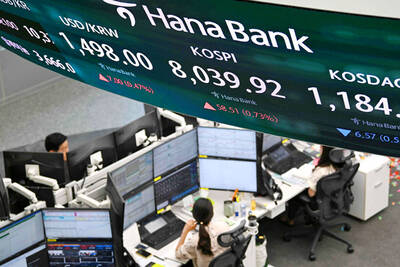
Taiwan’s overtaking of South Korea in GDP per capita is not a temporary anomaly, but the result of deeper structural problems in the South Korean economy says Chang Young-chul, the former CEO of Korea Asset Management Corp. Chang says that while it reflects Taiwan’s own gains, it also highlights weakening growth momentum in South Korea. As design and foundry capabilities become more important in the AI era, Seoul risks losing competitiveness if it relies too heavily on memory chips. IMF forecasts showing Taiwan widening its lead over South Korea have fueled debate in Seoul over memory chip dependence, industrial policy and
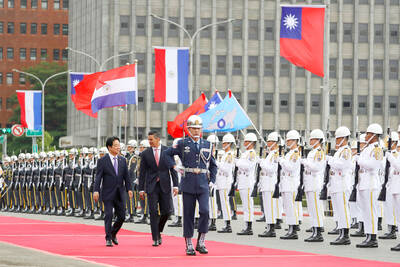
“China wants to unify with Taiwan at the lowest possible cost, and it currently believes that unification will become easier and less costly as time passes,” wrote Amanda Hsiao (蕭嫣然) and Bonnie Glaser in Foreign Affairs (“Why China Waits”) this month, describing how the People’s Republic of China (PRC) is playing the long game in its quest to seize Taiwan. This has been a favorite claim of many writers over the years, easy to argue because it is so trite. Very obviously, if the PRC isn’t attacking Taiwan, it is waiting. But for what? Hsiao and Glaser’s main point is trivial,
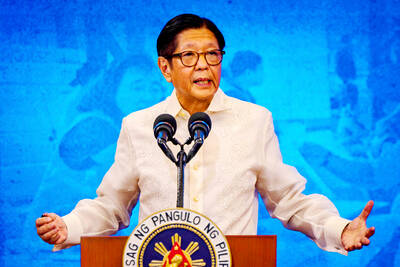
And so, in the wake of US President Donald Trump’s trip to the People’s Republic of China (PRC), all the experts on the Strait of Hormuz suddenly became experts on US-China-Taiwan relations. The Internet has certainly expanded human knowledge. Lots of these sudden experts made noise this week about Trump’s words after the meeting with PRC dictator Xi Jin-ping (習近平). Trump is going to sell out Taiwan! Longtime Taiwan commentator J. Michael Cole summed the situation up neatly in the Guardian: “We need to keep in mind that he has a tendency to say many things — sometimes contradicting himself within
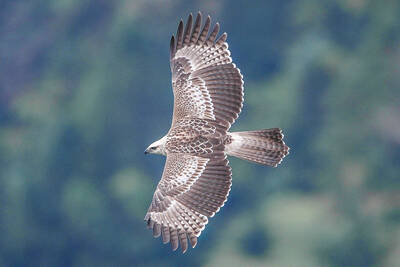
It took 12 years and months of standing in the same mountain location for director Liang Chieh-te (梁皆得) to capture a few seconds of footage: Taiwan’s largest resident raptor locking talons with its mate and spinning through the air in a courtship ritual. With only about 1,000 left in the wild and very short flight windows, the mountain hawk-eagle remains among Taiwan’s most elusive birds. The species generally produces only one offspring per year. Using forest cameras, the film crew and research teams document the arduous process the monogamous pairs go through for the chick to hatch and grow up, weathering


 RSS
RSS