


Persian Gulf's menu may seem confusing at first as Iranian dishes are placed side by side with European items. Iranian proprietor and chef Davod Bagherzadeh's tactic is too offer something for a wide range of palates; adventurous diners may choose from authentic Iranian cuisine made with exotic spices and herbs while the more cautious can stick with plain lamb chops.
An Iranian culinary trip could begin with the traditional shirazi salad, a mix of cucumber, tomato and onion. For the main course, chelo kabab, or barbecued minced beef or lamb mixed with onions and spices served with rice, is a popular option typical of the elaborate preparation that goes into Persian dishes. After mincing the ingredients four times, the chef leaves the mixture to marinate for 30 minutes before it's ready for the grill.
"For the barbecue dishes, Iranians mostly use sour-flavored spices such as lemon powder and somagh [crushed Sumac berries] to balance the meaty taste," Bagherzadeh said.
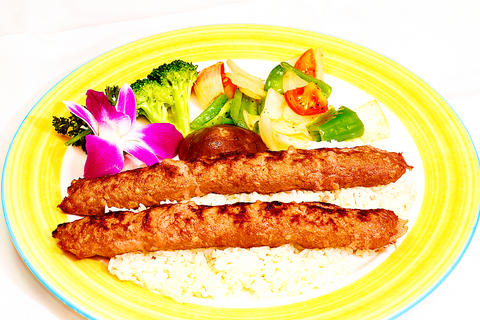
PHOTO: COURTESY OF PERSIAN GULF
Shish kebab, one of the region's more famous exports, comes in four choices: chicken with saffron spices; chicken wings with tomato paste; lamb with lemon and salt; and beef with yogurt sauce.
Stew, a staple of many countries, is also an important dish in Iranian cuisine. Ghormeh sabzi is often said to be the country's national dish and is made with beef and eight kinds of vegetables, which requires four hours of preparation. Other must-tries include the restaurant's haricot and stewed chicken with saffron spices.
Black tea is the Iranian beverage of choice. After the water is boiled in a traditional container, a cup of tea is served with a lump of saffron sugar that is used as a home remedy for colds, according to Bagherzadeh.
"We don't drink tea without lumps of sugar and every household always has a big block of sugar in stock," said the judo coach who was formerly a member Iran's national team.
Bagherzadeh's handmade Iranian yogurt and rice pudding are recommended as an end to a meal at Persian Gulf and so is having a puff on the exquisite hand-painted ghelyans [Iranian water pipes] in the smoking room. There is a choice of 20 flavors of tobacco.
Belly dancers provide entertainment every Wednesday, Friday, Saturday and Sunday from 7:30pm to 8:30pm.
Persian Gulf (波斯灣異國餐坊)
Address: 8, Ln 158, Nanjing E Rd Sec 4, Taipei
(台北市南京東路四段158巷8號)
Telephone: (02) 2577-5886
Open: Daily from 11am to 10pm
Average meal: NT$300 for lunch; NT$500 for dinner
Details: English and Chinese menu; major credit cards accepted
On the Net: www.persian-gulf.com.tw
Ajay Verma, a consultant gastroenterologist at Kettering general hospital in Northamptonshire, says our gut is a “complex machine.” “It is constantly providing us with the nutrition we need, initially to grow and develop, and then for us to survive, thrive and repair from injury and illness.” How can we keep it functioning well? Put simply: “Make sure what you put into it is balanced, and that you clear out its waste products adequately,” Verma says. “In a general gastroenterology clinic, the most common conditions we see are irritable bowel syndrome (IBS), gastroesophageal reflux disease, inflammatory bowel disease and constipation,” says Nisha
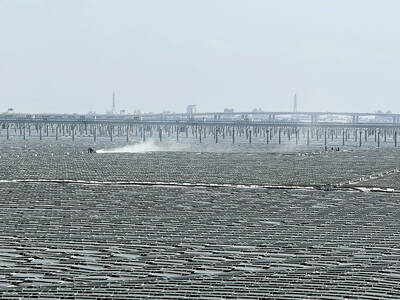
The arithmetic is straightforward and uncomfortable. By the end of 2025, Taiwan had committed itself to a 50-30-20 electricity mix — half natural gas, 30 per cent coal, 20 per cent renewables. The Ministry of Economic Affairs’s (MOEA) own monthly energy reports tell a different story. Natural gas reached 47.8 per cent of generation last year. Coal stood at 35.4 per cent, comfortably above its target ceiling. Renewables came in at 13.1 per cent, well short of the 20 per cent Taipei had pledged a decade earlier. Installed renewable capacity reached roughly half of the 12 gigawatts (GW) the government

Last week US President Donald Trump was asked by a reporter whether he would speak on the phone to the President of Taiwan. “l’ll speak to him. I speak to everybody. We have that situation very well in hand,” Trump said. This marked the second time in a couple of weeks he had said he would talk to the President of Taiwan. In 2016 he famously took a call from then-president Tsai Ing-wen (蔡英文), when he was president-elect. Despite warnings that the apocalypse was nigh because of a phone call, the world quickly forgot about the conversation between two democratically-elected presidents.
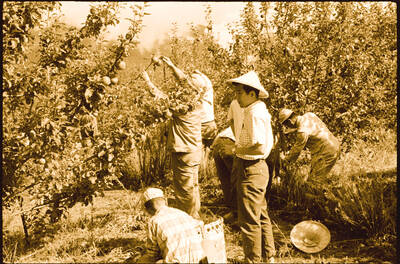
May 25 to May 31 Few believed that apples could be cultivated on a commercial scale in Taiwan’s high mountains. When horticulturalist Cheng Chao-hsiung (程兆熊) first proposed the idea in 1955, both American and Taiwanese colleagues dismissed it as implausible, arguing that temperate fruit could not be reliably grown on a subtropical island, especially on rugged terrain. However, it was this terrain in the Central Mountain Range where many Chinese Civil War veterans were resettled in the late 1950s. With limited job prospects and no family in Taiwan, they were placed on cooperative farms aimed toward self-sufficiency. Some say the conditions


 RSS
RSS