


Even Joseph Jackson and Murry Wilson might have been impressed by the manic persistence of the father of two sons in Brazil named Francisco Camargo.
Jackson and Wilson provided the somewhat fearsome fatherly pushing that propelled their children to success in, respectively, the Jackson 5 and the Beach Boys. But they had nothing on Camargo, whose determination is both the most unnerving and the most touching thing about Two Sons of Francisco.
The movie tells the story of the rise of Zeze di Camargo and Luciano, a leading Brazilian country music duo. The two men, brothers and Francisco Camargo's sons, started out a very long way from stardom, and though their father was not the first to pressure his children into becoming entertainers, few have had so far to go and such daunting tragedy to overcome.
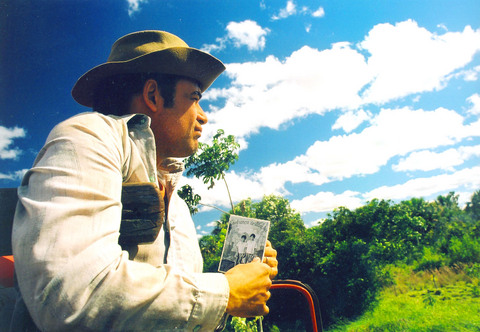
PHOTO: NY TIMES NEWS SERVICE
The film begins in 1962 in an impoverished-looking part of the state of Goias, in central Brazil, with Zeze (whose given name is Mirosmar) still in the womb, and Francisco (Angelo Antonio), a tenant farmer, hooking up a primitive radio. Francisco decides that his son will escape poverty and that music will be the way he does it.
The film, a huge hit in Brazil, feels most genuine when treating the family's early years. The young father sees the prize but isn't sophisticated enough to steer a path to it. In one amusing scene he takes Zeze (nicely played as a boy by Dablio Moreira) and a brother to play on a radio show, not realizing that the song they are singing would get everyone locked up. (One lyric goes, “Long live the armed forces and their tyranny.”)
Eventually, though, he recognizes his limitations and lets the two youngsters go off with a promoter. They find success but also tragedy; it will be years before Zeze and another brother, Welson (taking the name Luciano), try again. The film becomes less captivating in these later years, but the director, Breno Silveira, throws in a nice touch at the end, showing clips of the real singers, and their father.
Similar stories in the US tend to be turned into made-for-television mush. This one is manipulative in its own way, but it casts a sweet spell nonetheless.

As longtime residents and would-be immigrants, many foreigners are watching the developments around the cases of citizens of the People’s Republic of China (PRC) holding office in Taiwan with great interest and equally great resentment. At present PRC citizens are the only foreigners who can hold office in Taiwan. The rest of us have to give up our nationality, attain Taiwan nationality and wait 10 years before we can run for office. This makes the PRC officeholders a double issue. While the public discussion has focused on their nationality, it has ignored discussion of the 10-year rule (Deng in any

The government released figures for October showing that, year on year, exports increased 49 percent to a record US$61.8 billion for the month. The dramatic increases were partly due to fall being the high season, but largely due to the AI boom driving demand for exports, which many investors fear is rapidly turning into a massive bubble. An editorial in this newspaper last month warned that the government should be ready in case the boom turns to bust. In previous boom-bust cycles, from shoes and textiles, through computer parts and accessories, to tools, bicycles and sporting goods, Taiwan has survived in

Spicy, scarlet red Sichuan food isn’t normally my suggestion for a first date. But hear me out, if you can both handle a three-chili rating, this spot could be the one. The vibe is intimate and in-the-know cool, the food is fantastic and will spur many a conversation, the cocktail list is wacky and fun — and they do offer free mouthwash in the restroom. Old Seat (老位) is tucked down an unassuming alleyway in the bustling Zhongxiao Dunhua (忠孝敦化) area, warm red lighting and fairy lights leading the way. It’s elegant, overtly hipster and even our table by the
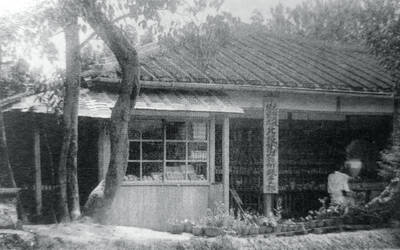
Nov. 30 to Dec. 6 It is said that those who refused to vacate Kipatauw’s upper settlement were knocked unconscious by Japanese agents and dragged to fingerprint the deeds. The Japanese coveted the site’s valuable white clay for Beitou District’s (北投) growing ceramics industry, and they were determined to acquire it by any means. The Indigenous Ketagalan settlement of Kipatauw had withstood centuries of external pressures and cultural erosion. Despite gradually losing much of their territory to Han settlers, they remained distinct into the early 20th century. By 1895, three communities persisted: the upper settlement near


 RSS
RSS