


The government released figures for October showing that, year on year, exports increased 49 percent to a record US$61.8 billion for the month. The dramatic increases were partly due to fall being the high season, but largely due to the AI boom driving demand for exports, which many investors fear is rapidly turning into a massive bubble. An editorial in this newspaper last month warned that the government should be ready in case the boom turns to bust.
In previous boom-bust cycles, from shoes and textiles, through computer parts and accessories, to tools, bicycles and sporting goods, Taiwan has survived in part because it has had a robust, diversified manufacturing base, skilled in lean production, and cadres of managers and export firms with vast experience in operating in manufacturing clusters. Take, for example, the textile cluster in western Changhua, or the old mold and die cluster in New Taipei’s Sanchong District (三重). But one by one, these industries and products have moved to other countries.
MICROCHIPS, MEGA BUSINESS
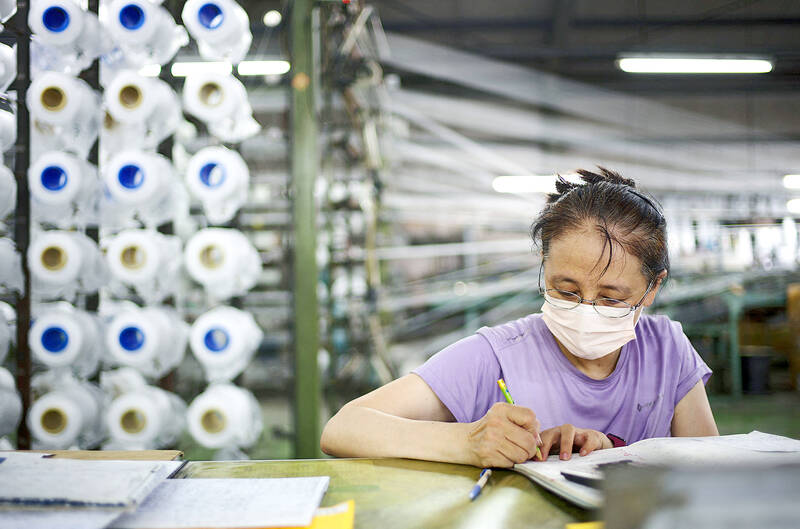
Photo: AFP
Enter Taiwan Semiconductor Manufacturing Co. (TSMC). That firm’s production is worth roughly 25 percent of Taiwan’s GDP and 30 percent of the Taiwan stock market’s main index, according to Wiki. By most accounts, it produces 8 to 15 percent of the nation’s GDP. The diversified manufacturing economy of the “miracle years” never depended on a single firm the way Taiwan’s economy today depends on the health of TSMC and its chip industry cohorts.
The Taipei Times editorial called for the government to be prepared for a stock market shock if the AI demand busts. But as various articles on Taiwan’s booming exports have noted in the past few months, Taiwan’s traditional industries are ailing. The Taiwan Institute of Economic Research (TIER), which uses a colored light system to indicate the health of a sector, has had electronics on yellow-red (booming) or green most of the year, but metals and chemicals largely flashing blue (contraction).
Photo: AP
Traditional industries have been hit hard by the New Taiwan Dollar’s appreciation, which has worsened their ability to compete on price. US President Donald Trump’s tariff madness has also impacted them. TIER’s monthly report for October observed that, excluding AI applications and pre-stocking for new consumer electronics, traditional industry exports were negative. TIER also wrote that “imports of chemicals, basic metals and their products declined significantly, indicating relatively weak traditional industry demand.”
Similarly, the Chung-Hwa Institution for Economic Research (CIER) observed in an August editorial that “since the US-China trade war began in 2018, total manufacturing output has grown 23 percent, but this growth has been concentrated mainly in integrated circuits and electronic products.”
It said that traditional industries have shrunk, “making the export structure even more lopsided.” CIER called on the government to promote R&D and innovation, since those industries employ 25 percent of all workers and offshoring them could lead to social and political disruption.
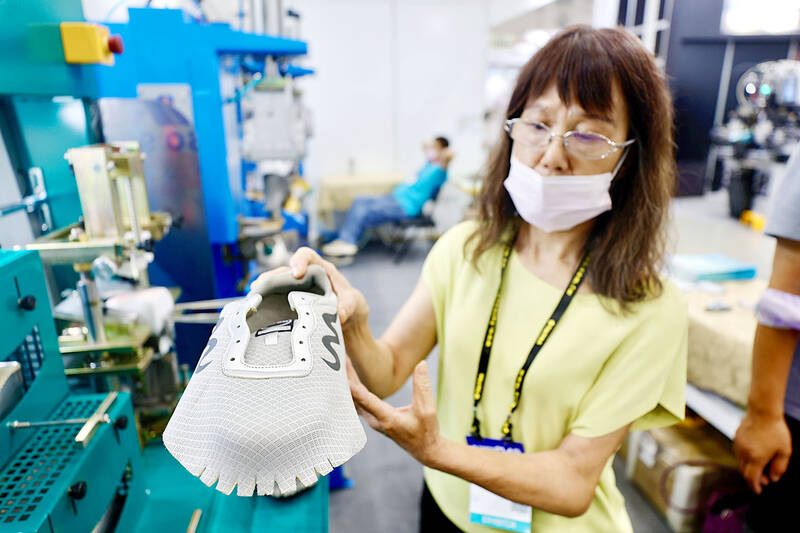
Photo: EPA
If AI is a bubble doomed to bust, what will take up the slack? The pattern of Taiwan’s industrial development suggests that the government should pay less attention to the vicissitudes of the stock market and more to identifying the next big industry Taiwan can move into once the chip industry and AI have moved elsewhere. And move they will: Taiwan’s aging population and demographic collapse suggest that those industries are living on borrowed time. Their upstream supply chains further depend on flows of migrant workers from nations that are also suffering from plummeting fertility.
TALENT TROUBLES
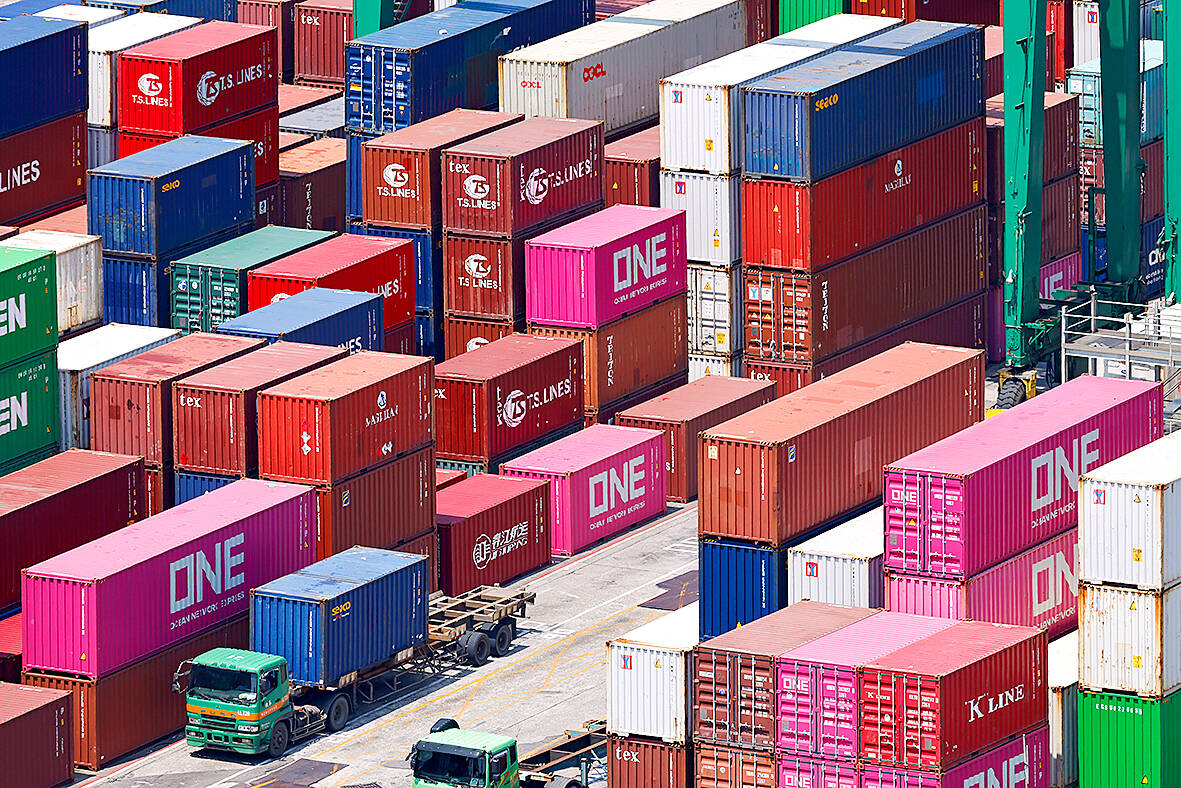
Photo: EPA
The National Development Council (NDC) has put forth Taiwan’s Five Trusted Industry Sectors Promotion Plan, following the plans outlined in President William Lai’s (賴清德) inauguration speech. The plan calls for making Taiwan “an indispensable and trusted technological partner of democracies around the world” — the word “indispensable” there indicates how the plan increases Taiwan’s international security by embedding it in the economies of other democracies.
The five sectors include semiconductors, AI, military, surveillance and security and next generation communications industries. The NDC has programs for talent recruitment, under the assumption that what Taiwan needs is high-level tech and engineering talent.
A recent article in the Taipei Times on the Gold Card talent program highlighted the problem with that, one I’ve discussed many times: Taiwan doesn’t need imported high-end talent. It needs skilled technical workers, machine operators, sales people and similar mid-level workers. The quest for high-end talent isn’t an economic program so much as a program to attract high-level workers because their perceived higher status validates Taiwan. Like many events and programs in Taiwan, it’s really about chasing status.
The hunt for “talent” is further misguided because it addresses the wrong industries. Last week, the head of the Chinese National Association of Industry and Commerce (CNAIC) Thomas Wu (吳東亮) urged the government to tackle the growing disjunction between high tech industry and the traditional sectors, arguing that most of the workforce is in those industries, which produce essential goods and services.
Of course Taiwan should be pursuing high tech industry, but it should be noted that one reason that Taiwan is chasing tech success is because high tech success confers status. The chip industries give Taiwan a global profile. Traditional industries, by contrast, lack social status. A good example of that is the NDC’s own 2025 to 2028 development plan, where the traditional industries rate a mere couple of lines. None of the vivid language and imagery of the plan is directed at them.
NOT TOO LATE
In a decade Taiwan could find itself in a very strange crunch, with both high and low-end industry drying up. The aging, shrinking workforce will be leaving the semiconductor and AI industries, yet traditional industries will also be disappearing. What will Taiwan do for an economy then? The gaudy glories of the tech industry mask an economy that increasingly resembles several European states: a post-industrial lootscape heavily dependent on real estate and finance, with the bulk of the working population in low-end service jobs without prospects. A world created by PRC manufacturing dominance.
Traditional industries are probably doomed in the long run. They compete on price, and cheaper skilled labor is abundant in other countries. Many traditional industry firms are zombie firms, kept alive on subsidies, incapable of R&D. The government should treat the calls for saving traditional industries as calls for transforming their workforce.
As I always say, it’s not too late.
Notes from Central Taiwan is a column written by long-term resident Michael Turton, who provides incisive commentary informed by three decades of living in and writing about his adoptive country. The views expressed here are his own.
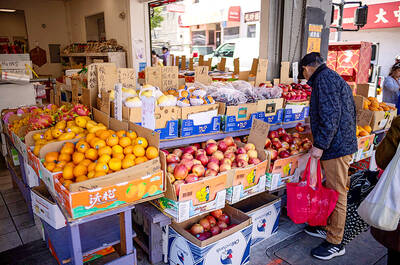
Ajay Verma, a consultant gastroenterologist at Kettering general hospital in Northamptonshire, says our gut is a “complex machine.” “It is constantly providing us with the nutrition we need, initially to grow and develop, and then for us to survive, thrive and repair from injury and illness.” How can we keep it functioning well? Put simply: “Make sure what you put into it is balanced, and that you clear out its waste products adequately,” Verma says. “In a general gastroenterology clinic, the most common conditions we see are irritable bowel syndrome (IBS), gastroesophageal reflux disease, inflammatory bowel disease and constipation,” says Nisha
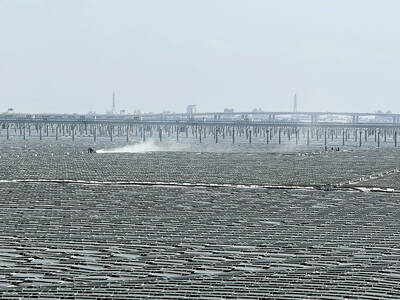
The arithmetic is straightforward and uncomfortable. By the end of 2025, Taiwan had committed itself to a 50-30-20 electricity mix — half natural gas, 30 per cent coal, 20 per cent renewables. The Ministry of Economic Affairs’s (MOEA) own monthly energy reports tell a different story. Natural gas reached 47.8 per cent of generation last year. Coal stood at 35.4 per cent, comfortably above its target ceiling. Renewables came in at 13.1 per cent, well short of the 20 per cent Taipei had pledged a decade earlier. Installed renewable capacity reached roughly half of the 12 gigawatts (GW) the government

Last week US President Donald Trump was asked by a reporter whether he would speak on the phone to the President of Taiwan. “l’ll speak to him. I speak to everybody. We have that situation very well in hand,” Trump said. This marked the second time in a couple of weeks he had said he would talk to the President of Taiwan. In 2016 he famously took a call from then-president Tsai Ing-wen (蔡英文), when he was president-elect. Despite warnings that the apocalypse was nigh because of a phone call, the world quickly forgot about the conversation between two democratically-elected presidents.
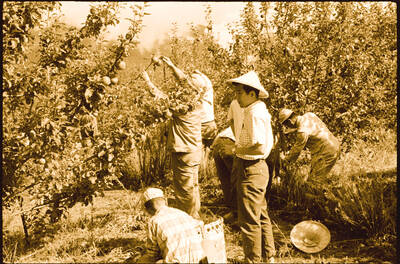
May 25 to May 31 Few believed that apples could be cultivated on a commercial scale in Taiwan’s high mountains. When horticulturalist Cheng Chao-hsiung (程兆熊) first proposed the idea in 1955, both American and Taiwanese colleagues dismissed it as implausible, arguing that temperate fruit could not be reliably grown on a subtropical island, especially on rugged terrain. However, it was this terrain in the Central Mountain Range where many Chinese Civil War veterans were resettled in the late 1950s. With limited job prospects and no family in Taiwan, they were placed on cooperative farms aimed toward self-sufficiency. Some say the conditions


 RSS
RSS