


For a long time, many Americans worried whether Iraq was becoming another Vietnam.
Now, as sectarian strife between Shiite and Sunni Muslims spreads, a grimmer and more disturbing question is emerging: Could Iraq become another Lebanon?
With the US military campaign in Iraq entering its fourth year, longtime concerns about the stubborn insurgency are being compounded by new fears that the country stands on the verge of civil war.
PHOTOS: NY TIMES NEWS SERVICE
"Could anyone imagine it would be more perilous than it is today?" Bruce Hoffman, a defense analyst for the Rand Corp, said Thursday in an interview. "The prospect of civil war is looming much larger than at any time in the past."
The bombing of a Shiite holy shrine at a mosque in Samarra on Feb. 22 unleashed a bloodbath that has claimed 1,500 lives and set off a wave of retribution killings.
Rob Malley, head of Middle East studies for the International Crisis Group in Brussels, Belgium, sees an even worse threat. He worries about the Iraq war extending beyond its borders and becoming a regional conflict, with Iran, Saudi Arabia and other neighbors pulled into the fray.

"The more chaotic the situation becomes, the more it spills over into neighboring states, and the more those states will take action to protect their interests," Malley said.
The Bush administration's hard-line stance against Iran's nuclear ambitions, Malley said, collides with its attempt to persuade Iranian-affiliated Iraqi Shiites to give Sunnis more oil revenues and a larger role in the government now being formed. Martin Van Creveld, a prominent Israeli military historian who is the only non-US author on the US Army's required reading list for officers, offered a brutal assessment of the decision to invade Iraq. It was, Van Creveld said, the worst military adventure in 20 centuries.
"For misleading the American people and launching the most foolish war since Emperor Augustus in 9BC sent his legions into Germany and lost them, Bush deserves to be impeached and, once he has been removed from office, put on trial," Van Creveld wrote in the Forward, a mainly Jewish-readership newspaper in New York.
Despite the president's repeated vows to stay the course, the current public debate about Iraq, across a broad political spectrum, focuses on when the 133,000 US troops can leave and how much they can limit the damage before their withdrawal.
"Our presence in Iraq is part of the problem, but our presence in Iraq is also part of the solution," said Carey Cavanaugh, a senior US State Department official working temporarily at the Pentagon.
Three years after US President George W. Bush launched the invasion of Iraq with a massive air assault followed by a land invasion and quick march to Baghdad, the war that he thought would be quick and relatively painless shows no signs of ending any time soon.
As the US death toll in Iraq climbs toward 2,500 and the violence grinds on, Bush and his top aides have adopted a more pragmatic approach to the war.
In a series of speeches over the last four months, Bush has acknowledged that his administration made mistakes in both planning and executing the war. And he has shown a new appreciation for the Sunni-dominated insurgents' prowess -- their coordinated attacks, suicide bombings and increasingly sophisticated, often remote-controlled, explosive devices.
Yet Bush has not strayed from his fundamental stance on the war: It has removed Saddam Hussein from power, delivered democracy to Iraqis and fulfilled their God-given right to freedom; and it has made Americans safer from fresh post-Sept. 11, 2001 attacks by taking the fight to terrorists abroad instead of waiting for them to strike at home.
"We have a strategy for victory in Iraq," Bush told Republican activists Thursday evening at a Washington gathering. "Part of that victory means that we will stand by the Iraqi people as a democracy unfolds. The only way the enemy can defeat us, the only way that Iraq will not become a democracy is if we lose our nerve. I will not lose my nerve in the face of assassins and killers."
But a growing number of Americans are, if not losing their nerve, abandoning Bush's hopeful view of the war. Only 37 percent think things are going well in Iraq, and just 32 percent believe that Bush has a clear plan for the conflict, according to a Gallup poll taken last week.
In a separate survey by the Pew Research Center, two-thirds of Americans said civil war is becoming more likely in Iraq.
Such polls reveal how much the instability and violence have overshadowed the political successes of last year, when Iraqis went to the polls three times to elect a provisional government, ratify a constitution and choose a permanent parliament. That legislature met Thursday for the first time for a hastily convened session aimed at showing progress toward putting a permanent government in place.
Iraq's recent movement toward civil war likely marks a success for Abu Musab al-Zarqawi, the Jordanian-born insurgent leader.
In a letter US military officials said he wrote, intercepted in February 2004, Zarqawi said he wanted to spark civil war by attacking Shiite targets and provoking retaliation against Sunnis, who dominate the insurgency.
It all seems like such a long departure from Bush and his top aides' early vision of the war.
"We will, in fact, be greeted as liberators," US Vice President Dick Cheney said three days before the invasion began.
Paul Wolfowitz, then deputy defense secretary and now World Bank chief, confidently predicted that Iraqi oil revenues would cover the costs of reconstruction.
When the Iraqi insurgents were still putting up unexpected resistance three months into the war, US Defense Secretary Donald Rumsfeld dismissed them as "pockets of dead-enders" and said US troops were "rooting them out."
Bush provided the most famous expression of premature celebration. On May 1, 2003, after Baghdad fell and Saddam went on the lam, he landed on the aircraft carrier USS Abraham Lincoln. Wearing a green flight suit and holding a white helmet in front of a banner reading "Mission Accomplished," Bush declared an end to major combat operations.
Today, Iraqis who might view Americans as liberators are fearful of showing as much. Iraqi oil production is below prewar levels, as is production of electricity and potable water, while Congress has spent tens of billions of dollars on reconstruction.
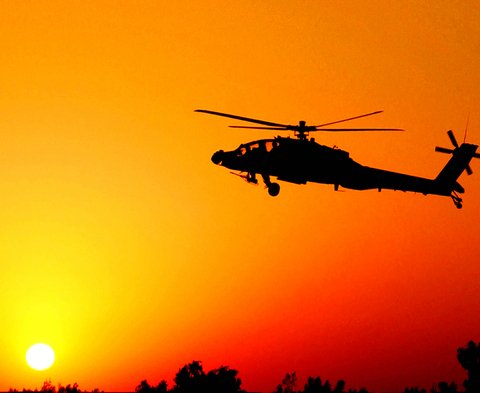
The insurgents are well and alive. Major combat operations continue -- most recently in the air strikes this week by 100 US military helicopters.
Moving into the war's fourth year, across the political spectrum and throughout a broad range of think tanks, it is difficult to find any independent expert who feels optimistic about Iraq.
"This is really about a war plan that went wrong based on a series of bad decisions that reflected really abysmal intelligence," said Loren Thompson, head of the Lexington Institute, a military think tank outside Washington.
Jon Alterman, who worked on Iraq policy at the State Department before the war and is now an analyst with the Center for Strategic and International Studies in Washington, said his many American and Iraqi contacts in the embattled country are at more and more of a loss.
"Everybody I know who works in Iraq and the Iraqis themselves say it's becoming increasingly difficult to figure out what's going on," he said.
Even the war's strongest and earliest supporters speak in much less enthusiastic terms about the venture.
Danielle Pletka, a foreign policy expert with the American Enterprise Institute in Washington, organized major prewar conferences of Iraqi expatriates who outlined ambitious goals for a democratic Iraq ushered in by US military action.
"For a lot of us, we thought Iraq could look different than it does today, and we were wrong," Pletka said.
Victor Davis Hanson, a military historian at Stanford University's Hoover Institution, is among the few outside analysts who think things are going reasonably well in Iraq.
"The problem is that the people at home think we don't have a strategy, and that they've been asked to give an endless commitment to what they consider a hopeless enterprise," Hanson said. "In fact, there's a clear strategy, and it seems to be working."
Hanson spent a week in Iraq last month, and he plans to return for two weeks in May. He stays in touch via e-mail with a dozen or so US officers and soldiers who, he says, feel that they are slowly turning the tide in their favor.
Among the signs of progress Hanson ticks off: US-trained Iraqi troops are conducting a growing share of patrols, allowing more Americans to stay out of harm's way; as displayed in the air strikes this week, US warplanes are providing cover for the Iraqi forces; Iraqi units are no longer disbanding in the face of strong resistance; former insurgent strongholds are not being reclaimed by rebels soon after they are disbursed in firefights.
Hanson sees more violence in store for Iraq, but he said it is actually a sign that insurgents are losing ground.
"Al-Qaeda is getting very desperate as they see a democratic government emerge and an increasingly professional Iraqi security force," he said. "We're going to see a lot more frustration and desperation before this is over."
Army Lieutenant Colonel Isaiah Wilson III, who served as the chief war planner in Iraq for the 101st Airborne Division during the first year of the conflict, caused a stir in late 2004 when he suggested that the Pentagon never developed an operational plan for the occupation and reconstruction of Iraq after the initial invasion.
It is a view he still holds.
"We had a plan to win the war, but not evidently to win the peace that followed," Wilson said.
"It's very hard to build a nation inside Iraq when you're having a hard time preventing interference from outside your borders," Wilson said. "This is a long war, and we have to understand what that's going to mean. There is no decisive victory around the corner. I think we're going to be there for a longer period of time. If we're interested in a secure, democratic Iraq that is no threat to its neighbors, we're there for the long haul."

Ajay Verma, a consultant gastroenterologist at Kettering general hospital in Northamptonshire, says our gut is a “complex machine.” “It is constantly providing us with the nutrition we need, initially to grow and develop, and then for us to survive, thrive and repair from injury and illness.” How can we keep it functioning well? Put simply: “Make sure what you put into it is balanced, and that you clear out its waste products adequately,” Verma says. “In a general gastroenterology clinic, the most common conditions we see are irritable bowel syndrome (IBS), gastroesophageal reflux disease, inflammatory bowel disease and constipation,” says Nisha
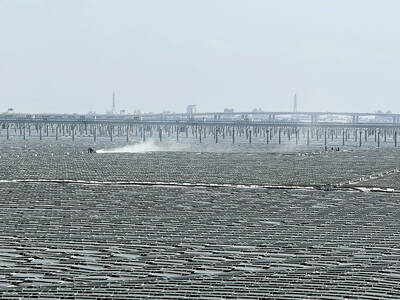
The arithmetic is straightforward and uncomfortable. By the end of 2025, Taiwan had committed itself to a 50-30-20 electricity mix — half natural gas, 30 per cent coal, 20 per cent renewables. The Ministry of Economic Affairs’s (MOEA) own monthly energy reports tell a different story. Natural gas reached 47.8 per cent of generation last year. Coal stood at 35.4 per cent, comfortably above its target ceiling. Renewables came in at 13.1 per cent, well short of the 20 per cent Taipei had pledged a decade earlier. Installed renewable capacity reached roughly half of the 12 gigawatts (GW) the government

Last week US President Donald Trump was asked by a reporter whether he would speak on the phone to the President of Taiwan. “l’ll speak to him. I speak to everybody. We have that situation very well in hand,” Trump said. This marked the second time in a couple of weeks he had said he would talk to the President of Taiwan. In 2016 he famously took a call from then-president Tsai Ing-wen (蔡英文), when he was president-elect. Despite warnings that the apocalypse was nigh because of a phone call, the world quickly forgot about the conversation between two democratically-elected presidents.
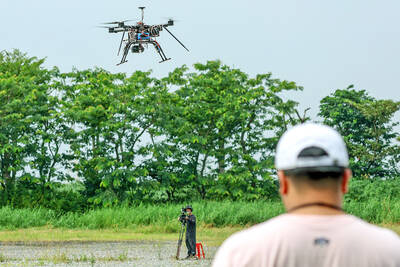
Taiwan’s drone exports are taking off, fuelled by the war in Ukraine, as Taiwanese companies seek a stake in the fast-growing global market for unmanned aerial vehicles (UAV). Low-cost drones used for reconnaissance and strikes are in high demand as governments around the world boost defense spending in the face of intensifying conflicts. A relative new player in the increasingly competitive industry, Taiwan’s pitch is to be an “Asian hub” for the production of UAVs and components free of Chinese materials, or “non-red.” That means its UAVs can be up to three times more expensive than their Chinese competitors, like the world’s biggest


 RSS
RSS