


Bagel Bagel is housed in a 55-year-old building and its regular patrons include business movers-and-shakers and diplomats. They come here for the quality food and the unique dining atmosphere, which never go out of style.
The two-storey building has a wood beam ceiling which, in the architecturally flaccid, concrete jungle of Taipei, lends it a certain pedigree and charm.
On the first floor, after passing through a small garden and reception, the largest of the restaurant's several dining rooms requires a few minutes to take in. What is revealed is a treasure trove of 20th century Chinese, Russian, French, English and Italian furniture: including cabinets, birdcages, chests of drawers, a 1950s refrigerator, dried flowers, chandeliers, candelabras, a gramophone, mirrors, screens, futuristic lamps from the 1960s and a ship's steering wheel -- enough to fill an auction house catalogue several times over. All the furniture is for sale.
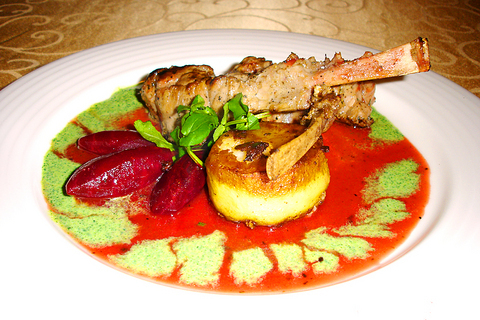
PHOTO: STEVE PRICE, TAIPEI TIMES
The restaurant was named Bagel Bagel because its first courses were accompanied by the distinctive bread when it opened a decade ago. There is no a la carte menu, but special dietary requirements can be catered for. The set menu includes six dishes, usually with three choices of main course. The food prepared by four full time chefs is modern European with a hint of the Orient.
The set menu is changed according to the availability of seasonal produce. This week's menu features salmon marinated in vodka and lemon juice served with parsley oil, citrus fruit segments and savory marmalade, warm duck breast salad with chives and garlic croutons, homemade spinach spaghetti and tomato sauce. Particularly noteworthy is the rack of veal, marinated with herbs, sauteed then baked and served in a beetroot juice and veal reduction, accompanied by a slab of fondant potato and watercress and wasabi cream sauce.
In a country where neophilia more often than not dictates the interior design of restaurants, it is refreshing to while away several hours over dinner in a setting that combines a sense of faded opulence with a rejection of minimalist austerity. Like Audrey Hepburn, perhaps, whose image is found throughout the restaurant, Bagel Bagel has a classic image that has survived the fads of fashion.
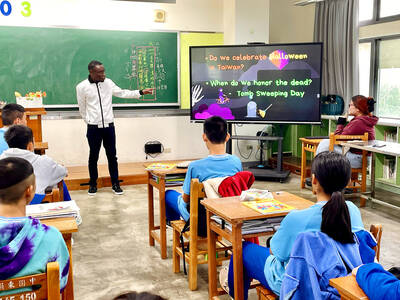
For many people, Bilingual Nation 2030 begins and ends in the classroom. Since the policy was launched in 2018, the debate has centered on students, teachers and the pressure placed on schools. Yet the policy was never solely about English education. The government’s official plan also calls for bilingualization in Taiwan’s government services, laws and regulations, and living environment. The goal is to make Taiwan more inclusive and accessible to international enterprises and talent and better prepared for global economic and trade conditions. After eight years, that grand vision is due for a pulse check. RULES THAT CAN BE READ For Harper Chen (陳虹宇), an adviser
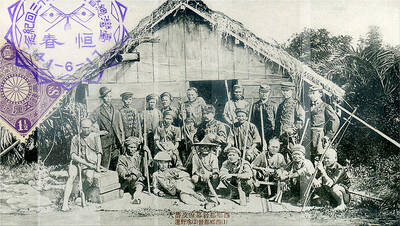
Traditionally, indigenous people in Taiwan’s mountains practice swidden cultivation, or “slash and burn” agriculture, a practice common in human history. According to a 2016 research article in the International Journal of Environmental Sustainability, among the Atayal people, this began with a search for suitable forested slopeland. The trees are burnt for fertilizer and the land cleared of stones. The stones and wood are then piled up to make fences, while both dead and standing trees are retained on the plot. The fences are used to grow climbing crops like squash and beans. The plot itself supports farming for three years.

May 4 to May 10 It was once said that if you hadn’t performed at the Sapphire Grand Cabaret (藍寶石大歌廳), you couldn’t truly be considered a star. Taking the stage at the legendary Kaohsiung club was more than just a concert. Performers were expected to entertain in every sense, wearing outlandish or revealing costumes and staying quick on their feet as sharp-tongued, over-the-top hosts asked questions and delivered jokes that would be seen as vulgar, even offensive, by today’s standards. Opening in May 1967 during a period of strict political and social control, Sapphire offered a rare outlet for audiences in
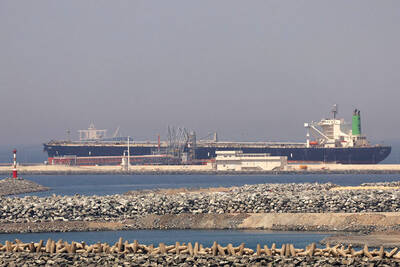
The breakwater stretches out to sea from the sprawling Kaohsiung port in southern Taiwan. Normally, it’s crowded with massive tankers ferrying liquefied natural gas from Qatar to be stored in the bulbous white tanks that dot the shoreline. These are not normal times, though, and not a single shipment from Qatar has docked at the Yongan terminal since early March after the Strait of Hormuz was shuttered. The suspension has provided a realistic preview of a potential Chinese blockade, a move that would throttle an economy anchored by the world’s most advanced and power-hungry semiconductor industry. It is a stark reminder of


 RSS
RSS