

In the light and leafy atrium of the Sheraton Taipei the country's most successful fashion designer, Shiatzy Chen (王陳彩霞), showed off her latest collection. It was a bright, breezy and youthful show that epitomized what has been called "neo-Chinese chic," full of mix-and-match outfits in satin and silk.
The stated aim of the fall-winter show was to court a new generation of buyers and the upmarket audience on Monday clearly enjoyed what it saw. Chen's been in the business for over a quarter of a century and the consensus seemed to be that she is getting trendier with age.

New elements were introduced, such as the neon green, pink and yellow miniskirts that were intricately patterned with Chinese motifs. The headline outfit was a delicate shoulderless lime-green creation overlaid with gauzy, black see-through lace and tiny diamante flourishes, which came with a matching handbag.

There were traditional collarless and Mandarin-collared shirts for the men in blue, black or white, beautifully tailored and shaped to the body. Jackets were made of linen, cotton, silk and leather and were embroidered with flowers, butterflies and dragonfly patterns. These embellishes were sparingly applied and stood out even more. Bright yellow, pink and green trousers with a satin sheen set off the ensembles.
As for the ladies, the overall look was Oriental and feminine. There was the signature brocade work and bright hems in contrasting colors. The addition of pleats to the skirts gave a slightly puffed-out look, creating an impression of floating down the catwalk.

Dresses in shimmering silver came to just above the knee. Others were taken in at the waist to emphasize the slighter Asian figure. Trousers were colorful and form-fitting, shorter than is usual in the West. Accessories included jewelled high heels, beaded bags and long pearls reminiscent of 1920s Shanghai poster girls.

Speaking after the show, Chen told the Taipei Times that despite her presence in Paris and sales of knitwear and ready-to-wear in the world's major centers, her primary goal at present is to satisfy the Asian market, not Europe or America.
Chen entered the Chinese market in 2003 in Shanghai and last year opened up further stores in Hong Kong and Beijing. Her company's business plan is to open in Tokyo and have 50 shops on the Mainland by 2010. This is in addition to the 47 outlets she already has in Taiwan. The company presently has over 200 employees and manufactures more than 70,000 items of clothing each year.

"In June we will be having a soft opening in Shanghai and in August there will be the formal opening of a stand-alone building in Shanghai that will be our flagship store there. I'm excited about this," Chen said.
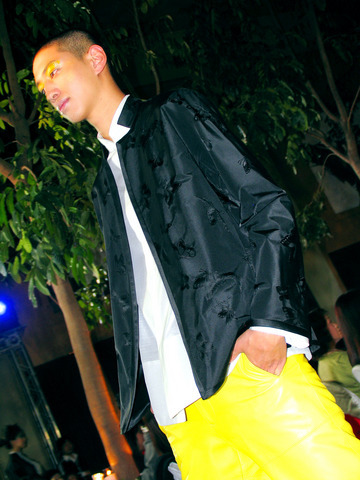
Regarding her most recent collection, Chen was all smiles and confirmed that she had designed it with a younger audience in mind.
"Yes, over the past seasons our clothes have been positioned at a younger audience. Some of these younger women come because of their mothers, who are already established clients. We have combined Western and Chinese elements. Chinese colors are brighter, but the Western cutting style is better and as a result our clothes are more fashionable and modern."

Unusual for fashion designers these days, Changhua-born Chen was not formally educated in the industry but learned her trade by working at her uncle's factory. She met her husband Wang Yuan-hong (王元宏), a smart businessman in the textile trade, and together they founded Shiatzy International Company Limited in 1978, over which they maintain total control.
For over 10 years Chen worked on making her name in the local market and by 1994 had built a client list of nearly 25,000 people, many of whom are high society types, or the wives and mistresses of government officials and diplomats. Most of these people are in the 41 to 50 age range so it has been a company strategy over the last 10 years to reach out to a younger generation of upwardly mobile customers, not only here, but in the beckoning China market and farther afield.
This will be achieved, said Shiatzy Chen's PR and marketing manager Amber Chen (陳奕彤), by extending established principles. "We use our own culture and roots to create a new look for the country, which is elegant but not obvious."
Amber Chen likened Shiatzy Chen's brand to that of Japan's Yohji Yamamoto, who has a loyal homegrown market and international appeal, is always at the leading edge of fashion and has recently tapped into the youth market by teaming up with Adidas for the Y-3 collection. If Shiatzy Chen can gain the same leverage as a Taiwanese/Chinese designer that Yamamoto has as the preeminent Japanese designer, the future is assured.
"A brand gives identity and makes us stand out as a designer label," Amber Chen said. "We represent the Taiwan-China market. We have many of the aesthetic elements of Chinese culture and we are the leading edge as far as creating a `new Chinese look.' ... It takes time to build a brand. It's nothing to do with the clothes anymore, it's all about marketing. The product doesn't just speak for itself, our voice needs to be heard."
Last year, Shiatzy Chen had a turnover of NT$750 million. This represents 15 percent growth over the past five years and means the company has enough funds to expand quickly over the next 10 years and achieve significant market penetration, not just in China -- the short-term goal -- but in the mature high-end markets of Paris, Milan, London and Tokyo.
To enable this, a huge new factory has been built in Shanghai and a large proportion of profits is going into research and design. There will also be further recruitment of talent in design, marketing and manufacturing. All the fundamentals for growth are in place.
A source of pride for the company is its innovation of new materials with which to fashion clothes while using traditional Chinese handicraft and tailoring techniques, some of which had practically vanished before being revived by Shiatzy Chen.
Shiatzy Chen's fashion apparel is no longer just "Made in Taiwan." Over the next 25 years she intends to make her name on the world stage. Last year London's Financial Times listed her as one of the top fashion brand names and Vogue said, "There is nothing in any market with her style at the international designer level."
There is no doubt Shiatzy Chen has taste so expect to see, touch and hear a lot more of her brand in the future.
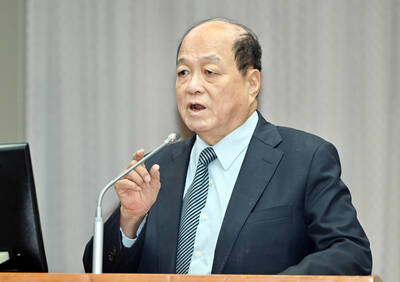
The Nuclear Safety Commission (NSC, 核安會) on Sept. 24 approved the re-operation plan that Taiwan Power Co (Taipower, 台電) filed in March for the Ma-anshan Nuclear Power Plant in Pingtung County, after three rounds of review and 589 comments. Taipower now has to carry out the work in the plan and its own inspections on ageing, radiation and seismic resistance, then report back to the commission for review and on-site checks. Minister of Economic Affairs Kung Ming-hsin (龔明鑫) has named 2028 as the earliest restart. The NSC has given no date. THE DEBATE No challenge has been identified as to whether Ma-anshan
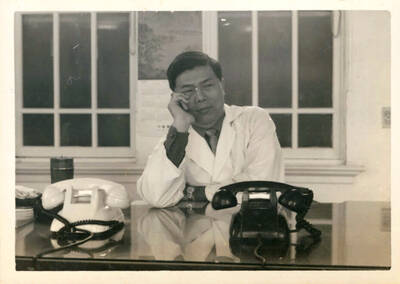
Oct. 12 to Oct. 18 After 11 years in prison on Green Island, Yen Shih-hung (顏世鴻) was finally due for release when a camp guard asked him for NT$20,000 to help pay his bride price. Yen refused. The next day, officials deemed that he had “failed to improve his thinking” and ordered him to undergo further political reeducation on Siaoliouciou (小琉球), where prisoners were also subjected to forced labor. He spent another 19 months there before regaining his freedom in January 1964. Yen’s punishment stemmed from his joining the Taiwan Provincial Student Affairs Committee

Cognitive warfare, says the Ministry of National Defense (MND), is the People’s Republic of China’s (PRC) use of “political, economic, cultural, military and legal means, with the intent to divide internal unity and undermine social stability” in Taiwan. Last week offered several examples. PRC media in October last year reported that the Chongqing Municipal Public Security Bureau had opened an investigation into Democratic Progressive Party (DPP) Legislator Puma Shen (沈伯洋), the DPP’s mayoral candidate for Taipei in next month’s election, for “Taiwan independence” activities. This was a cognitive warfare ploy, designed to unsettle the targeted person and to establish the idea

In pandemic preparedness work, scientists like to focus on the technical challenges: identifying pathogens, diagnosing infections, understanding their effects and developing vaccines and treatments. Each step promises progress through human innovation, investment and planning. The WHO, for example, brings experts together to identify and prioritize emerging disease threats and collect the evidence needed to prepare for them. But preparedness depends on more than scientific innovation. As the past week has shown, politics is the elephant in the room in all of this. No one could have predicted we would be talking about pneumonic plague, and that the death of a single


 RSS
RSS