


The east coast county of Taitung is home to beautiful mountains, valleys and beaches and it's also the place to experience different cultures. Taitung County has become a center of archaeology and famed for the study of Austronesian cultures because it is also home to the National Museum of Prehistory (
Two weeks ago, the museum held an international conference, Austronesian Forum: New Perspective on Museum and Cultural Tourism. Guests from Austronesian-speaking countries New Zealand, the Solomon Islands, Papua New Guinea and Northern Mariana paid visits to the museum and exchanged their experiences on preserving Aboriginal culture.
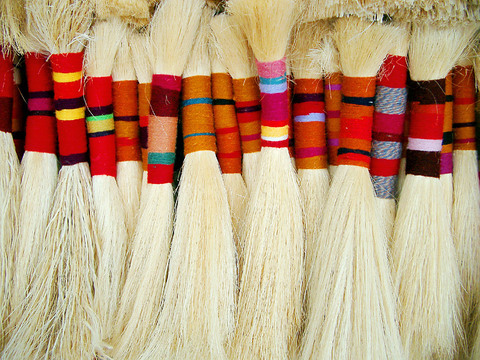
PHOTO: YU SEN-LUN, TAIPEI TIMES
Prior to the forum, the installation ceremony of an 8m-long ancient Palau sailing boat took place in the entrance hall of the National Museum of Prehistory. The museum made an order for the boat in Palau in September as part of its plan to establish permanent collections of boats from all Austronesian-language countries. According to director Tsang Cheng-hwa (臧振華), the collection will promote the sea-based culture of Austronesian people.
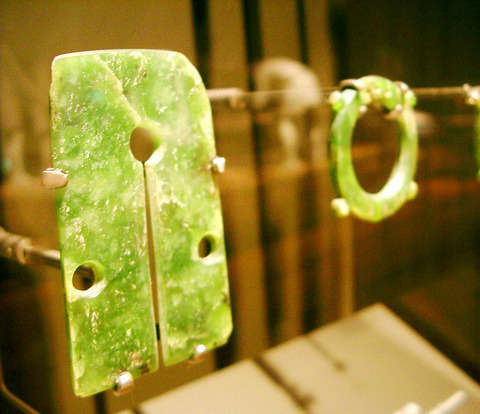
PHOTO: YU SEN-LUN, TAIPEI TIMES
At the end of the two-day forum, Tsang announced plans to build The Austronesian Cultural Center (南島文化園區), to be located next to the museum. The government plans to spent NT$3.6 billion in the next five years to build a multifunctional complex that will include a theme park, a research center and performance halls to celebrating Austronesian cultures.
The trend of exploring Austronesian culture is not embraced only by Taiwan independence fanatics, who are eager to prove Taiwan's its distinctness from China. The trend is also no longer just an academic question. It's now a popular topic that recognizes how Taiwan's past is tied up with the Austronesian culture.
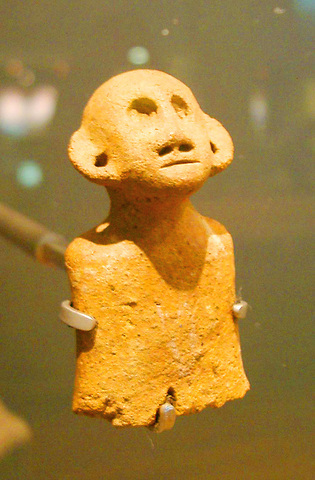
PHOTO: YU SEN-LUN, TAIPEI TIMES
When visiting the Aboriginal villages, Lawrence Foanaota, director of Solomon Island National Museum, pointed out that the "meeting house" in Taitung's Rukai tribe is very similar to those in the Solomon Islands.
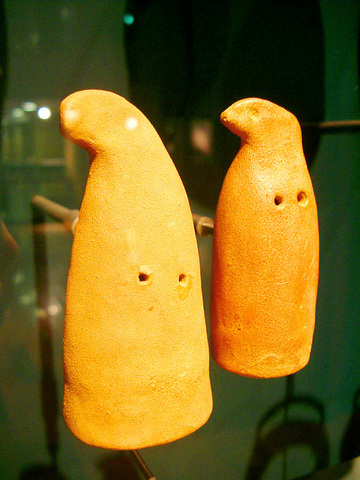
PHOTO: YU SEN-LUN, TAIPEI TIMES
He said: "We have a very similar system where young men are asked to stay in this men-only house for three years, learning fishing, hunting and surviving in the wild. Their moms or female relatives are not allowed to visit them in the house." Besides, Foanaota said, in music performance style, Taiwan Aborigines share much similarity with that of Solomon Islands.
According to current research, Taiwan is at the northern end of the vast area in which Austronesian languages are spoken, which stretches to Easter Island in the east, Madagascar in the west and New Zealand to the south. Some researchers even believe that Taiwan may be the "original land" or "ancestral land" for all the peoples who speak Austronesian languages on the islands in the South Pacific and Indian oceans.
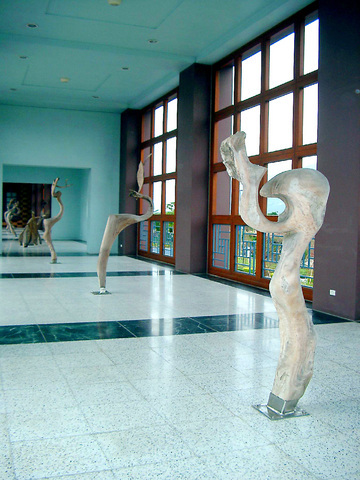
PHOTO: YU SEN-LUN, TAIPEI TIMES
The language used by Taiwanese Aboriginal people is also an Austronesian language, so the country's 400,000 Aborigines are Taiwan's representatives of the Austronesian people.
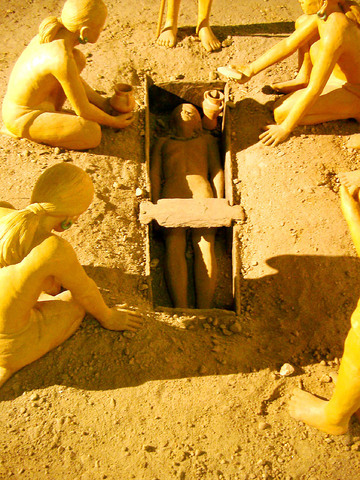
PHOTO: YU SEN-LUN, TAIPEI TIMES
"The prehistoric cultures excavated here underground have provided some support and helped explore the Austronesian culture. At least we are sure that the prehistoric people are the Aboriginal, the ancestors of the Aboriginal people here," Tsang said.
Turning the time back to 1980, when construction began on a new train station for Taitung, workers excavated a massive congregation of slate coffins and pottery relics. There were more than 1,500 slate coffins and tens of thousands of pottery relics. The construction site was found to be the location of the largest prehistoric burial site on the Pacific Rim. The site stretched more than 10,000m2 and is now known as the Beinan Prehistoric Site.
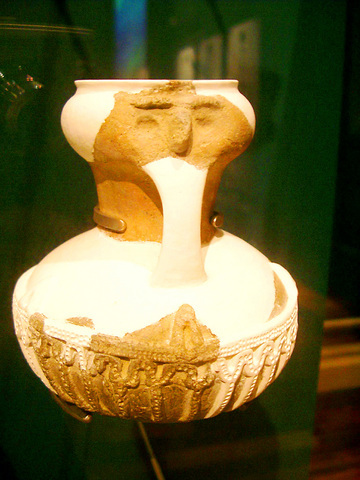
PHOTO: YU SEN-LUN, TAIPEI TIMES
archaeologists lead by National Taiwan University found that the land was first inhabited by the ancestors Aborigines at least 5,000 years ago. Each of the slate coffins was arranged with the head to the northeast and feet to the southwest. They have also found that many pottery artifacts are made as mortuary objects instead of daily goods, so the artifacts were in good shape when exhumed. archaeologists raced to save the site from destruction, and members of social elites called for long-term preservation. Twenty-four years after, the Beinan Cultural Park was located at the site of the prehistoric settlement and graveyard, and the National Museum of Prehistory was located near Taitung airport.
The park was opened two years ago and is the first facility in Taiwan where tourists can see the work of archaeologists and researchers who unearth buried artifacts. The facility offers ongoing archeological studies at the park, where visitors can see up close the work of specialists in real-life archeological digging. The museum collects the exhumed artifacts from the Beinan site as well as thousands of prehistoric relics such as fossils and other Aboriginal artifacts.
The museum is divided into three galleries: Taiwan Natural History Gallery, Taiwan Prehistory Gallery and Taiwan Austronesian Gallery. The Taiwan Natural History Gallery displays evidence of ecological changes in Taiwan. The exhibition is divided chronologically into the birth of Taiwan, the ice age and the present era.
The Taiwan Prehistory Gallery, is the main attraction of the museum, which collects and displays precious artifacts such as pottery, jade, stone knives and megaliths. Each artifact tells a story of the different periods of prehistoric culture. The cultures span a period of at least 15,000 years, from the late Paleolithic Age to the Bronze Age.
The delicately made pottery doll, dating back 3,000 years, and the twin human and animal shaped jade, also 3,000 years old, are two must-see items in the gallery.
The Taiwan Austronesian Gallery introduces representative aspects of each of Taiwan's Aboriginal cultures. Topics include ethnic group relations, architecture, division of labor by gender, Pacific cultures, ritual practices and spiritual beliefs.
The National Museum of Prehistory has 200,000 visitors annually, but most are tourists from other counties or overseas. For director Tsang, it takes more effort to attract local residents to visit the museum. He does not intend for the museum to stay static and academic. The alternating exhibitions of contemporary Aboriginal art works and the regular free tours of Aboriginal villagers are obvious attempts to keep good interaction with the neighborhood villagers. After all, one-third of Taitung's 250,000 residents are Aborigines. And the museum celebrates the culture of their ancestors, thousands of years ago, not the ancestors of those academics descending from Taipei.
In the hallway next to the museum's cafe, public art works made of drift wood are displayed. Next to the wood art, there are colorful weavings of ramie twines by Atayal artists. On display in a special exhibition room is the wood sculpture exhibition of the Paiwan and Rukai tribes.
The only trouble visiting the museum and the park is transportation. The Beinan Cultural Park is 20 minutes by car from the museum. There is no public transportation to connect the two places and the only means of transportation is taxi. Beware of taxis in Taitung.
No taxi in Taitung charges according to the meter, so you have to bargain for a price with the driver before taking the ride. For a ride between the park and the museum, don't pay more than NT$200.
For your information:
Beinan Cultural Park is located within walking distance of the new Taitung train station at 200 Cultural Park Road and can be reached by calling (089) 233466.
More information can be found on the park's Web site at http://www.nmp.gov.tw.
The National Museum of Prehistory is located across town near the Kang-lo train station, at 1, Museum Road.
Telephone: (089)381166.
Also: Tourism Bureau of Taiwan at http://taiwan.net.tw

Just after 6am, I walked up to the ticket gate at Taipei Main Station and entered the Taiwan Railway platform without scanning any ticket; instead, I flashed the Sanrio Fun Rail pass on my phone to the gate worker and was admitted. I found my train and prepared to board. My destination? This very same station. I was embarking on a 13-hour journey on one of two round-the-island trains operated by ezTravel. They run each day, one counterclockwise around the island and one clockwise. They differ in a number of ways from an ordinary Taiwan Railway train and can make for
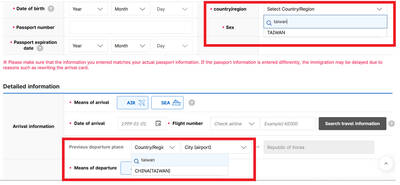
Jason Han says that the e-arrival card spat between South Korea and Taiwan shows that Seoul is signaling adherence to its “one-China” policy, while Taiwan’s response reflects a reciprocal approach. “Attempts to alter the diplomatic status quo often lead to tit-for-tat responses,” the analyst on international affairs tells the Taipei Times, adding that Taiwan may become more cautious in its dealings with South Korea going forward. Taipei has called on Seoul to correct its electronic entry system, which currently lists Taiwan as “China (Taiwan),” warning that reciprocal measures may follow if the wording is not changed before March 31. As of yesterday,
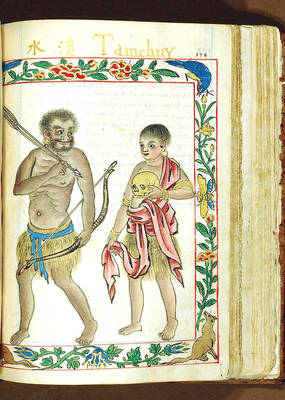
The Portuguese never established a presence on Taiwan, but they must have traded with the indigenous people because later traders reported that the locals referred to parts of deer using Portuguese words. What goods might the Portuguese have offered their indigenous trade partners? Among them must have been slaves, for the Portuguese dealt slaves across Asia. Though we often speak of “Portuguese” ships, imagining them as picturesque vessels manned by pointy-bearded Iberians, in Asia Portuguese shipping between local destinations was crewed by Asian seamen, with a handful of white or Eurasian officers. “Even the great carracks of 1,000-2,000 tons which plied
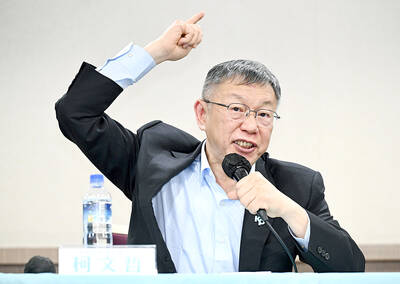
On Thursday, former Taipei mayor and founder of the Taiwan People’s Party (TPP) Ko Wen-je (柯文哲) was sentenced to 17 years in prison and had his civil rights suspended for six years over corruption, embezzlement and other charges. Seven others related to the case were also handed prison sentences, while two were found not guilty. It has been a bad week for the TPP. On Tuesday, prosecutors charged Chinese immigrant Xu Chunying (徐春鶯) with suspicion of taking part in Beijing-directed election interference. Xu has strong links to the TPP, which once offered her a party list legislator nomination. Tuesday also


 RSS
RSS