


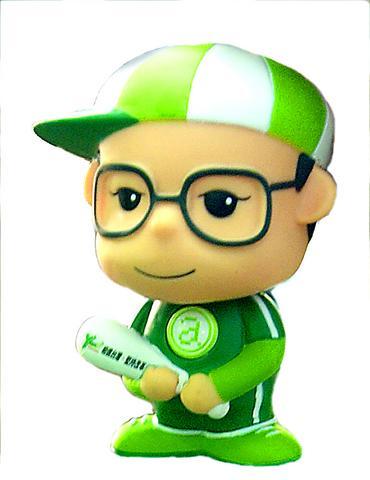
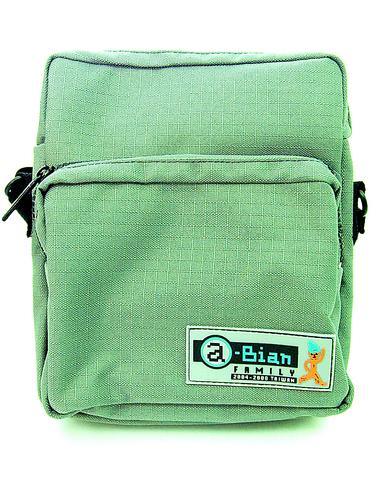
Everyday, Amy Huang (黃惠美) dons her A-Bian hat, puts her A-Bian pen into her A-Bian holdall, pulls on her A-Bian jumper and -- if there's a chill in the air, throws on her A-Bian jacket -- waves goodbye to her A-Bian cuddly doll and heads off to her volunteer job at the DPP's campaign headquarters. Huang's behavior might appear odd, especially when exhibited by a grown adult with a husband and two young children, but she's far from alone.
Walk down any city street these days and you're guaranteed to see the young and the old alike sporting some kind of campaign-related paraphernalia be it a hat, a pin or a gaudy pair of sneakers.
"We've got three of everything. Pullovers, jackets, bags and hats in all different sizes one for each of us," said Huang, proudly showing off her latest purchase, an A-Bian sports top. "I just keep buying them because my two children and I love to wear them [A-Bian products]. All my friends wear A-Bian clothes too. We all believe that it's a great way to show our support for the DPP and, of course, they look so cool."
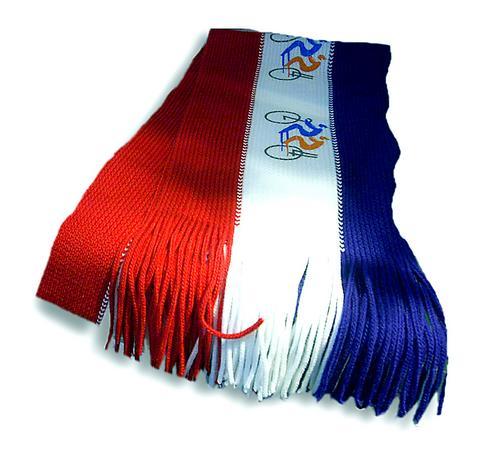
With election day looming and the campaigns in full swing, thousands of supporters of both the ruling party and the opposition Chinese Nationalist Party (KMT) are showing their support for their future leader of choice by filling their wardrobes, desk drawers and even kitchens with political party paraphernalia. And, like the Huang's, many no longer venture out without sporting at least one, two or even three items from their 2004 election-related wardrobes.
Before leaving his home on Guam to return in order to savor the election build-up and vote on March 20, Jason Liao (廖武忠), had already acquired quite a bit of A-Bian attire. Sent to him by friends and family, the few pieces were to prove only a taster for what was to follow. Since his return, Liao has built up what must surely be Guam's largest inventory of A-Bian memorabilia. He has purchased nearly everything in the A-Bian catalogue for himself, his wife, his children and his friends.
"Originally all I had was an A-Bian flag on the roof of my house, but then people started to send me things and my collection began to grow," said the jovial Taiwanese expat. "Since I've been back here I've bought everything I can for me and my family. Clothes, scarves, hats and jackets. You name it, if they make it I've bought it."
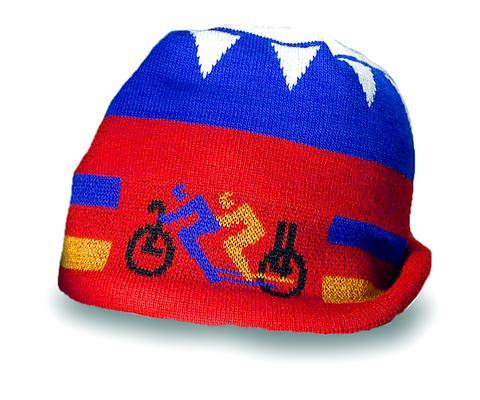
On any given day at the DDP's election headquarters the till at the Bian Mao Factory (扁帽工廠) stall never stops ringing. For volunteers like Melody Chen (陳清美), a member of the women's support group for the Chen Shui-bian (陳水扁) campaign, the days are long, but the lines of those wanting to purchase any one of the 11 A-Bian products are even longer.
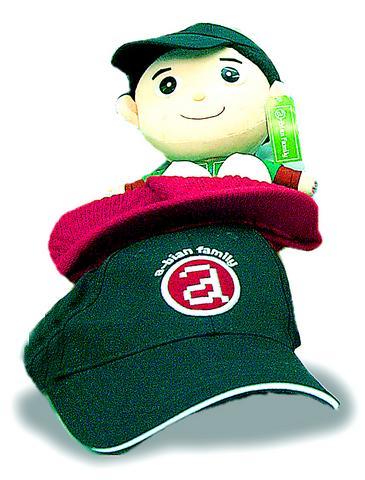
"People are coming at all times of the day to buy A-Bian things. They come before they go to work, during their lunch breaks and on their way home. There's a never-ending line of people here," she said. "The most popular product is the baseball cap. We sell anywhere from between 200 to 500 of these nearly everyday."
According to Joanna Chiu (
"We see a lot of young people in their teens coming, which for a political party anywhere is pretty odd. We get retired people, many of who like the cuddly dolls, as well as entire families and foreigners lining up regardless of the weather to buy A-Bian products," Chiu said.
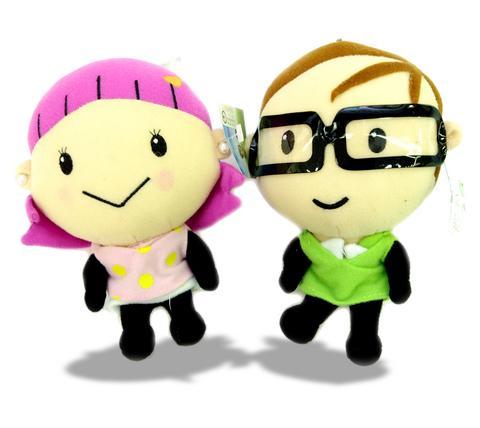
Along with the baseball cap, which has become this year's top selling A-Bian product, clothing and characterizations of Chen Shui-bian in cuddly toy form are also proving hugely popular -- recording average sales of between 100 and 200 units on weekdays and upwards of 300 units at weekends respectively.
Founded in March 1999, the Bian Mao Factory and its sister company, A-Bian Family, were hugely successful in helping Chen and the DPP finance the 2000 election campaign. As well as proving a huge hit with DPP supporters of all ages, Chen Shui-bian products were rated one of the top 10 "trendiest concepts" of that year by Business Weekly (商業周刊) magazine.
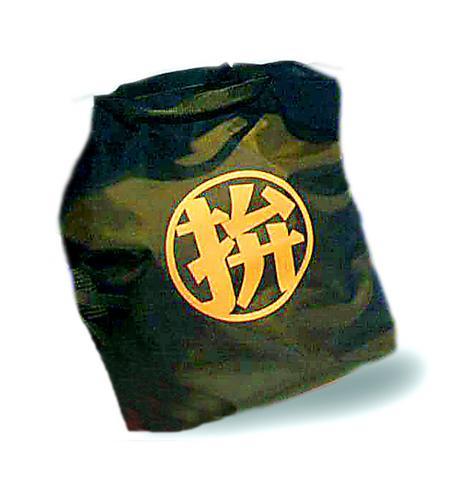
Closed shortly after Chen took office as president for reasons that forbid the elected government from running and profiting from a business, the A-Bian Family was resurrected in order to generate funds for this year's campaign. Priced between NT$60 and NT$1,500 the products are available at the 26 official A-Bian Family stalls located in the campaign offices in all of the country's major cities.
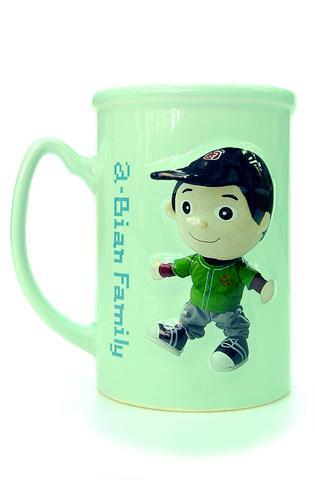
The most lucrative of these has proven to be the DPP's central campaign headquarters. Since the stall opened for business nearly a month ago its has garnered well over NT$7million in campaign funds from sales of beanie caps, scarves, mugs, cuddly toy A-Bians, holdalls, baseball caps and its limited edition dog collar.
Not to be out-done, the opposition KMT has also created its own line of election products. While the KMT's 2000 election campaign product line amounted to little but sweaters and sweatshirts, this year the party decided to expand its product line to 74 items.
Chen Yen-yuen (陳延源) of the KMT's product marketing department said opting for a such an expansive line of quite contrasting paraphernalia was to counter the DPP's cutesy image. Chen and his party believe the down-to-earth line of its products appeals to a wider section of the general public than the DPP's.
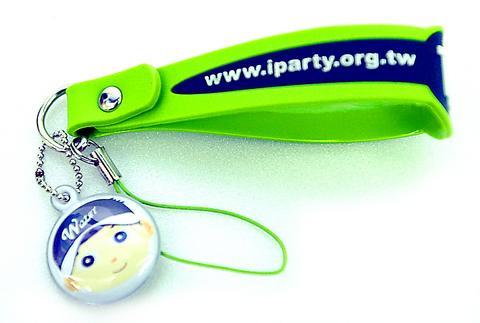
"We wanted to appeal to as wide a section of the public as possible. Whereas the DPP seems to only want to appeal to those who like cute things we've manufactured goods that not only look nice, but are also useful to everyone," he said. "If you do sports then the sweatbands and sneakers are good. If you have a mobile phone then the phone chain is useful and if you go shopping the bags are useful and so on."
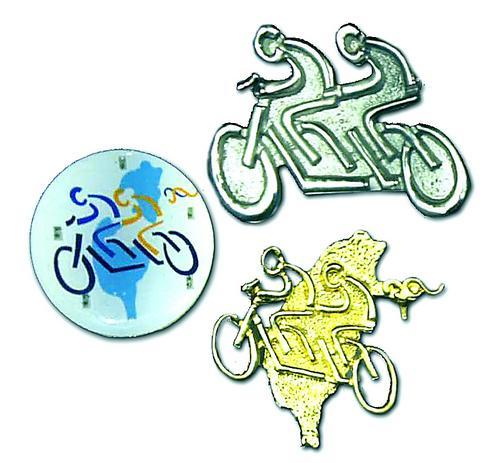
As well as conventional items such a hats, sweatshirts, T-shirts, sweaters and holdalls, the opposition also sells a patriotic Rubik cube, cough drops, a tea/coffee drip pot, cufflinks, sweat bands, pins, watches, a megaphone, rubber effigies of its candidates and the controversial history book General History of Taiwan (台灣通史) to help raise campaign funds.
The most popular KMT product to date is the beanie cap, the design of which is remarkably similar to that of the original Bian Mao. Unlike its single-colored DPP counterpart the KMT's beanie is a colorful red, white and blue affair topped off with the flag of the ROC.
"I don't think that creating cute items is any way to look at an election. After all, we represent the [future government] and [Taiwan] and how can a government be taken seriously when it makes everything look so childlike and cute?" said KMT supporter, Huang Shou-miao (黃秀妙) "We think it just looks idiotic and makes us, Taiwan, look laughable. It should be serious and ordered with everything in its proper place."
Just how serious is anyone's guess, especially considering that another of the KMT's best-selling items is a pair of rather natty Lien Chan (連戰) and James Soong (宋楚瑜) battery powered dolls. Press a button and the political allies dance a jig to a somewhat offbeat and tinny tune. All of which is pretty comical to begin with, but when their batteries run low it becomes rather alarming, and, some might feel, all too lifelike.
Ranging in price from NT$5 to NT$50,000, the manufacturers of the KMT products might be under the impression that they are geared towards the masses, but the numbers point to a very different story. To date, sales of KMT products have only managed to generate NT$5 million nationwide. KMT staffers and supporters, however, remain upbeat.
"I'm sure as election day draws nearer you'll see a marked rise in sales of KMT paraphernalia," Chen said.
It's not only supporters of the political parties who have been grabbed by the current trend in election memorabilia. It hasn't gone unnoticed by some of the nation's more enterprising schemers and scammers. Four years ago relatively small amounts of knock-off A-Bian and KMT paraphernalia hit the market, but this year there has been a marked development in the way in which counterfeit goods are produced.
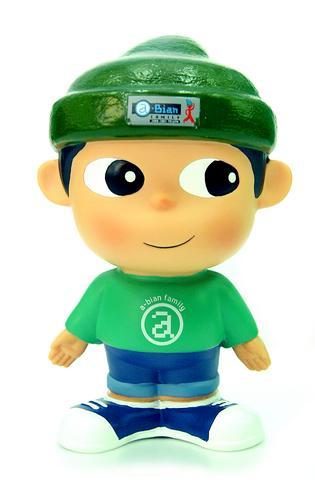
The largest consignment of such goods to appear so far came to light earlier this week. Customs officials in Taichung foiled a plan to flood the market with fake A-Bian products made in a factory in China when they intercepted a shipment of more than 24,000 A-Bian cuddly dolls aboard a ship registered in Shanghai. According to customs officials, those involved in the counterfeit smuggling operation planned to sell the dolls for NT$250 per unit, which, if successful would have netted them a hefty tax-free NT$6 million. Nearly enough to finance their own knock-off election campaign.
The primaries for this year’s nine-in-one local elections in November began early in this election cycle, starting last autumn. The local press has been full of tales of intrigue, betrayal, infighting and drama going back to the summer of 2024. This is not widely covered in the English-language press, and the nine-in-one elections are not well understood. The nine-in-one elections refer to the nine levels of local governments that go to the ballot, from the neighborhood and village borough chief level on up to the city mayor and county commissioner level. The main focus is on the 22 special municipality

The People’s Republic of China (PRC) invaded Vietnam in 1979, following a year of increasingly tense relations between the two states. Beijing viewed Vietnam’s close relations with Soviet Russia as a threat. One of the pretexts it used was the alleged mistreatment of the ethnic Chinese in Vietnam. Tension between the ethnic Chinese and governments in Vietnam had been ongoing for decades. The French used to play off the Vietnamese against the Chinese as a divide-and-rule strategy. The Saigon government in 1956 compelled all Vietnam-born Chinese to adopt Vietnamese citizenship. It also banned them from 11 trades they had previously

Hsu Pu-liao (許不了) never lived to see the premiere of his most successful film, The Clown and the Swan (小丑與天鵝, 1985). The movie, which starred Hsu, the “Taiwanese Charlie Chaplin,” outgrossed Jackie Chan’s Heart of Dragon (龍的心), earning NT$9.2 million at the local box office. Forty years after its premiere, the film has become the Taiwan Film and Audiovisual Institute’s (TFAI) 100th restoration. “It is the only one of Hsu’s films whose original negative survived,” says director Kevin Chu (朱延平), one of Taiwan’s most commercially successful
Jan. 12 to Jan. 18 At the start of an Indigenous heritage tour of Beitou District (北投) in Taipei, I was handed a sheet of paper titled Ritual Song for the Various Peoples of Tamsui (淡水各社祭祀歌). The lyrics were in Chinese with no literal meaning, accompanied by romanized pronunciation that sounded closer to Hoklo (commonly known as Taiwanese) than any Indigenous language. The translation explained that the song offered food and drink to one’s ancestors and wished for a bountiful harvest and deer hunting season. The program moved through sites related to the Ketagalan, a collective term for the


 RSS
RSS