


The Year of the Goat has drawn to an end without much having occurred and that is because of this quiet -- and if the astrologers are to be believed -- artistic and contemplative zodiac animal. The monkey on the other hand, astrologers are gleefully reporting, seems ready to sum up the character of the year ahead, if not the past year as well.
This mischievous beast is the patron of politicians and diplomats and -- with the international situation as it is -- there are plentiful predictions about how national elections in Taiwan and the US are going to monkey around with the rather turbulent state of international affairs.
The key to the monkey's character is its ambivalence. It is at once creative, intelligent and full of energy and curiosity, while at the same time it's easily bored and full of mischief. There is plenty of room for it to make trouble. This reputation for being the symbol of a turbulent year is balanced by the optimism that the monkey often inspires.
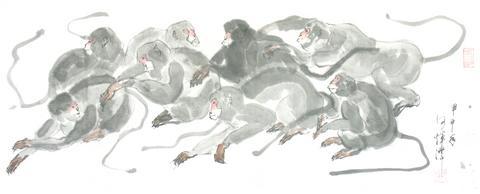
In this case, it is enhanced by yet another subsystem of Chinese cosmology, which makes this a year in which the element wood is in the ascendant. This element is associated with rapid development, idealism and youthful innocence. Combined, 2004 becomes the Year of the Wood Monkey, and the idea of "transformation," along with the turbulence that it often brings in its wake, is a major factor for most of those looking at cosmic cycles, rather than foreign policy, to see where the world is heading.
The last Year of the Wood Monkey was 60 years ago, 1944, which saw a turn in the tide of the war in the Pacific against Japan with the liberation of the Philippines. In Europe, the Allies started pushing back the Germans after D-Day and the Bretton Woods conference. A beacon of hope, you might say. Whether that bodes well or ill for a world still coming to grips with the invasion of Iraq, the lack of progress in Afghanistan and the terror wrought by SARS and Mad Cow disease is anybody's guess -- but unsurprisingly, the astrologers are optimistic. The almost frantic belief on Internet astrology pages that the Year of the Monkey will be a year of transformation for the better is rather touching, but not particularly encouraging.
But these dark thoughts aside, the monkey has largely been a symbol of hope for the Chinese, even as it is a symbol for the naughty world we live in. The creature's similarity to ourselves breeds a kind of affection, for it embodies both the foolishness we know ourselves capable of and the wisdom and cleverness that we often aspire to. Perhaps the greatest representative of monkeys in Chinese culture is the irrepressible Sun Wu-kung (
Sun Wu-kung was a follower of the Tang dynasty monk who traveled to India to collect Buddhist sutras for the edification of his countrymen. The journey involved passing through many lands inhabited by demons and spirits, and the Monkey King, while getting the caravan into all kinds of trouble because of his insatiable curiosity and mischievousness, generally also managed to get it out again through bravery and cleverness.
First published in the mid-1500s, the story has established itself as one of China's great novels and is available in a rather handsome four-volume set translated by W. J. F. Jenner and published by the Foreign Language Press. The book could be a good gift this monkey year, as it retains a surprising degree of contemporary relevance.
It is of passing interest that in some Buddhist texts, the human mind, as opposed to the ideal of a Buddha-mind focused on the seeming eternity of the Dharma, is described as the "monkey mind." In Hindu mythology, the god Hanuman is one of the greatest of the minor deities and -- while never specifically lauded in Buddhist or Taoist cosmology -- the monkey retains our respect because it is one of our closest relations within the animal kingdom.
In Taiwan, our simian representative is the Formosan macaque, which has already been up to all kinds of high jinks this year, causing grief to farmers in Taitung County, where -- according to one CNA report -- they were found plucking the feathers off roosters and placing hens high in treetops from which they couldn't escape. A goat ranch owner in Fuyuan even claimed macaques sexually assaulted his ewes. The Formosan macaque is protected by law and unfortunately for the farmers, they seem to know it, and are generally unresponsive to threats.
With all that the monkey represents, we can clearly all look forward to an eventful year. The astrologers tell us that this year will be best for people born under the sign of the snake, for the unpredictable monkey stimulates the intellectual snake, whose common sense balances out the exuberance of the monkey. The other zodiac signs don't do so well. While rats and dragons are expected to deal reasonably well with the complexity of a monkey year, tigers, pigs and dogs are all in for a hard time, for they are too straightforward and up-front to deal with the subtlety and guile of a monkey year.
Basically, with the upcoming Year of the Monkey, we are fated, as the Chinese imprecation goes, to "live in interesting times." How we deal with it, is up to the monkey in ourselves.
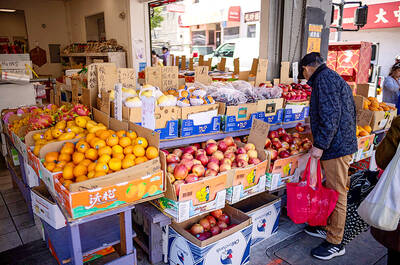
Ajay Verma, a consultant gastroenterologist at Kettering general hospital in Northamptonshire, says our gut is a “complex machine.” “It is constantly providing us with the nutrition we need, initially to grow and develop, and then for us to survive, thrive and repair from injury and illness.” How can we keep it functioning well? Put simply: “Make sure what you put into it is balanced, and that you clear out its waste products adequately,” Verma says. “In a general gastroenterology clinic, the most common conditions we see are irritable bowel syndrome (IBS), gastroesophageal reflux disease, inflammatory bowel disease and constipation,” says Nisha
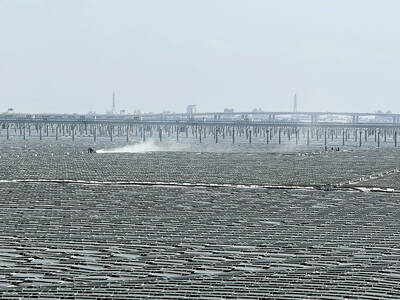
The arithmetic is straightforward and uncomfortable. By the end of 2025, Taiwan had committed itself to a 50-30-20 electricity mix — half natural gas, 30 per cent coal, 20 per cent renewables. The Ministry of Economic Affairs’s (MOEA) own monthly energy reports tell a different story. Natural gas reached 47.8 per cent of generation last year. Coal stood at 35.4 per cent, comfortably above its target ceiling. Renewables came in at 13.1 per cent, well short of the 20 per cent Taipei had pledged a decade earlier. Installed renewable capacity reached roughly half of the 12 gigawatts (GW) the government
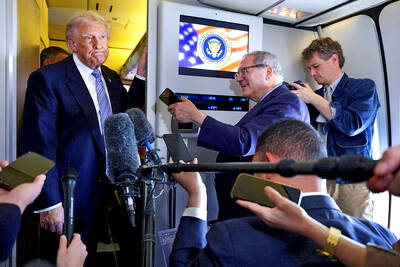
Last week US President Donald Trump was asked by a reporter whether he would speak on the phone to the President of Taiwan. “l’ll speak to him. I speak to everybody. We have that situation very well in hand,” Trump said. This marked the second time in a couple of weeks he had said he would talk to the President of Taiwan. In 2016 he famously took a call from then-president Tsai Ing-wen (蔡英文), when he was president-elect. Despite warnings that the apocalypse was nigh because of a phone call, the world quickly forgot about the conversation between two democratically-elected presidents.
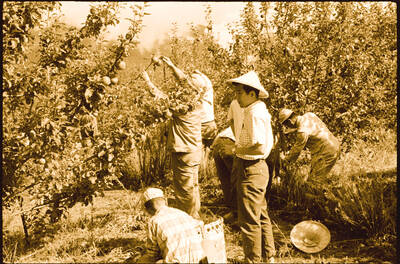
May 25 to May 31 Few believed that apples could be cultivated on a commercial scale in Taiwan’s high mountains. When horticulturalist Cheng Chao-hsiung (程兆熊) first proposed the idea in 1955, both American and Taiwanese colleagues dismissed it as implausible, arguing that temperate fruit could not be reliably grown on a subtropical island, especially on rugged terrain. However, it was this terrain in the Central Mountain Range where many Chinese Civil War veterans were resettled in the late 1950s. With limited job prospects and no family in Taiwan, they were placed on cooperative farms aimed toward self-sufficiency. Some say the conditions


 RSS
RSS