


He made a name for himself by opening Au Lac Cafe in an elegant French-style villa in Hanoi, and his fashionable coffee shops are now Vietnam's answer to Starbucks.
Seattle-born David Thai, 31, is one of Vietnam's two coffee kings.

PHOTO: REUTERS
The other, Dang Le Nguyen Vu, 32, was raised in Vietnam's rugged central highland area. In contrast to Thai, his focus is the mass market. Across the country he serves up steaming mugs of coffee to factory workers and office clerks.
Between them they are encouraging the population of the world's second-biggest coffee exporter after Brazil to acquire a liking for branded brews. The entrepreneurs run rival cafes and distribute packaged processed beans in a tea-drinking nation where instant coffee is popular and sidewalk shops that sell individually filtered cups serve them thick and with sweetened milk.
"This country needs good coffee," declares Thai, a "Viet Kieu," or overseas Vietnamese who could barely speak a word of the language when he arrived to find his roots in 1995.
Vietnam's 80 million people down just 5 percent of its total coffee output. But with coffee prices plummeting to a 30-year low on overproduction some blame on Vietnam, the industry is looking to pump up consumption.
The country exports robusta as a raw, green bean, which roasters like Nestle SA and Sara Lee grind into instant coffee. Higher value, more aromatic Arabica beans are not widely grown in Vietnam.
Thai passed on a job offer from Citibank to start his venture.
Vu, whose thinning hair belies his youth, hocked his friend's motorcycle to pay bills in the early days.
"I told him that if my business failed he would lose the bike. It took him several years to save for it, but he accepted it and what he gave me was so much," he said.
Tall, wavy-haired Thai ruefully recalls trying to roast coffee beans in a frying pan in his kitchen.
His Viet Thai International has 500 staff and runs nine Highlands Cafes reminiscent in look and set-up to Seattle-based Starbucks, which has no presence in the country. It also sells Highlands branded coffee in supermarkets. Thai believes Vietnam has room for about 15 of his cafes that serve a middle- to high-end market.
Vu's Trung Nguyen Coffee, with 1,000 direct staff, disagrees, and has gone for volume.
The name is emblazoned on 400 shopfronts from Ho Chi Minh City to rural backwaters. And there are six branches overseas, including China, Japan and Singapore.
Vu says he wanted to establish the network first, then work on the look and feel later.
And while Thai owns his cafes, Vu charges cafe owners a royalty to use his Trung Nguyen name and takes a cut of the revenues.
"My goal is to change the world's perspective on Vietnamese coffee and how we consume coffee," Vu said, as he sat in a tastefully decorated meeting room of his newest venture, an upmarket business club and restaurant in Ho Chi Minh City.
He won't provide figures, but says Trung Nguyen is profitable.
Each coffee king operates factories that process the ground bean for local and overseas sale. Vu pioneered a numbering scheme for his packaged coffee to indicate the strength of the brew.
Vu regards Thai's cafes as minnows competitively, though he concedes the Viet Kieu brings in Western expertise and business acumen.
Neither is standing still. Vu wants four more cafes in Japan.
Thai shows off his dream of a "coffee building" where three Highlands operations -- a kiosk, regular cafe and a new rooftop venue are taking space in a glitzy downtown shopping center.
The philosophy degree holder has no qualms about being compared with the best known coffee retailer in the world. "The biggest compliment I get is when people say I am trying to be a Starbucks," he said.
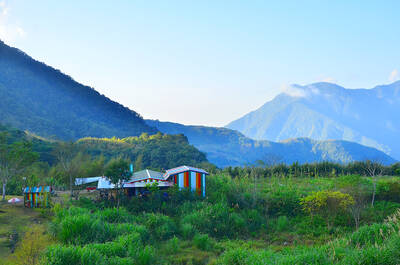
If one asks Taiwanese why house prices are so high or why the nation is so built up or why certain policies cannot be carried out, one common answer is that “Taiwan is too small.” This is actually true, though not in the way people think. The National Property Administration (NPA), responsible for tracking and managing the government’s real estate assets, maintains statistics on how much land the government owns. As of the end of last year, land for official use constituted 293,655 hectares, for public use 1,732,513 hectares, for non-public use 216,972 hectares and for state enterprises 34 hectares, yielding
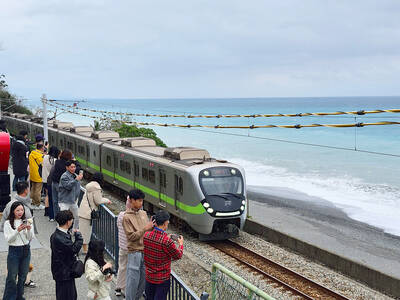
The small platform at Duoliang Train Station in Taitung County’s Taimali Township (太麻里) served villagers from 1992 to 2006, but was eventually shut down due to lack of use. Just 10 years later, the abandoned train station had become widely known as the most beautiful station in Taiwan, and visitors were so frequent that the village had to start restricting traffic. Nowadays, Duoliang Village (多良) is known as a bit of a tourist trap, with a mandatory, albeit modest, admission fee of NT$10 giving access to a crowded lane of vendors with a mediocre view of the ocean and the trains

The March/April volume of Foreign Affairs, long a purveyor of pro-China pablum, offered up another irksome Beijing-speak on the issues and solutions for the problems vexing the People’s Republic of China (PRC) and the US: “America and China at the Edge of Ruin: A Last Chance to Step Back From the Brink” rang the provocative title, by David M. Lampton and Wang Jisi (王緝思). If one ever wants to describe what went wrong with US-PRC relations, the career of Wang Jisi is a good place to start. Wang has extensive experience in the US and the West. He was a visiting
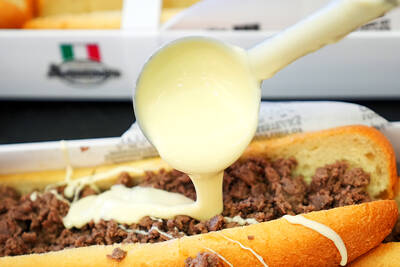
One of the challenges with the sheer availability of food in today’s world is that lots of us end up spending many of our waking hours eating. Whether it’s full meals, snacks or desserts, scientists have found that it’s not uncommon for us to be mindlessly grazing at some point during all of our 16 or so waking hours. The problem? As soon as this food hits the bloodstream in the form of glucose, it initiates the release of the hormone insulin. This in turn activates a switch present in every one of our cells, which is responsible for driving cell


 RSS
RSS