


There are plenty of books written about Taiwan written by Taiwanese authors. But books in Taiwanese? These are few and far between, but according to Lu Guangcheng (
The release, tentatively scheduled for the end of the year, of the second volume of the University Taiwanese Reader (大學台語文選), is a small step toward the foundation of Taiwanese literature.
It only requires a quick look around any bookshop to see that there is no shortage of Taiwanese language teaching materials. That might not seem surprising, given that this is Taiwan. But you are unlikely to find any literature in the Min-nan dialect (otherwise called Taiwanese), as it is a tiny niche market that is only now gaining some exposure due to the emphasis on mother-tongue education.
All this might be rather confusing for people who have been told that one of the glories of Chinese civilization is a script that joins together Chinese all over the world, regardless of what dialect they speak. But for Lu and other like-minded people, while Chinese can be used for writing Taiwanese, the languages, not the dialects, are as different as English and French.
But why write Taiwanese at all? Most people are content to see it as spicy vernacular, the language of taxi drivers, street vendors and gangsters. The language of literature, it seems, is Chinese.
But this assumption is what sticks in the craw of Lu and his fellow editors of the University Taiwanese Reader.
"Without a written tradition, a language can easily die out and once dead, can never be revived," Lu said. In this context, he referred to the Hebrew revival (which got started in the 1890s), in which a language that had been neglected for centuries and the understanding of which was confined to a religious elite, was brought back into wide use through the dedication of a number of individuals such as Eliezer Ben-Yehuda.
It is a powerful analogy, and while the Taiwanese and Hebrew examples differ in some crucial respects, they share elements of an ideology in which national destiny, racial identity and political sovereignty play important roles.
The primary difference has to do with literature and explains why the publication of the University Taiwanese Reader and books like it are of such importance to those seeking a Taiwanese revival. The problem for Lu is that Taiwanese -- while it has a long history as a spoken vernacular -- only has a marginal history in the written form, and that is largely confined to various kinds of narrative poetry and popular songs.
"Mandarin Chinese and Taiwanese share a common written lexicon of about 60 percent," Lu said. "But it is in the other 40 percent that the unique character of Taiwanese is expressed."
Finding characters to express this 40 percent is an important part of his work, but at the moment, due to lack of consensus, publication in Taiwanese is forced to rely on an unregulated mixture of Chinese ideograms and romanization. Lu brushes off criticism that they are creating an unreadable literature.
"People get cross when they cannot read it," Lu said. "But there is nothing strange about that because this is simply another language. It is like an English speaker expecting to understand French because it is written with the same alphabet."
Much of the journal Tai-bun Thong-sin (
This illustrates how relatively unformed the state of Taiwanese literature presently is. A further indication is the fact that virtually all Taiwanese readers come with audio CDs to give students easier access to the text. For better or for worse, Taiwanese literature is still some way from escaping the shackles of a spoken vernacular.
Part of the reason for this has been political, as both the Japanese and the KMT governments suppressed the use of Taiwanese. This has given the movement for Taiwanese a strongly political flavor that goes beyond simply finding a way of transcribing Taiwanese speech.
While not wanting to make too much of the political issues, Lu said that in the case of the University Taiwanese Reader editors, there is definitely an issue of differentiation from Chinese. "We reserve the right to correct the texts. To make them more correctly Taiwanese," he said. "Sometimes authors become over influenced by Mandarin, so that you are simply reading Mandarin using Taiwanese sounds. This is clearly something to be avoided."
The community that seeks to create Taiwanese literature might be widely divided on exactly how to do so, but it is gradually building recognition for the Taiwanese language.
The publication of the University Taiwanese Reader by Yuanliou (
Lu avoids any predictions about what Taiwanese literature will ultimately look like, but sees the current trends in the publication and teaching of Taiwanese literature as an unprecedented opportunity. "The best way of expressing Taiwanese will emerge through use," he said.
Taiwanese literature is also available on the Internet. In addition to Tai-bun Thong-sin, mentioned above (taiwantbts.org), there is Bong (www.bongpo.com.tw) and Lien Chiao Hui (
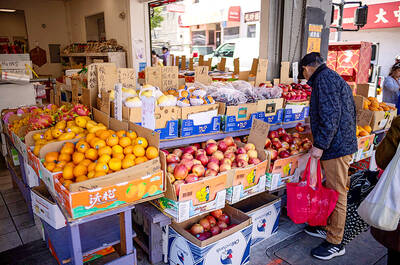
Ajay Verma, a consultant gastroenterologist at Kettering general hospital in Northamptonshire, says our gut is a “complex machine.” “It is constantly providing us with the nutrition we need, initially to grow and develop, and then for us to survive, thrive and repair from injury and illness.” How can we keep it functioning well? Put simply: “Make sure what you put into it is balanced, and that you clear out its waste products adequately,” Verma says. “In a general gastroenterology clinic, the most common conditions we see are irritable bowel syndrome (IBS), gastroesophageal reflux disease, inflammatory bowel disease and constipation,” says Nisha
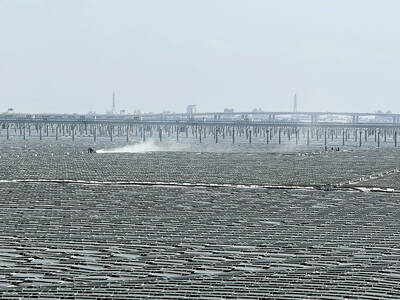
The arithmetic is straightforward and uncomfortable. By the end of 2025, Taiwan had committed itself to a 50-30-20 electricity mix — half natural gas, 30 per cent coal, 20 per cent renewables. The Ministry of Economic Affairs’s (MOEA) own monthly energy reports tell a different story. Natural gas reached 47.8 per cent of generation last year. Coal stood at 35.4 per cent, comfortably above its target ceiling. Renewables came in at 13.1 per cent, well short of the 20 per cent Taipei had pledged a decade earlier. Installed renewable capacity reached roughly half of the 12 gigawatts (GW) the government

Last week US President Donald Trump was asked by a reporter whether he would speak on the phone to the President of Taiwan. “l’ll speak to him. I speak to everybody. We have that situation very well in hand,” Trump said. This marked the second time in a couple of weeks he had said he would talk to the President of Taiwan. In 2016 he famously took a call from then-president Tsai Ing-wen (蔡英文), when he was president-elect. Despite warnings that the apocalypse was nigh because of a phone call, the world quickly forgot about the conversation between two democratically-elected presidents.
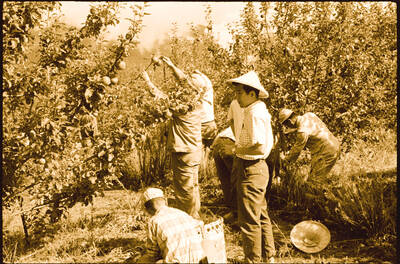
May 25 to May 31 Few believed that apples could be cultivated on a commercial scale in Taiwan’s high mountains. When horticulturalist Cheng Chao-hsiung (程兆熊) first proposed the idea in 1955, both American and Taiwanese colleagues dismissed it as implausible, arguing that temperate fruit could not be reliably grown on a subtropical island, especially on rugged terrain. However, it was this terrain in the Central Mountain Range where many Chinese Civil War veterans were resettled in the late 1950s. With limited job prospects and no family in Taiwan, they were placed on cooperative farms aimed toward self-sufficiency. Some say the conditions


 RSS
RSS