


There's a rathskeller revolution happening in Taipei. Where there was once a short list of lounge bars in which to while away the small hours sipping NT$200 beers, there's now one opening seemingly every week. The increased competition is nowhere more apparent than in the interior designs of these establishments, with lounge owners engaged in an aesthetic one-upmanship for the most well-appointed watering hole, one that captures the imaginations of Taipei's top-shelf clientele and keeps them coming back. Lounging is now big business.
The business model is based on the belief that the same glass of single malt Scotch tastes better when the drinker is sunk into an Italian leather sofa than when propped up by a folding chair, and so emphasizes the role of the designer, who becomes central to the success or failure of the enterprise. So central, in fact, that they often own a share in the lounge they create or, in some cases, own it outright.
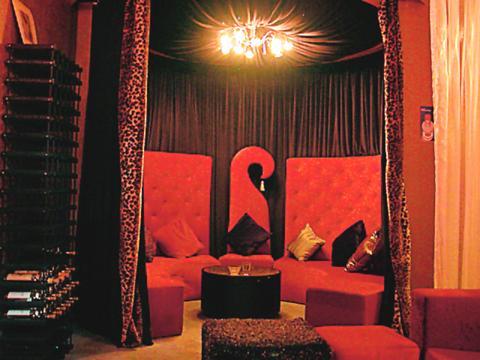
PHOTO COURTESY OF PURPO
"There is definitely a symbiotic relationship between the owner and the designer," said Mark Lintott, who has designed some of the most high-profile parlors in Taipei. He was the creative force behind Opium Den, one of the city's pioneering swank saloons, and Plush, atop the Core Pacific Living Mall. He also owned part of the former and is a shareholder in the latter. When the designer owns part of the lounge they create, according to Lintott, "You get a greater commitment from the designer."
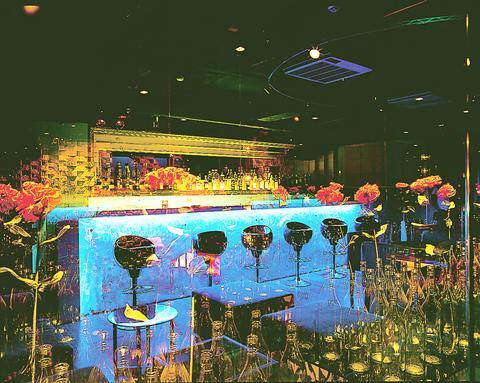
PHOTO COURTESY OF 7 LABS
Whether they have a stake in its success or not, lounge bars invariably offer designers a high-profile venue to showcase their work and a chance to stretch themselves creatively. "There aren't the back-of-house considerations that you have when designing, say, a restaurant," Lintott said. "You don't have to concern yourself with food storage or a kitchen area. ... There's greater flexibility."
Paul Chen was one designer who realized this flexibility. He and Andrew Liu (劉德璋) teamed up to create Purpo, which opened earlier this year. "From a designer's point of view, owning the venue you've designed yourself is tantamount to having your line of clothing if you're a fashion designer," he said. "It's a different kind of fashion statement."
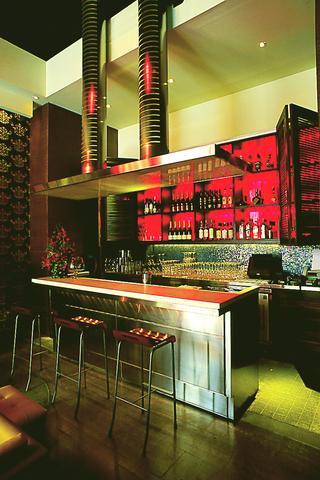
PHOTO COURTESY OF MILD
In fact, much of Chen's previous design work has been in the fashion industry, and this influence shows inside Purpo. Opaque fabrics drape from the ceiling in some areas and pillow-work walls in others. Sequins dangle from most every light and, as its name suggests, the whole place is awash in purple hues.
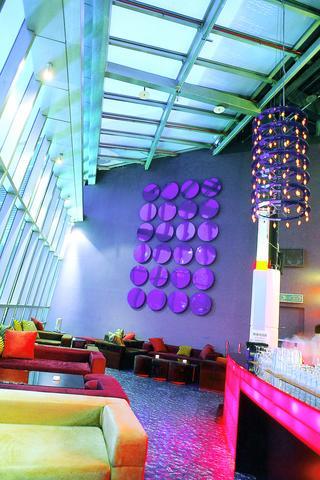
PHOTO COURTESY OF MILD
Located on Anho Road, Purpo will have plenty of competition. In recent years the area has been carpeted with lounge bars. "Not long ago, I walked along Anho and counted over 30 bars and restaurants," said Christy Lee (
Often they don't. The same address that now houses Saloon was previously the location of Juicy and before that, Milk. Both of those lounges, whose interiors cost millions of New Taiwan dollars to create, proved popular with Taipei's hip urban youth but closed nonetheless after relatively short business runs. Saloon has proven equally popular and has the economic security of being owned by some of the same people who invested in Room 18, one of the city's most popular lounge clubs. Room 18 itself is in the same place that previously housed Lightbug, whose lights went out nearly four years ago. Four years is something of a benchmark in the lounge bar industry -- if not for the business, then for its design.
According to Lee, when Plush opened, the owners signed a four-year lease on the property. The reason, she and Lintott both said, is that a design generally has a four-year shelf life, even if the lounge itself stays in business much longer. "Opium Den went for four years and that's considered a long time for a lounge bar," Lintott said.
Lintott also did the original design for Room 18 when it took over Lightbug's address. The club was temporarily closed and redesigned last year and continues to draw crowds of regulars. Lee said that Plush, too, will undoubtedly see its design revamped someday. Redesigning will be less expensive than it would be if it didn't have an interior designer as one of its owners.
Even so, the amount of money spent creating these oases is considerable. The owners of Perfume Bar, which opened off Tunhua South Road in March, spent some NT$70,000 per ping on such things as a faux fur-covered bar, according to figures cited by 7 Labs (
Other designers cited an average of NT$50,000 per ping spent appointing various parlors, but all were quick to point out that the costs are often much higher. "We spent twice that on Plush," Lintott said, adding that they started with a concrete shell and had to install such basic amenities as central air conditioning.
Is it money well spent? After all, many of Taipei's less lavish bars have been in business much longer than four years. My Place, to cite one example, has been pulling pints in Taipei's Combat Zone for 19 years without a single purple couch to sit on. Others in that area and in the Shita area boast similar success stories.
"It's absolutely well-spent," Lee said, explaining that it's spent creating an aesthetic for those who wouldn't be comfortable in a traditional bar setting. "It's selling a lifestyle," she said.
Are there too many lounge bars in Taipei now? "I'm sick to death of the whole lounge bar concept," Lintott said. His solution is Apartment, which opened on Siwei Road in mid-January and in which he is a partner. It looks more like someone's lavishly decorated apartment than a lounge, with a bar reminiscent of a kitchen island, a fireplace, TV and even a bed in the loft area.
"There are too many lounge bars," said Plush's Lee, who is also involved in Apartment. "We think this is the next trend." So, if she's right, we can expect to spend money going out to more and more places that look a lot like home. Now that is a revolutionary idea.
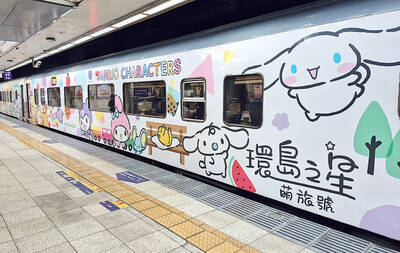
Just after 6am, I walked up to the ticket gate at Taipei Main Station and entered the Taiwan Railway platform without scanning any ticket; instead, I flashed the Sanrio Fun Rail pass on my phone to the gate worker and was admitted. I found my train and prepared to board. My destination? This very same station. I was embarking on a 13-hour journey on one of two round-the-island trains operated by ezTravel. They run each day, one counterclockwise around the island and one clockwise. They differ in a number of ways from an ordinary Taiwan Railway train and can make for
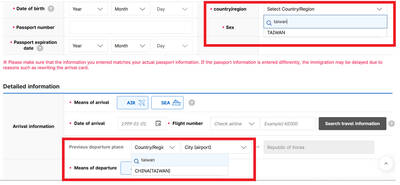
Jason Han says that the e-arrival card spat between South Korea and Taiwan shows that Seoul is signaling adherence to its “one-China” policy, while Taiwan’s response reflects a reciprocal approach. “Attempts to alter the diplomatic status quo often lead to tit-for-tat responses,” the analyst on international affairs tells the Taipei Times, adding that Taiwan may become more cautious in its dealings with South Korea going forward. Taipei has called on Seoul to correct its electronic entry system, which currently lists Taiwan as “China (Taiwan),” warning that reciprocal measures may follow if the wording is not changed before March 31. As of yesterday,
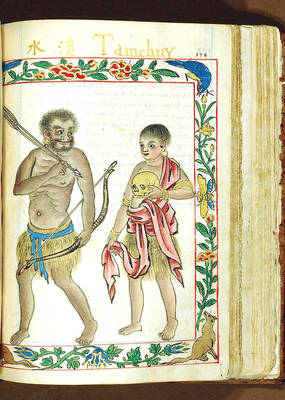
The Portuguese never established a presence on Taiwan, but they must have traded with the indigenous people because later traders reported that the locals referred to parts of deer using Portuguese words. What goods might the Portuguese have offered their indigenous trade partners? Among them must have been slaves, for the Portuguese dealt slaves across Asia. Though we often speak of “Portuguese” ships, imagining them as picturesque vessels manned by pointy-bearded Iberians, in Asia Portuguese shipping between local destinations was crewed by Asian seamen, with a handful of white or Eurasian officers. “Even the great carracks of 1,000-2,000 tons which plied
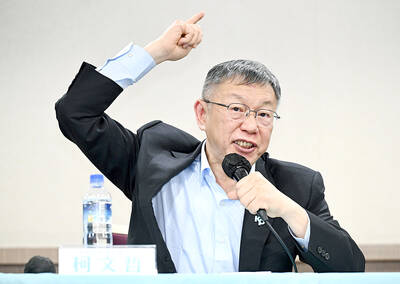
On Thursday, former Taipei mayor and founder of the Taiwan People’s Party (TPP) Ko Wen-je (柯文哲) was sentenced to 17 years in prison and had his civil rights suspended for six years over corruption, embezzlement and other charges. Seven others related to the case were also handed prison sentences, while two were found not guilty. It has been a bad week for the TPP. On Tuesday, prosecutors charged Chinese immigrant Xu Chunying (徐春鶯) with suspicion of taking part in Beijing-directed election interference. Xu has strong links to the TPP, which once offered her a party list legislator nomination. Tuesday also


 RSS
RSS