


The 228 Incident and massacre that followed is an ongoing nightmare for Taiwanese. Even though the authorities organize remembrance activities every year, many people are unlikely to escape its shadow any time soon.
This is true not only of the primary victims — those who were killed and their families — but also for the secondary victims — Taiwanese in general, who suffered the tyrannical rule of the illegitimate Republic of China under former presidents Chiang Kai-shek (蔣介石) and Chiang Ching-kuo (蔣經國).
This is because the perpetrators remain at large while the victimized communities are still in bondage, and it is a situation that is unlikely to change in the short term.
The first step that needs to be taken for the public to escape from this nightmare is to properly appraise the massacre.
First, the massacre should be called the “Formosa genocide.” As defined in legal terms by the Convention on the Prevention and Punishment of the Crime of Genocide adopted by the UN General Assembly in 1948, genocide means killing, in whole or in part, and in a systematic and planned way, a particular national, ethnic, racial or religious group.
It should be understood that language is a concept that is equivalent to a group. The “seven major dialect groups” that China recognizes as comprising the Chinese or Han language are mutually unintelligible.
Furthermore, even the “dialects” within those groups include many branches, the speakers of which cannot communicate with one another.
For example, as well as the Yue, Wu and Mandarin groups being mutually unintelligible, even subgroups of the Min group, such as the Eastern Min spoken in China’s Fuzhou and the Teochew or Chaozhou branch, do not allow their speakers to communicate with one another.
The “Chinese language” is really a political concept. It includes many languages, the relations and differences of which are no less complex than those of the various Indo-European languages.
By the same token, the notion of “Chinese people” is not an ethnological concept. China’s historical “dynasties” were empires established by different ethnic groups who just happened to all use “Chinese characters.”
However, there were differences between the pronunciations and meanings of the Chinese characters they used. For example, Korea has been under the influence of the culture of Chinese characters for 3,000 years, as has Vietnam for 2,000 years.
Tang Dynasty poems rhyme better when read in Korean or Vietnamese than they do in Mandarin. In the past, both these countries have claimed to be the bearers of orthodox Chinese culture. However, their inhabitants are neither Chinese nor ethnic Han.
Similarly, the sounds and meanings of the “Chinese characters” used by Hong Kongers are also very different from those used in Mandarin.
By the same token, Hoklo (commonly known as Taiwanese) is not “Chinese,” and Taiwanese are not “Chinese” either.
Second, Taiwan was originally not a Chinese territory. It was merely annexed by the Qing Dynasty in 1683.
The Chinese descendants of the Ming Empire were also colonized by the Qing 39 years before the Qing annexed Taiwan.
Much later, after overthrowing the Qing Empire in China, those same Chinese claimed territorial sovereignty over Taiwan, even though the Qing Empire’s colonial rule had ended years earlier. It is clear as day that this claim of sovereignty has no justification.
Third, after Chiang Kai-shek’s army illegally occupied Taiwan, it subjected Taiwanese to rape and pillage, and when Taiwanese protested, his army committed genocide, including killing to eliminate witnesses. His army would rather kill 100 people in error than let one escape.
In the month after it landed in Taiwan, the army’s 21st Division used more than 200,000 bullets. Its crimes are comparable to Turkey’s systematic extermination of the Armenians, the Nazis’ slaughter of Jews during the Holocaust and the 1994 genocide in Rwanda.
As genocide is the most heinous of crimes against humanity, there is no statute of limitations for those accused of it.
Lastly, if we continue to refer to the “228 Incident,” a term Chiang Kai-shek’s army used to diminish the scale of the massacre, rather than calling it what it is — the Formosa genocide — and if we adhere to the conventional discourse that it was a “massacre of Taiwan’s elite by the army,” it would give people the impression that Taiwan’s elite were rather feeble.
For example, when leaders such as former South Korean president Syngman Rhee, former North Korean leader Kim Il-sung and Vietnamese revolutionary leader Ho Chi Minh where fighting for their nations’ independence, did “Taiwan’s elite” only want to be China’s adopted children?
Furthermore, this discourse about the elite is not likely to mould the overall public will, whereas a discourse about genocide is.
The “elite discourse” is not just a conservative, right-wing and reactionary argument; it fails to highlight Chiang Kai-shek’s cross-border violence, which amounts to war crimes, so it obstructs the public’s chance of gaining justice at an international court.
As well as expressing the desire of Taiwanese to be in line with international human rights safeguards, adopting the term the “Formosa genocide” might also have the effect of reducing China’s ambition to annex Taiwan.
Tekkhiam Chia is secretary-general of the Southern Taiwan Society.
Translated by Julian Clegg
KMT Chairwoman Cheng Li-wun’s (鄭麗文) recent visit to Beijing and her upcoming visit to Washington will serve as a high-level test of her diplomatic mettle. In Beijing, Cheng was received with symbolic gestures, a warm reception, and high-level access. In Washington, she will receive far less pomp and far sharper questions about the KMT’s vision for the future of Taiwan. Her challenge will be to persuade Washington that the KMT’s engagement with China can coexist with strong deterrence. Cheng’s April 7-12 visit to mainland China coincided with an intense period of conflict in Iran. Despite the strategic significance of Cheng’s trip,
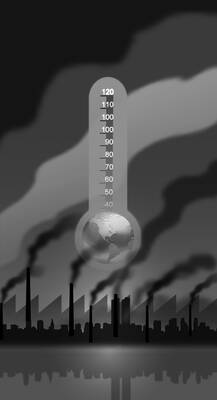
The closure of the Strait of Hormuz has sent the vast Asian chemicals industry into a tailspin. Deprived of the likes of Qatari natural gas and Saudi Arabian oil, the region’s fertilizer and plastics plants are slowing production or even shutting down. Everywhere except China, that is. In petrochemicals, China is unique. As well as a traditional industry that uses oil and gas as feedstock, it has parallel output that relies on its abundant domestic coal. Unsurprisingly, India and other regional powers want to copy and paste the Chinese method. This would not be easy — or climate friendly. The
Indonesian President Prabowo Subianto says he knows how to fix the problems facing Indonesia. Yet his economic mismanagement and authoritarian tendencies are steering the nation toward a familiar mix of currency instability and political chaos. The world’s fourth-most populous nation risks reversing the hard-won democratic and business reforms that came after the Asian Financial Crisis in 1997. At that time, the rupiah collapsed and the political upheaval that followed forced former president Haji Mohamed Suharto from power. Prabowo’s administration is ignoring similar warning signs. That disconnect was apparent in a national address on Wednesday, when Prabowo projected the swagger that has
“Of course you can choose not to be Taiwanese, just do not stay here,” chairwoman of Taipei 101 operator Taipei Financial Center Corp Janet Chia (賈永婕) said in an online interview with local entertainer Tai Chih-yuan (邰智源), triggering intense discussion on social media, with politicians across party lines weighing in. In the interview, which was aired on May 14, Chia and Tai’s discussion over a meal in Taipei 101 covered Chia’s career change from entertainer to chairwoman and US climber Alex Honnold’s free solo climb up the Taipei 101 building. During the interview, Chia said, “Being on this land, we


 RSS
RSS