


Minister of Foreign Affairs Lin Chia-lung (林佳龍) in an interview published yesterday confirmed that there are joint ventures between Taiwan and Poland in the drone industry.
Lin made the remark in an exclusive interview with the Chinese-language Liberty Times (the Taipei Times’ sister paper).
The government-backed Taiwan Excellence Drone International Business Opportunities Alliance and the Polish Chamber of Unmanned Systems on Wednesday last week signed a memorandum of understanding in Poland to develop a “non-China” supply chain for drones and work together on key technologies.
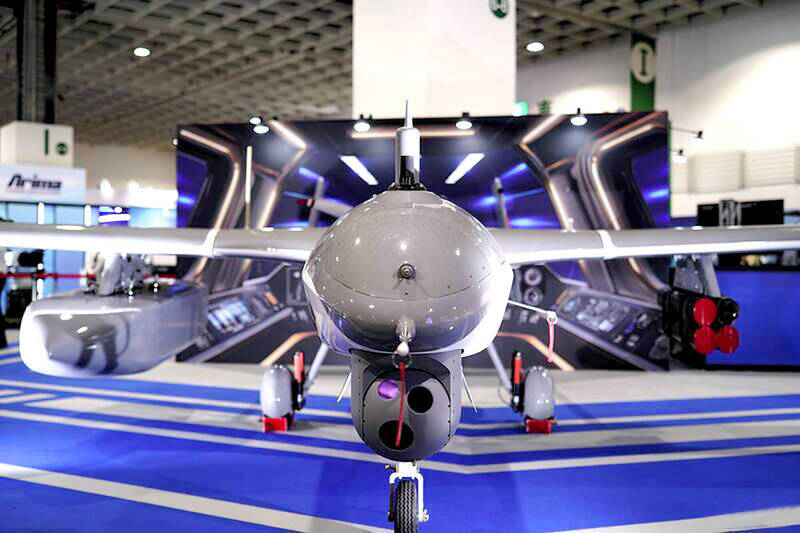
Photo: Chen Chih-cheng, Taipei Times
Asked if Taiwan prioritized Poland among central and eastern European countries in drone collaboration, Lin said: “Yes, we already have joint ventures with Poland.”
Taiwan also collaborates with the Baltic states and the Czech Republic, he added.
As Russia often uses drones to harass its neighbors, countries in central and eastern Europe have rich drone experience, so the Ministry of Foreign Affairs (MOFA) and the Ministry of Economic Affairs have been facilitating bilateral or multilateral cooperation with these nations, he said.
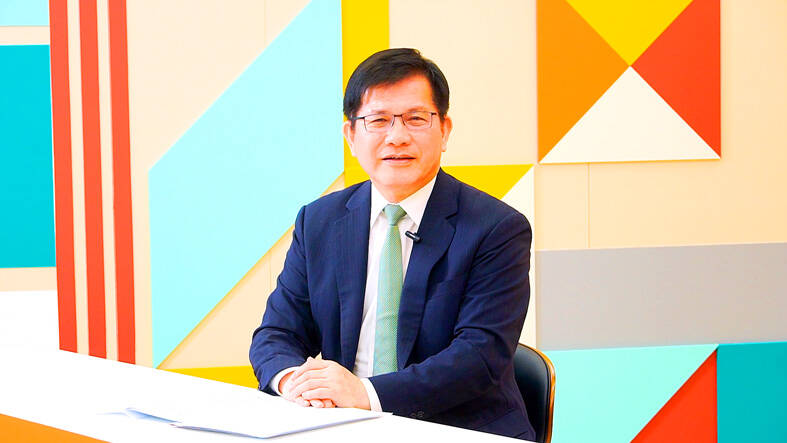
Photo: Huang Ching-hsuan, Taipei Times
Taiwan has a “central and eastern Europe supply chain resilience plan,” which includes Poland, as it is not only located at the center of the region, but is also the region’s largest economy, which plays an important role in Ukraine’s resistance against Russia’s invasion, Lin said.
Taiwan’s drone cooperation with Poland could create a win-win situation from the perspective of integrated diplomacy, also allowing Taiwan to connect with the world, he said.
Meanwhile, Taiwanese drone manufacturers such as Thunder Tiger Corp (雷虎科技), GEOSAT Aerospace & Technology Inc (經緯航太科技) and Coretronic Corp (中光電) have “great capacity,” Lin said, adding that they are eager to participate in international collaborations.
Either in the democratic supply chain or economic security partnerships, uncrewed aerial vehicles (UAVs) would be a key item of Taiwan’s international cooperation efforts, he said.
The MOFA has a “drone diplomacy task force,” aimed at establishing an international drone alliance, he said, adding that it would be greatly beneficial for Taiwan to help its allies and like-minded countries establish such an alliance.
The Philippines, and countries in central and eastern Europe are also Taiwan’s important potential drone cooperation partners, he said, adding that if Taiwan has collaboration with the Philippines, it would align with the US’ suggestion for joint development and production, while Taipei can also push forward its coprosperity project.
Taiwan has allocated a budget for such projects, Lin said.
After a drone supply chain is formed, Taiwan and its allies would have an edge over neighboring countries in terms of talent, technology, funding and big data artificial intelligence application, he said.
It would also demonstrate that “being friends with Taiwan not only prospers their [partners’] economy, but also makes them feel proud of being an ally of Taiwan,” he added.
The MOFA is mulling setting up an international drone academy and an international drone pilot alliance, as well as hold international drone pilot competitions, Lin said.
Drones also need maintenance and repair, so the government could also establish a scholarship program for talents from Taiwan’s diplomatic allies, he added.
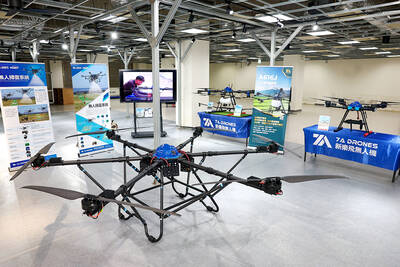
DRONE CENTRAL: Taiwan aims to become Asia’s democratic hub for drones, with most exports focused on high-quality military-grade models, an official said Taiwan’s drone industry is expected to expand significantly by 2030, producing 100,000 units per month and exporting half of them, the Ministry of Economic Affairs said yesterday. Current drone production capacity is about 15,000 units per month, but the industry can quickly scale up as demand increases, Industrial Development Administration Director-General Chiou Chyou-huey (邱求慧) told a news conference in Taipei. Taiwan’s drone output grew 2.5-fold last year to NT$12.9 billion (US$408.3 million) under a government program to develop the uncrewed vehicle sector, he said. The Executive Yuan in October last year approved plans to invest NT$44.2 billion into domestic production of uncrewed aerial
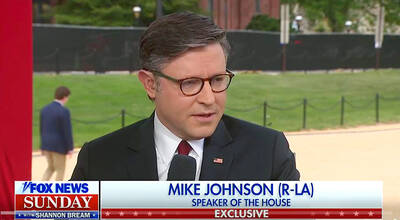
RESOLUTE BACKING: Two Republican senators are planning to introduce legislation that would impose immediate sanctions on China if it attempts to invade Taiwan US House of Representatives Speaker Mike Johnson on Sunday reaffirmed US congressional support for Taiwan, saying the US and “all freedom-loving people” have a stake in preventing China from seizing Taiwan by force. Johnson made the remarks in an interview with Fox News Sunday on US President Donald Trump’s summit with Chinese President Xi Jinping (習近平) last week. In an interview that aired on Friday on Fox News, just as Trump wrapped up a high-stakes visit to China, he said he has yet to green-light a new US$14 billion arms package to Taiwan and that it “depends on China.” “It’s a very good
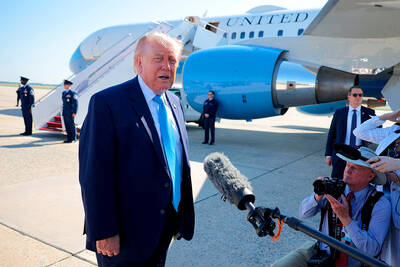
US President Donald Trump yesterday said he would speak to President William Lai (賴清德) as his administration considers whether to move ahead with a US$14 billion weapons sale to Taiwan — a potential arms deal that has drawn criticism from China. “Well, I’ll speak to him. I speak to everybody,” Trump told reporters yesterday when asked if he had any plans to call his counterpart, although he did not offer a time frame for when such a conversation could take place. Trump previously said he would speak to the person “that’s running Taiwan,” without specifying who he meant. “We have that situation very
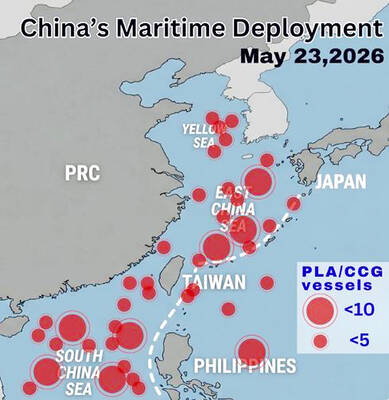
WARNING: China should stop engaging in actions that undermine regional peace and stability, as it would only build resentment among people across the Strait, the CGA said China has deployed more than 100 navy, coast guard and other vessels in waters from the Yellow Sea to the South China Sea and the western Pacific since US President Donald Trump and Chinese President Xi Jinping (習近平) met in Beijing, National Security Council Secretary-General Joseph Wu (吳釗燮) said yesterday. “In this part of the world, #China is the one & only PROBLEM wrecking the #StatusQuo & threatening regional peace & stability,” Wu wrote on X. In a separate post, he said Beijing was coercing Taiwan’s maritime domain, calling it illegal and provocative, after the Coast Guard Administration (CGA) expelled a


 RSS
RSS