


News about expanding security cooperation between Israel and Taiwan, including the visits of Deputy Minister of National Defense Po Horng-huei (柏鴻輝) in September and Deputy Minister of Foreign Affairs Francois Wu (吳志中) this month, as well as growing ties in areas such as missile defense and cybersecurity, should not be viewed as isolated events.
The emphasis on missile defense, including Taiwan’s newly introduced T-Dome project, is simply the most visible sign of a deeper trend that has been taking shape quietly over the past two to three years.
Taipei is seeking to expand security and defense cooperation with Israel, something officials are no longer trying to hide behind vague language.
Former president Tsai Ing-wen (蔡英文) and President William Lai (賴清德), alongside senior officials from the Ministry of Foreign Affairs and the Ministry of National Defense, have publicly referred to Israel as a possible model for Taiwan. This includes references to military preparedness, civil resilience, emergency response and technological innovation. It seems that such openness signals intent rather than just rhetoric.
Historically, this development should not come as a shock. Taiwan and Israel have a long record of security cooperation dating back to the 1960s, when Israel assisted Taiwan’s nuclear ambitions, and extending through the 1970s and 1980s with arms sales, tech transfers and operational know-how.
What is surprising is not the revival itself, but the long dormancy that followed. For decades, bilateral ties were largely confined to trade, technology and academic exchanges.
That raises an obvious question: What changed?
Three factors stand out.
First, cross-strait relations have deteriorated steadily since the Democratic Progressive Party returned to power in 2016. Under Tsai, and even more clearly under Lai, Beijing has abandoned any pretense of accommodation. Military pressure, “gray zone” activities and explicit timelines about readiness for conflict have become central to China’s signaling strategy. In response, Taiwan has intensified its search for partners that can offer practical security experience rather than symbolic political support. Israel fits that requirement.
Second, and closely related, Israel’s military experience matters. Even before the current crisis in the Middle East, the Israel Defense Forces could be regarded as among the most operationally experienced militaries in the world. Continuous exposure to high-intensity conflict, missile threats and civilian emergency management has produced a body of experience that few armed forces possess.
From Taiwan’s perspective, Israel’s missile defense architecture, civil defense systems, and integrated approach to military and civilian resilience are especially relevant. This is not about copying Israel wholesale, but about extracting usable lessons under conditions of sustained security pressure.
The third factor is political and perhaps the most overlooked. Taiwan-Israel security cooperation stalled largely because Israel was unwilling to jeopardize its expanding relationship with China. To some extent, that calculation no longer holds. The deterioration in China-Israel relations began during the administration of US President Donald Trump, particularly over infrastructure and technology projects. It accelerated following Hamas’ Oct. 7, 2023, attack and China’s response, which was viewed in Jerusalem as morally evasive and strategically revealing.
China is increasingly seen within Israel’s political and security establishment not as a neutral economic partner, but as a strategic problem — not a traditional threat such as Iran, but a serious security concern nonetheless.
As a result, Israel is far less restrained when it comes to engagement with Taiwan. Beijing’s displeasure is no longer sufficient to block cooperation outright. This does not mean Israel has abandoned caution, but it does mean the old red lines have shifted.
Taken together, these developments point to a recalibration rather than a dramatic realignment. A full transformation of Taiwan-Israel relations is unlikely, and there are clear limits imposed by geopolitics, US interests and Israel’s own strategic priorities. Nevertheless, the shift is real. For Taiwan, this represents a rare window of opportunity to deepen cooperation with a partner whose security experience is relevant and hard-earned. The question is not whether Taiwan should explore this path, but how strategically and selectively it chooses to do so.
Mor Sobol is an associate professor in Tamkang University’s Department of Diplomacy and International Relations.
KMT Chairwoman Cheng Li-wun’s (鄭麗文) recent visit to Beijing and her upcoming visit to Washington will serve as a high-level test of her diplomatic mettle. In Beijing, Cheng was received with symbolic gestures, a warm reception, and high-level access. In Washington, she will receive far less pomp and far sharper questions about the KMT’s vision for the future of Taiwan. Her challenge will be to persuade Washington that the KMT’s engagement with China can coexist with strong deterrence. Cheng’s April 7-12 visit to mainland China coincided with an intense period of conflict in Iran. Despite the strategic significance of Cheng’s trip,
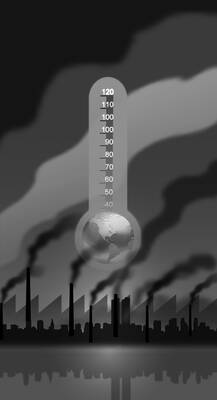
The closure of the Strait of Hormuz has sent the vast Asian chemicals industry into a tailspin. Deprived of the likes of Qatari natural gas and Saudi Arabian oil, the region’s fertilizer and plastics plants are slowing production or even shutting down. Everywhere except China, that is. In petrochemicals, China is unique. As well as a traditional industry that uses oil and gas as feedstock, it has parallel output that relies on its abundant domestic coal. Unsurprisingly, India and other regional powers want to copy and paste the Chinese method. This would not be easy — or climate friendly. The
US President Donald Trump recently repeated his claim that “Taiwan stole America’s chip industry,” reigniting public debate on the issue. As a former Taiwanese minister of economic affairs and an entrepreneur deeply involved in semiconductor supply chain development, I feel a responsibility to clarify this misunderstanding. From the perspective of global industrial evolution and the economic principle of comparative advantage, such a statement appears overly simplistic and risks obscuring the essence of the issue. The rise of Taiwan’s semiconductor industry was not built on “replacing America,” but rather emerged as a result of countries pursuing different development paths within the
Indonesian President Prabowo Subianto says he knows how to fix the problems facing Indonesia. Yet his economic mismanagement and authoritarian tendencies are steering the nation toward a familiar mix of currency instability and political chaos. The world’s fourth-most populous nation risks reversing the hard-won democratic and business reforms that came after the Asian Financial Crisis in 1997. At that time, the rupiah collapsed and the political upheaval that followed forced former president Haji Mohamed Suharto from power. Prabowo’s administration is ignoring similar warning signs. That disconnect was apparent in a national address on Wednesday, when Prabowo projected the swagger that has


 RSS
RSS